

If you’ve ever walked an athletic field after an irrigation cycle and noticed circular dry patches with green turf in the center, you’ve likely encountered one of the most recognizable irrigation distribution problems in sports turf management.
These donut-shaped dry spots, sometimes referred to as “D-shaped dry areas” or “donut patterns,” are frequently mistaken for turf diseases, nutrient deficiencies, or drought stress. In reality, they are often a clear indicator of irrigation system performance issues.
Understanding what causes these patterns can help prevent unnecessary turf loss, wasted water, and costly repairs.
What Causes Donut-Shaped Dry Areas?
The classic donut pattern consists of:
- A relatively healthy green center
- A ring of drought-stressed or straw-colored turf
- Healthier turf beyond the dry ring
This pattern usually develops when water distribution from a sprinkler head becomes uneven.
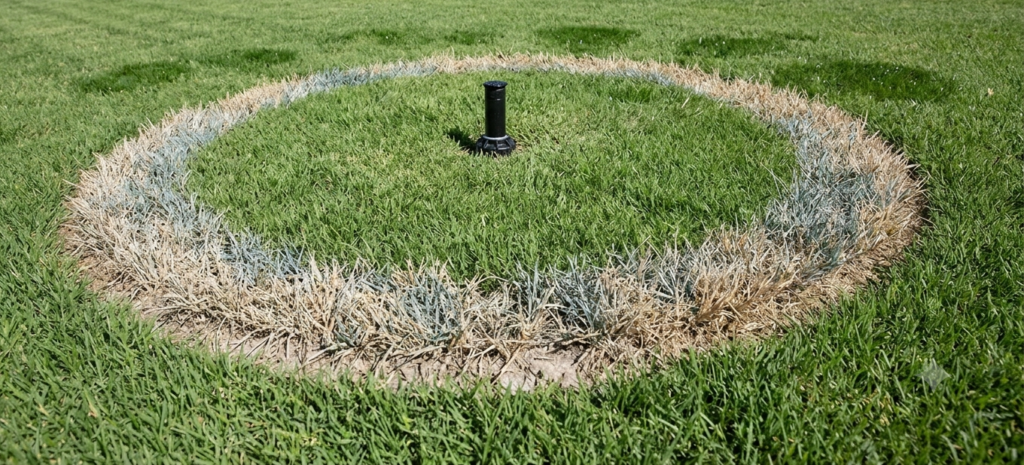
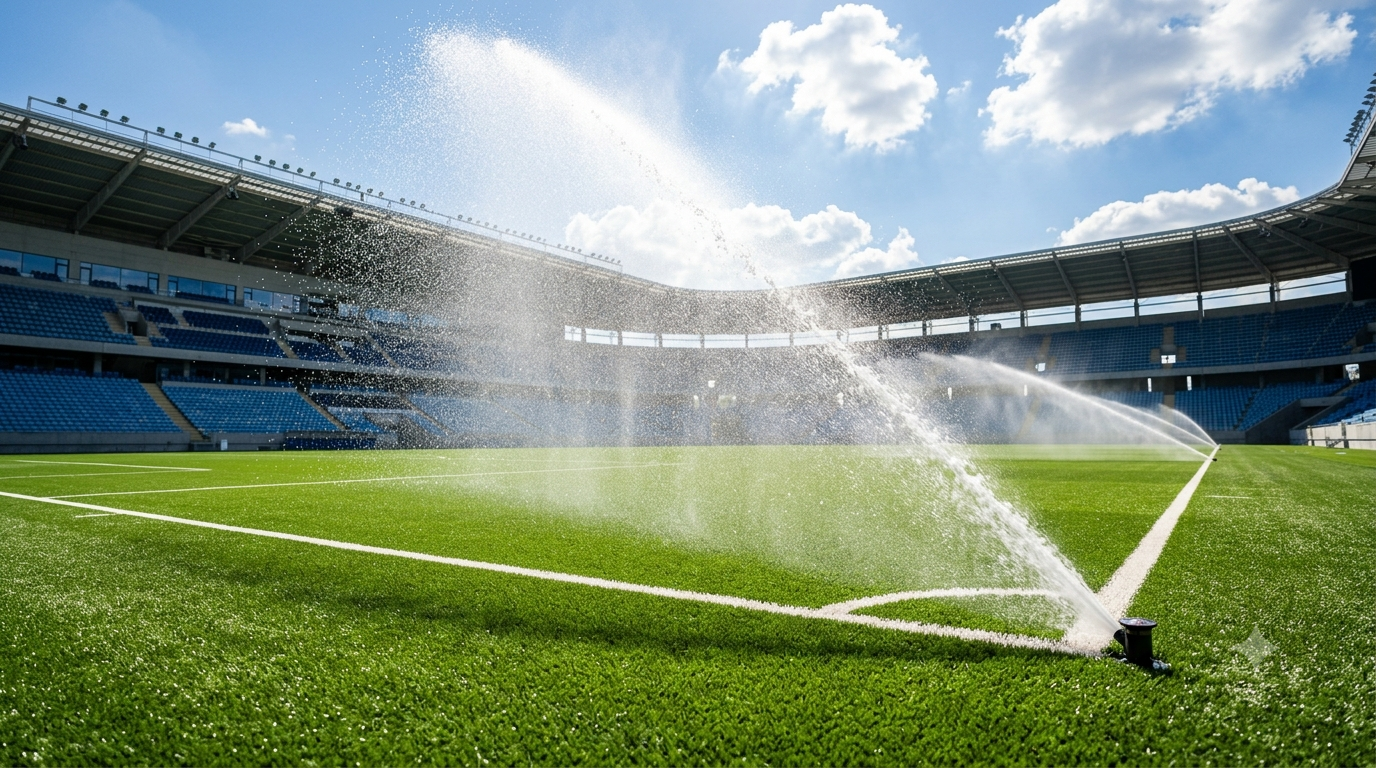
Figure 1. Donut-shaped dry spot surrounding a sprinkler head on a sports field.
1. Partially Clogged Nozzles
The most common cause is a partially clogged nozzle.
Debris, sand particles, or mineral buildup can alter the sprinkler’s spray pattern. Water is deposited close to the head, while the mid-range throw receives insufficient coverage.
The result is a distinct dry ring surrounding the sprinkler location.
2. Worn or Damaged Nozzles
Over time, nozzle wear changes the original flow characteristics and trajectory of the water stream.
Even minor wear can reduce distribution uniformity and create localized drought stress zones.
3. Improper Sprinkler Alignment
A sprinkler head that has settled below grade or become tilted can significantly alter its throw pattern.
When the stream is directed downward, the effective radius decreases, often producing the characteristic donut-shaped appearance.
4. Pressure Problems
Low operating pressure can shorten the sprinkler radius, while excessive pressure may create excessive misting and poor water distribution.
Pressure fluctuations during peak irrigation demand periods often contribute to recurring dry spots.
5. Localized Dry Spot (Hydrophobic Soil)
In some cases, the irrigation system may be functioning correctly, but the soil itself is repelling water.
Hydrophobic soils prevent infiltration, creating localized dry areas that visually resemble sprinkler-related donut patterns.
6. Pump performance issues (including reverse rotation of three-phase motors)
In larger sports field irrigation systems, reduced pump performance can also contribute to donut-shaped dry areas and poor water distribution.
One often-overlooked cause is reverse rotation in three-phase pump motors. If electrical phases are accidentally reversed after maintenance or installation, the motor may rotate in the wrong direction.
Centrifugal pumps operating in reverse rotation typically produce significantly lower flow and pressure. The resulting pressure loss can reduce sprinkler throw distance, decrease overlap between heads, and create localized dry areas across the field.
If multiple sprinkler heads suddenly exhibit reduced radius or uniformity problems, verify operating pressure and confirm proper pump rotation before replacing irrigation components.
How to Diagnose the Problem
Run a Manual Irrigation Test
Operate the affected irrigation zone and observe each sprinkler in real time.
Look for:
- Distorted spray patterns
- Shortened throw distance
- Incomplete rotation
- Visible stream deflection
Inspect and Clean the Nozzle
Remove the nozzle and flush both the nozzle and filter screen.
If the spray pattern does not improve after cleaning, replace the nozzle.
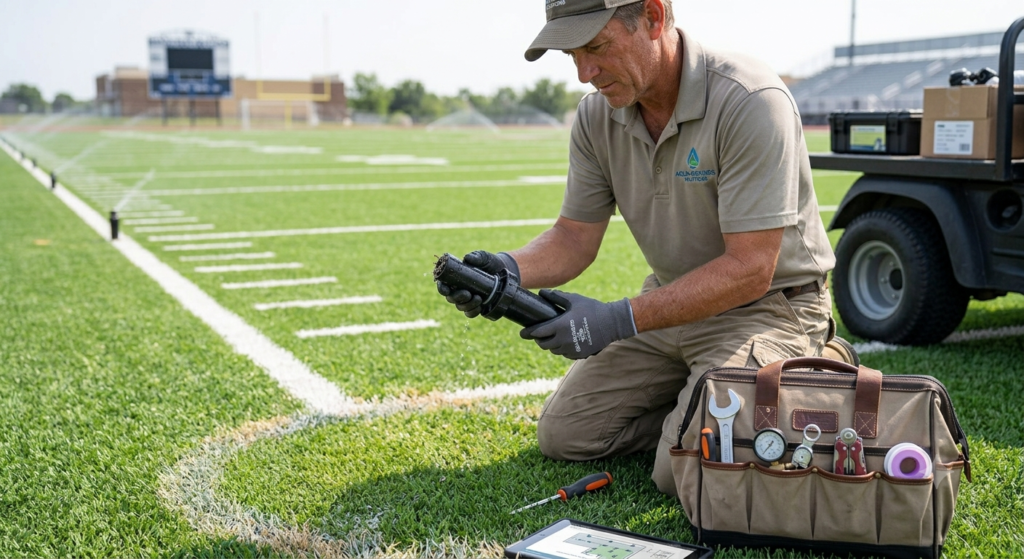
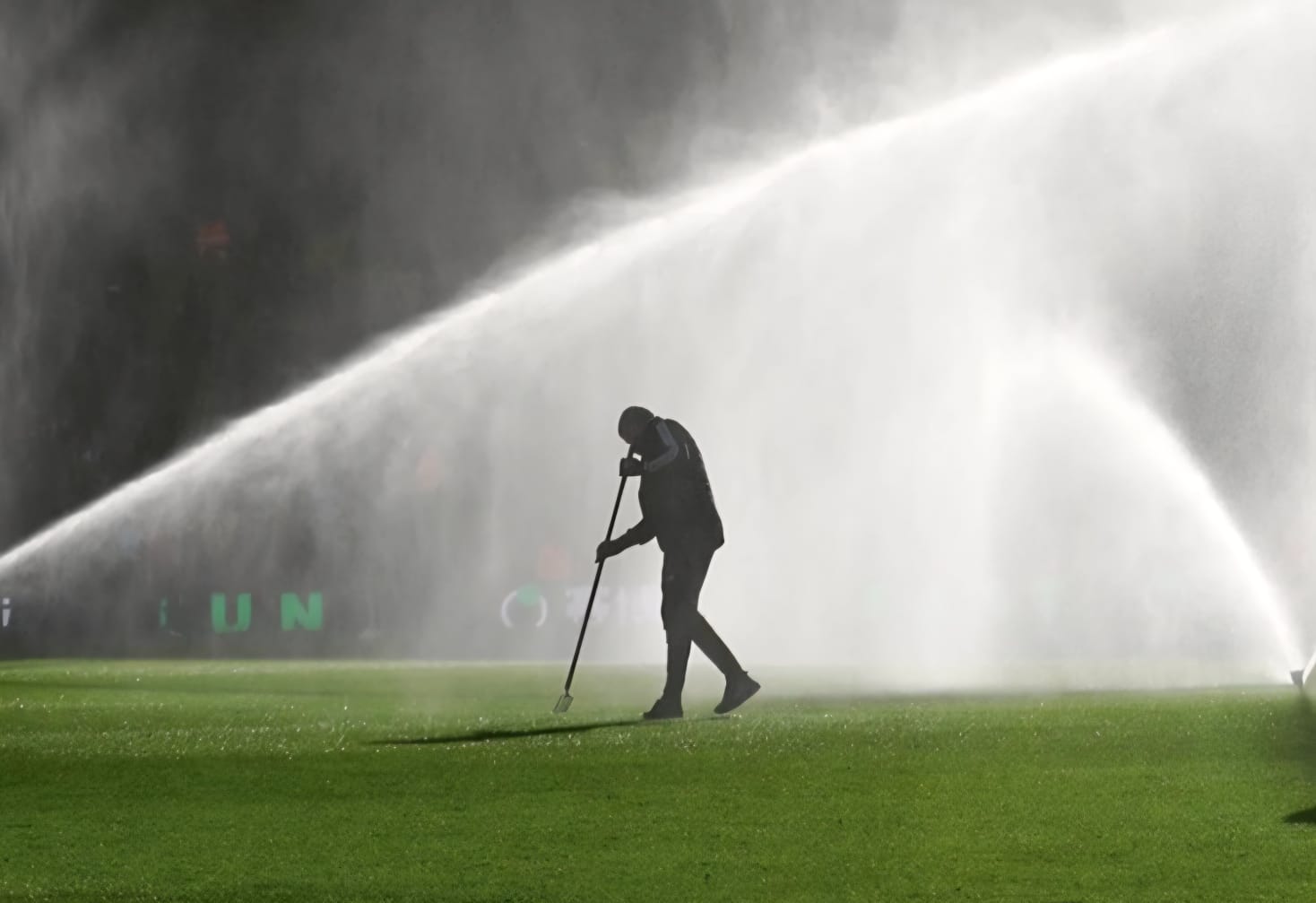
Figure 2.Technician inspecting irrigation sprinkler nozzle on athletic turf.
Verify Head Elevation and Alignment
Ensure the sprinkler is level and flush with the turf surface.
Even small deviations can significantly affect distribution uniformity.
Evaluate Soil Moisture
Probe the dry ring using a screwdriver, soil probe, or moisture meter.
If the soil remains dry immediately after irrigation, test infiltration by applying water directly to the surface.
Poor infiltration may indicate localized dry spot conditions requiring wetting agent applications.
Common Mistakes Turf Managers Make
Misdiagnosing the Problem as Disease
Many turf diseases create circular patterns, but irrigation-related dry spots often align precisely with sprinkler locations.
Always compare the affected areas with the irrigation layout before applying fungicides.
Replacing Heads Before Checking Pressure
A new sprinkler installed in a low-pressure zone will often produce the same symptoms.
Pressure testing should always be part of the troubleshooting process.
Ignoring Early Symptoms
Small dry rings can rapidly expand during periods of high evapotranspiration and summer heat stress.
Early intervention minimizes turf damage and reduces recovery costs.
How to Prevent Donut-Shaped Dry Spots
Preventive maintenance is the most effective strategy.
Best practices include:
- Routine nozzle inspections
- Seasonal pressure testing
- Annual irrigation audits
- Catch-can distribution uniformity testing
- Regular head alignment checks
- Periodic use of wetting agents in susceptible areas
A proactive maintenance program can significantly reduce irrigation-related turf stress and improve overall water-use efficiency.
Donut-shaped dry areas are not just cosmetic issues—they are valuable diagnostic indicators of irrigation system performance.
In most cases, the underlying cause is a clogged nozzle, worn sprinkler component, pressure issue, misaligned head, or localized dry spot condition. Identifying the root cause early allows turf managers to restore uniform irrigation coverage before significant turf loss occurs.
For sports turf managers, golf course superintendents, and groundskeepers, recognizing these patterns can improve irrigation efficiency, conserve water, and maintain safer, healthier playing surfaces.