
A high-performing irrigation system is one of the foundations of healthy, safe, and visually consistent sports turf. Even when fertilization, mowing, and pest management programs are properly executed, poor irrigation distribution can compromise the overall performance of a soccer field.
Dry spots, waterlogged areas, overly firm playing surfaces, increased disease pressure, and water waste are often linked to improper sprinkler selection or poor system design. For sports turf managers, irrigation professionals, and facility operators, choosing the right sprinkler is about much more than maximum throw distance.
The right sprinkler directly influences irrigation uniformity, water-use efficiency, turf health, and long-term maintenance costs.
What Is the Best Sprinkler for a Professional Soccer Field?
For most professional and high-performance athletic fields, high-performance pop-up rotors are considered the industry standard because they provide:
- Long-radius coverage
- High distribution uniformity
- Exceptional durability
- Resistance to vandalism and wear
- Safe operation for athletes and maintenance crews
Although FIFA does not officially endorse specific sprinkler brands, professional-grade pop-up rotors are widely used in stadiums and training facilities worldwide because of their proven reliability and performance.
However, there is no single sprinkler model that works best for every facility.
The ideal selection depends on factors such as:
- Field dimensions
- Available flow rate
- Operating pressure
- Hydraulic design
- Maintenance strategy
- Project budget
Why Soccer Fields Require Specialized Sprinklers
A FIFA-standard soccer field measures approximately 105 m × 68 m (344 ft × 223 ft), covering more than 7,000 m² (75,000 ft²).
Uniformly irrigating an area of this size requires careful coordination among:
- Sprinkler spacing
- Operating pressure
- Nozzle selection
- Available flow
- Hydraulic zoning
- Water storage capacity
Even small coverage deficiencies can quickly develop into dry spots or overwatered areas.
On fields subjected to heavy traffic, these differences become increasingly visible throughout the playing season.
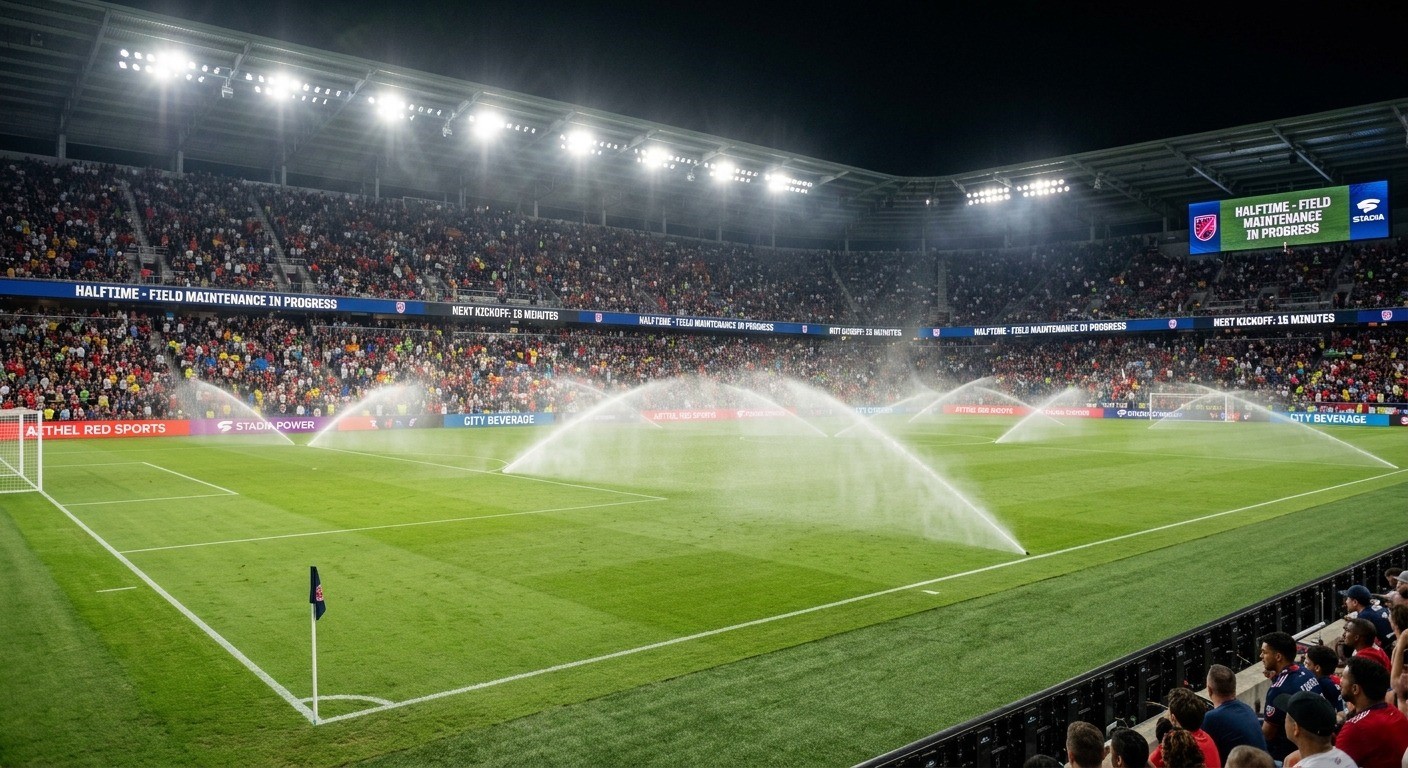
The Importance of Head-to-Head Coverage
One of the most important principles in sports turf irrigation design is head-to-head coverage.
Under this concept, each sprinkler should throw water all the way to the adjacent sprinkler.
This overlap compensates for the natural variations in sprinkler distribution patterns and significantly improves irrigation uniformity across the field.
When head-to-head coverage is not achieved, certain areas receive less water than required, leading to inconsistent turf quality, increased manual watering, and reduced irrigation efficiency.
For professional sports fields, proper head-to-head spacing is considered a fundamental design requirement.
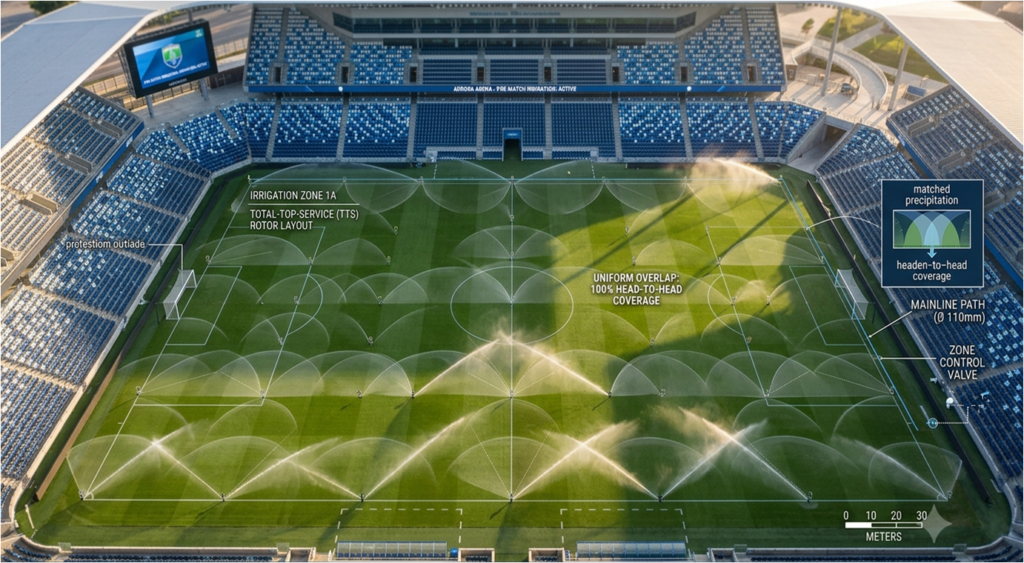
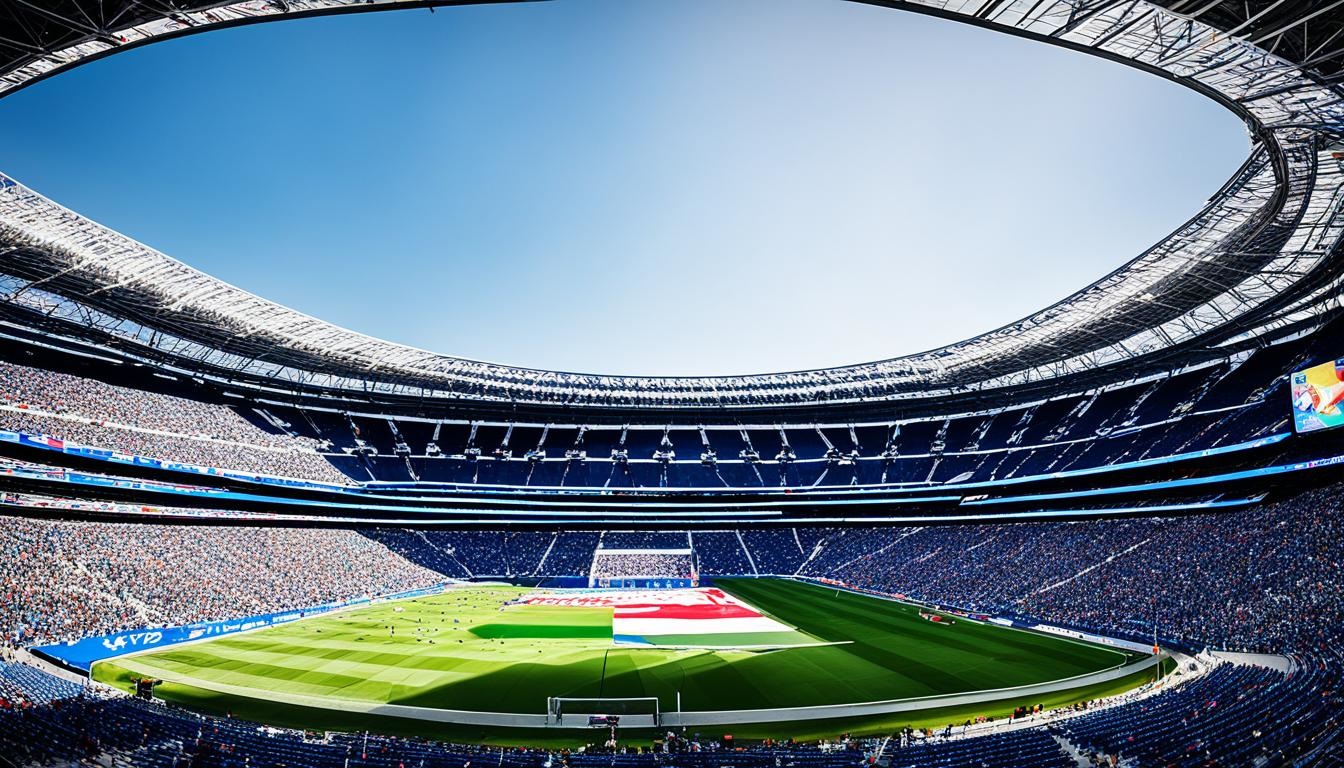
Figure 1. Head-to-Head Coverage Improves Irrigation Uniformity (AI image).
Understanding Run Time Multiplier (RTM)
The Run Time Multiplier (RTM) is one of the most useful metrics for evaluating sprinkler spacing quality and irrigation performance.
In simple terms, RTM indicates how much additional irrigation time is needed for the driest areas of a field to receive the target amount of water.
Examples:
- RTM = 1.00 → Theoretical perfect distribution
- RTM = 1.20 → Irrigation time must increase by 20%
- RTM = 1.50 → Irrigation time must increase by 50%
For high-performance sports turf, RTM values near 1.15 are generally considered excellent.
Values above 1.40 often indicate problems related to:
- Improper spacing
- Incorrect pressure
- Poor nozzle selection
- Deficient hydraulic design
The following figure shows the simulation of spacings and the respective uniformity indices obtained via a densogram.
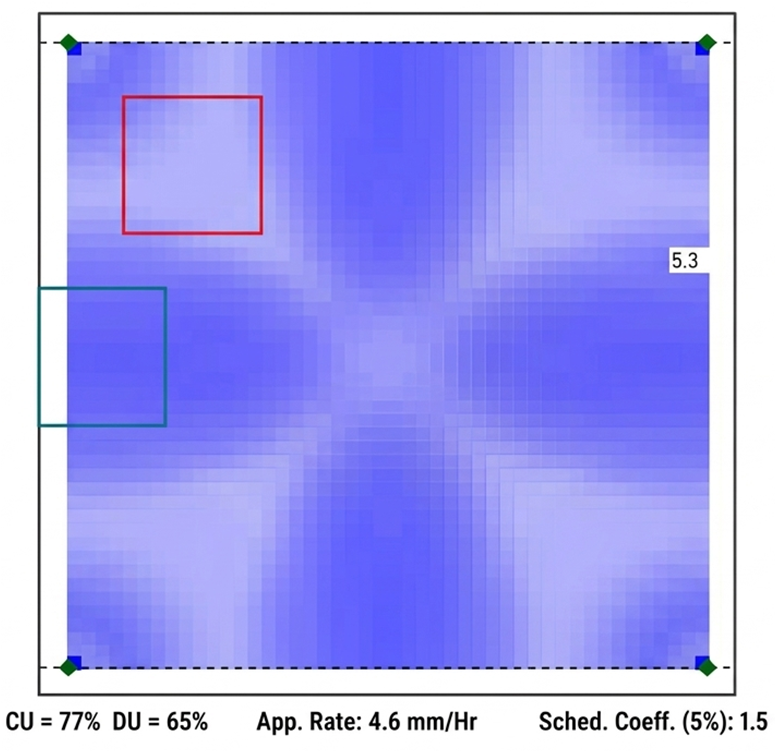
Figure 2. Precipitation density plot with low distribution uniformity (Source: José Giacoia Neto).
Irrigation audits frequently show that many dry spot issues on athletic fields are directly linked to elevated RTM values.
When RTM is high, managers often compensate by extending irrigation run times. While this may improve the driest areas, portions of the field already receiving adequate water become excessively wet.
As a result:
- Disease risk increases
- Water consumption rises
- Irrigation efficiency declines
Practical Example on a Soccer Field
Consider a FIFA-standard field measuring 105 m × 68 m.
If several rotors lose only 10% of their intended throw radius due to low pressure or poor spacing, moisture deficits may begin developing between irrigation zones or near field edges.
Over time, these areas may exhibit:
- Reduced turf density
- Yellowing turf
- Lower wear tolerance
- Slower recovery after matches and training sessions
This example illustrates why proper hydraulic design is just as important as selecting the sprinkler itself.
6 Critical Factors When Choosing a Soccer Field Sprinkler
1. Radius of Throw
Professional sports fields typically use rotors with throw distances ranging from 40 to 80 feet (12–24 m).
Longer throw distances often provide:
- Fewer sprinklers
- Reduced maintenance requirements
- Less interference with field operations
2. Operating Pressure and Available Flow
Most professional rotors perform best between 50 and 70 psi (3.5–5.0 bar).
Insufficient pressure can cause:
- Reduced throw distance
- Poor coverage
- Dry spots
Excessive pressure may lead to:
- Mist formation
- Increased evaporation losses
- Greater wind drift
Rotors equipped with pressure-regulating technology help maintain consistent performance throughout the system.
3. Precipitation Rate
The sprinkler precipitation rate should match the soil’s infiltration capacity.
When application rates exceed infiltration rates, problems may include:
- Surface runoff
- Puddling
- Reduced irrigation uniformity
Balancing precipitation rate with soil characteristics is essential for maintaining safe and playable sports surfaces.
4. Pop-Up Height
Five-inch pop-up models are commonly used on sports fields.
The riser height should allow the nozzle to clear the turf canopy during operation while remaining safely retracted when inactive.
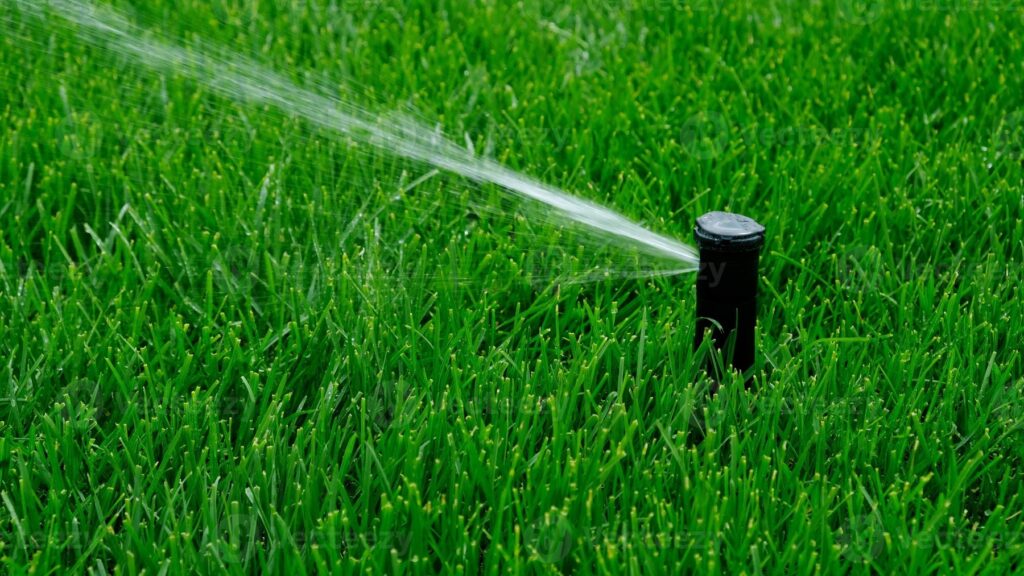
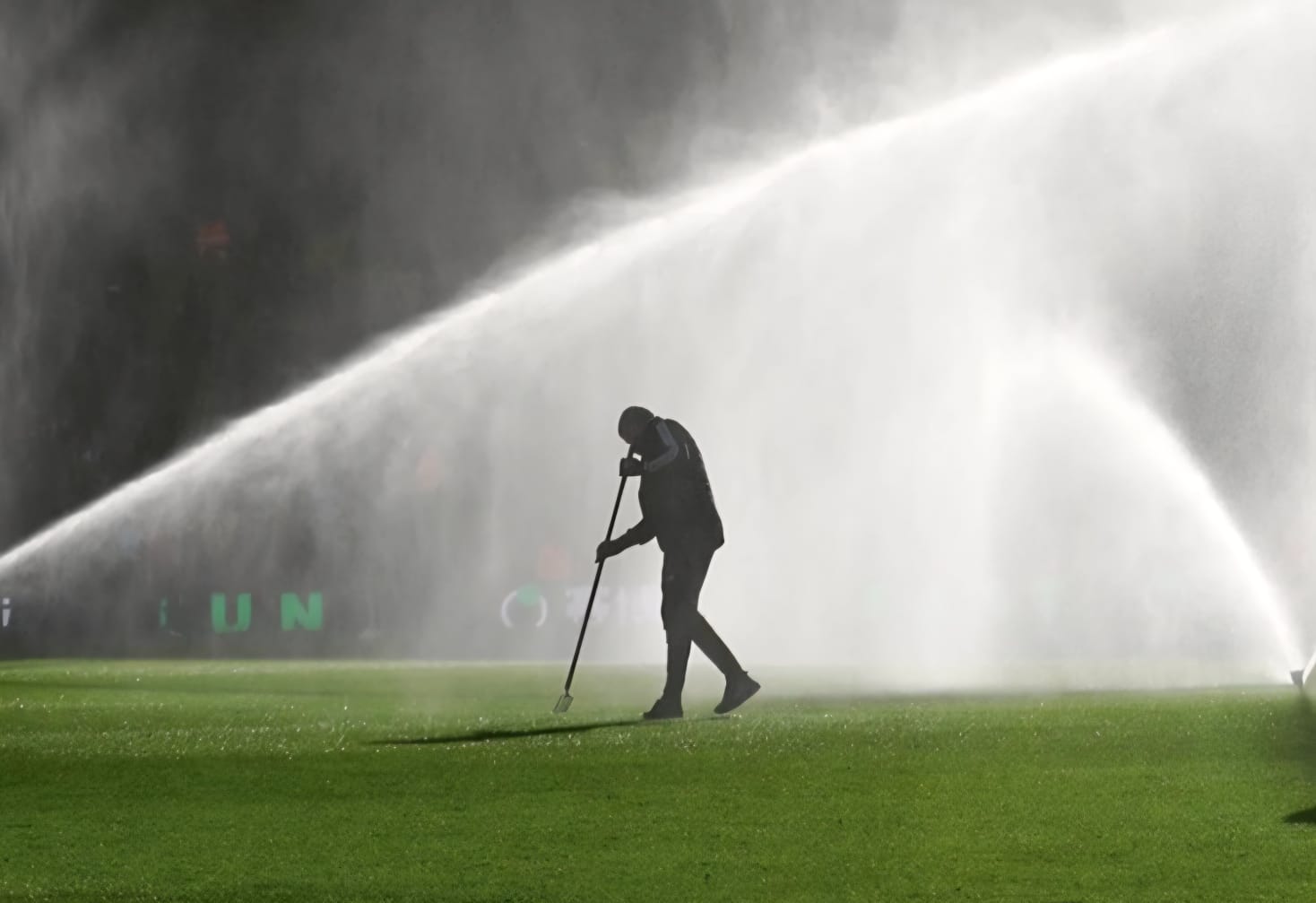
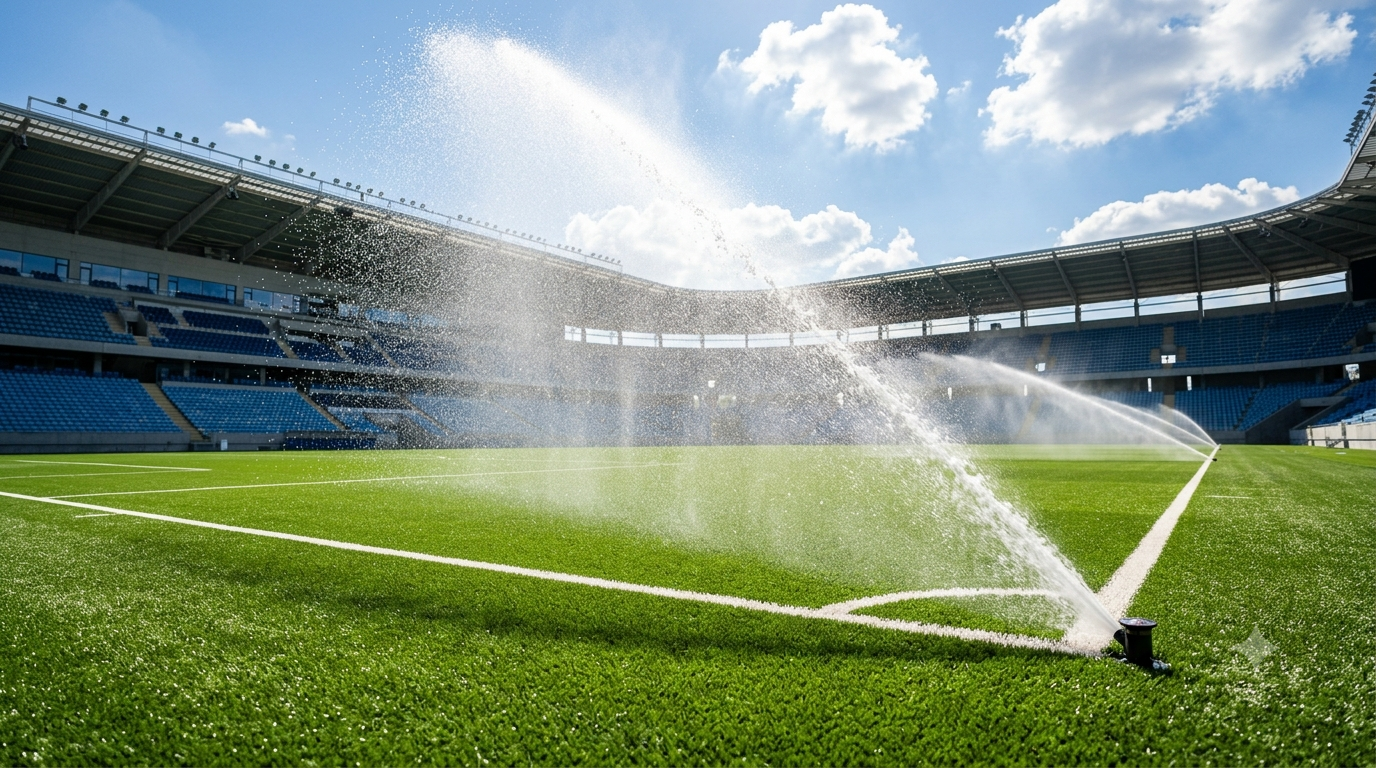
Figure 3. Professional Pop-Up Rotor Irrigating Natural Sports Turf.
5. Check Valve (SAM Technology)
Integrated check valves prevent low-head drainage after irrigation cycles end.
Benefits include:
- Reduced water waste
- Less puddling
- Improved system uniformity
- Better performance on sloped sites
6. Durability and Vandal Resistance
Sports fields experience constant traffic from:
- Athletes
- Maintenance equipment
- Staff
Desirable features include:
- Stainless steel risers
- Reinforced internal components
- Memory Arc® technology
- Impact-resistant construction
Durability is particularly important in stadiums and training centers where irrigation systems operate year-round.
Technologies That Enhance Irrigation Performance
Selecting the right sprinkler is only part of a successful irrigation strategy.
Today, many sports facilities integrate:
- Soil moisture sensors
- Weather stations
- Evapotranspiration (ET) data
- Smart irrigation controllers
- Cloud-based irrigation management software
These technologies allow irrigation schedules to automatically respond to changing weather conditions, improving water-use efficiency while reducing operating costs.
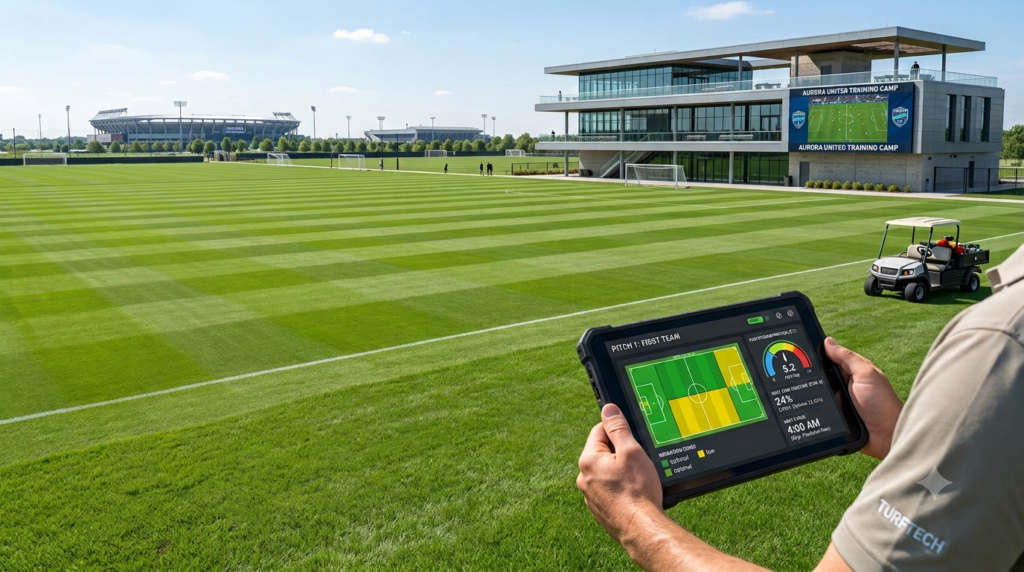
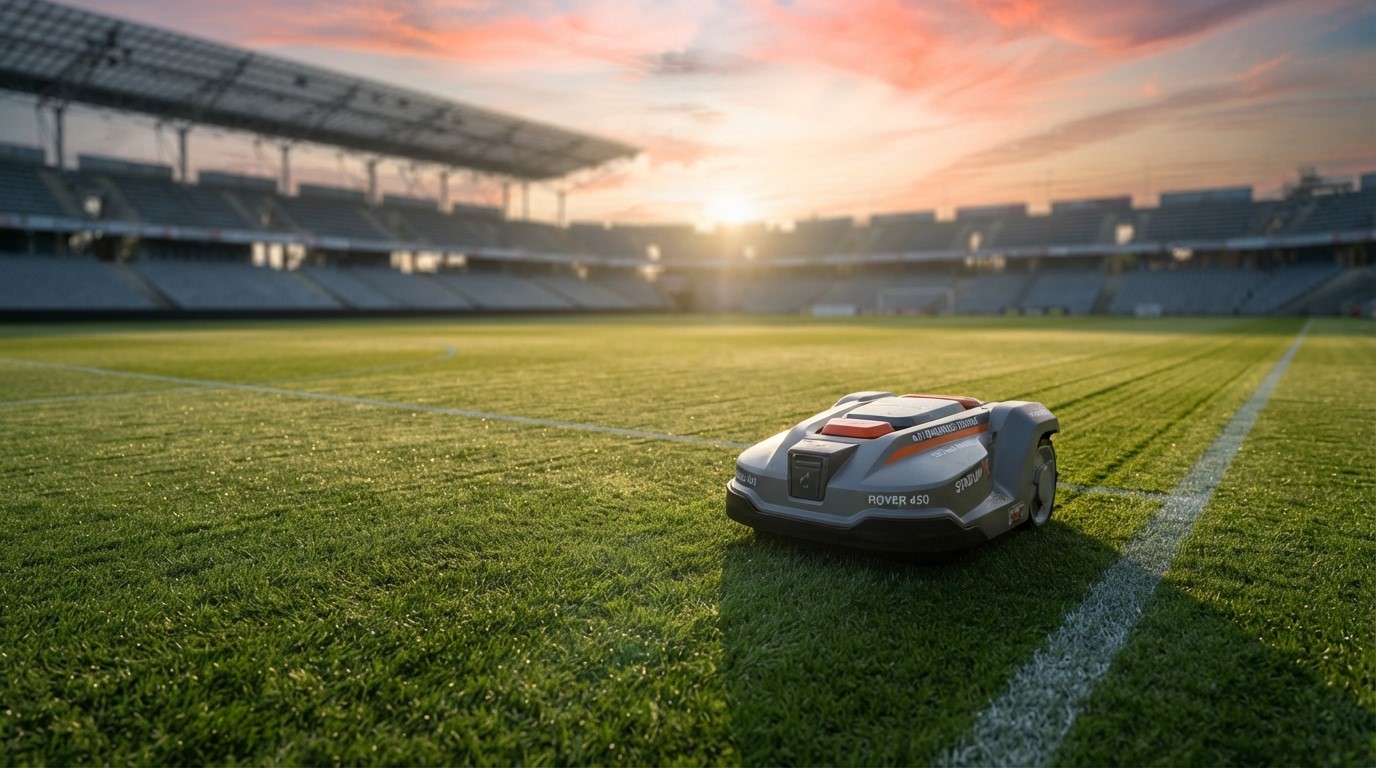
Figure 4. Smart Irrigation Technologies for Professional Sports Turf. (AI Image)
Common Mistakes When Selecting Sprinklers
Avoid these common errors:
- Skipping a complete hydraulic design
- Ignoring friction losses
- Mixing different precipitation rates within the same zone
- Using residential-grade rotors on professional fields
- Failing to regulate pressure
- Overlooking head-to-head coverage principles
Many irrigation performance issues originate during design rather than during day-to-day operation.
Final Thoughts
Choosing the best sprinkler for a soccer field involves far more than selecting the model with the greatest throw distance.
The long-term success of an irrigation system depends on the interaction between hydraulic design, operating pressure, available flow, distribution uniformity, and modern monitoring technologies.
When properly specified and installed, professional irrigation rotors contribute to healthier turf, improved playing conditions, greater athlete safety, and more efficient water management.
For sports turf managers, investing time in proper sprinkler selection can deliver benefits that last for decades.
FAQ
What type of sprinkler is best for a soccer field?
High-performance pop-up rotors are generally considered the best option because they provide long-range coverage, high distribution uniformity, and durability under heavy field use.
What is head-to-head coverage?
Head-to-head coverage means each sprinkler throws water to the adjacent sprinkler, ensuring adequate overlap and improving irrigation uniformity.
What is a good RTM value for sports turf?
An RTM close to 1.15 is generally considered excellent for high-performance sports fields. Higher values may indicate design or spacing problems.
Why is pressure regulation important in sports turf irrigation?
Proper pressure regulation helps maintain consistent throw distance, minimizes misting, reduces water waste, and improves distribution uniformity.
Can smart irrigation technologies improve field performance?
Yes. Soil moisture sensors, weather stations, ET-based scheduling, and smart controllers can significantly improve irrigation efficiency and turf quality.
PART 2 OF THIS SERIES
Choosing the right sprinkler is only the first step toward building a high-performance sports turf irrigation system.
In Part 2, we’ll compare some of the most widely used irrigation rotors on professional soccer fields and athletic facilities, including:
- Rain Bird 8005
- Hunter I Series
- Toro T7 Series
- Other professional-grade sports turf rotors
You’ll learn the strengths, limitations, and best applications of each model to help you select the right equipment for your facility.
Follow along and subscribe to receive Part 2 as soon as it’s published.
Continue Learning
If you’re designing or upgrading a soccer field irrigation system, explore these TurfWaterPro resources:
-
Common Irrigation Scheduling Mistakes in Sports Turf Management
-
Donut-Shaped Dry Areas on Irrigated Sports Fields: Causes, Fixes, and Prevention
-
How Much Water Does a Soccer Field Need Per Week?
Subscribe to the TurfWaterPro Newsletter for practical irrigation guidance, equipment reviews, water management strategies, and sports turf maintenance insights tailored specifically for turf professionals