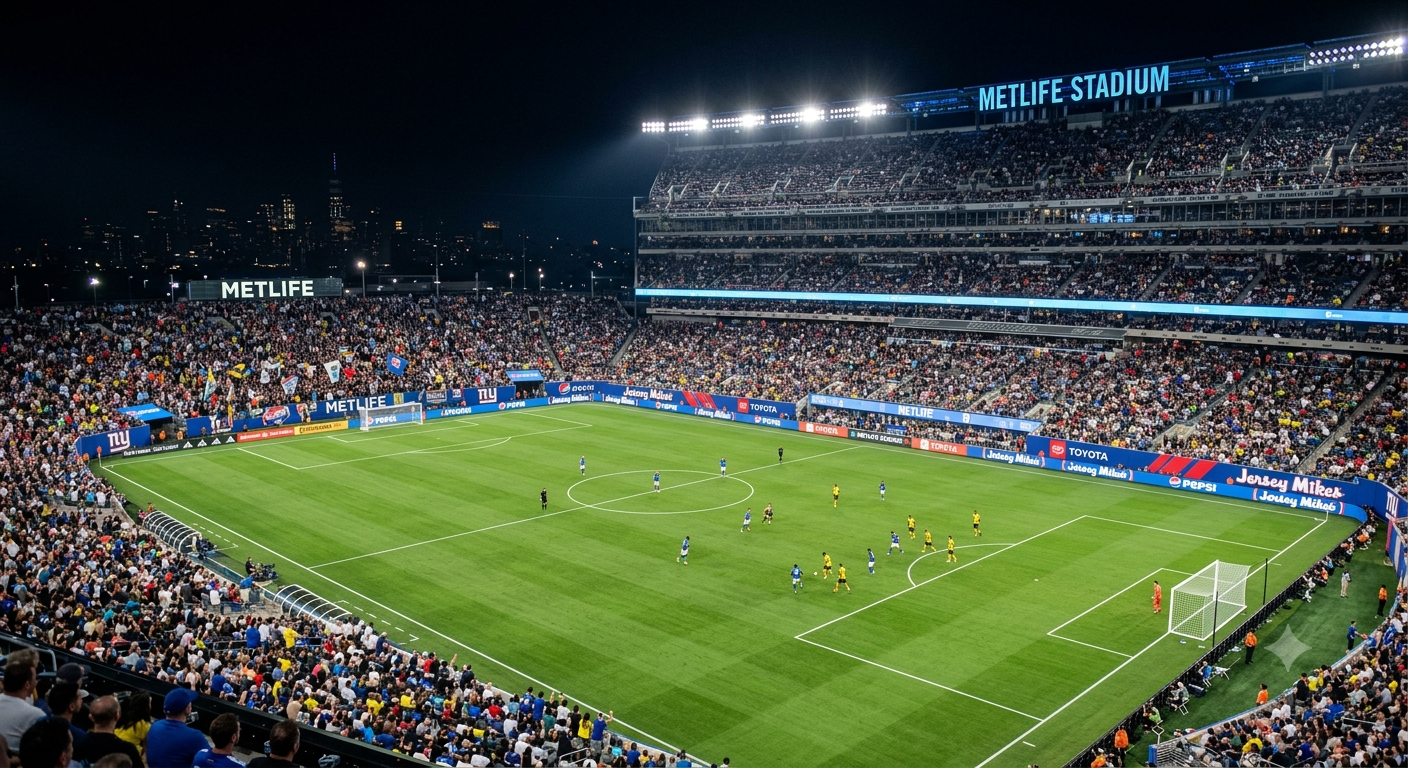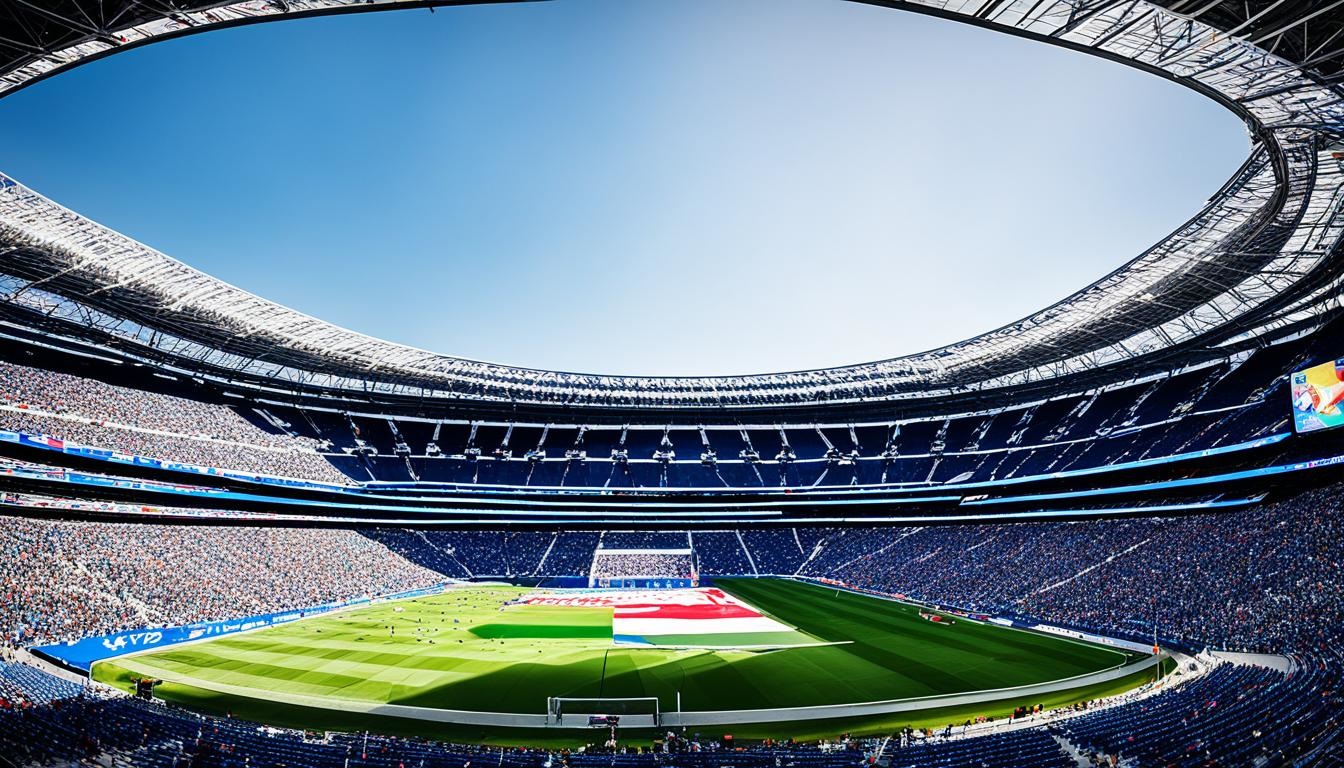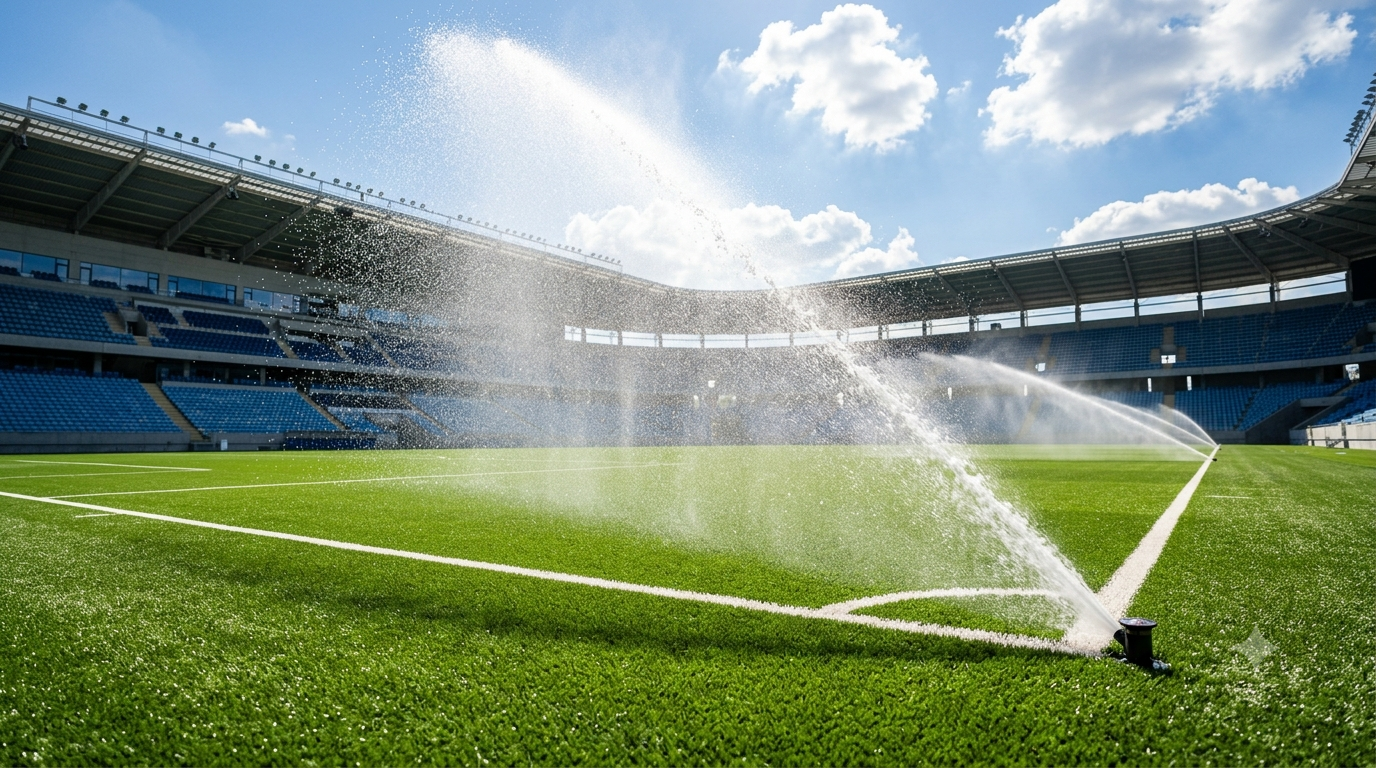


On a hot summer afternoon, an artificial turf field can become hot enough to increase the risk of heat stress, skin burns, and reduced athletic performance. Yet many facility managers still assume synthetic turf does not require irrigation.
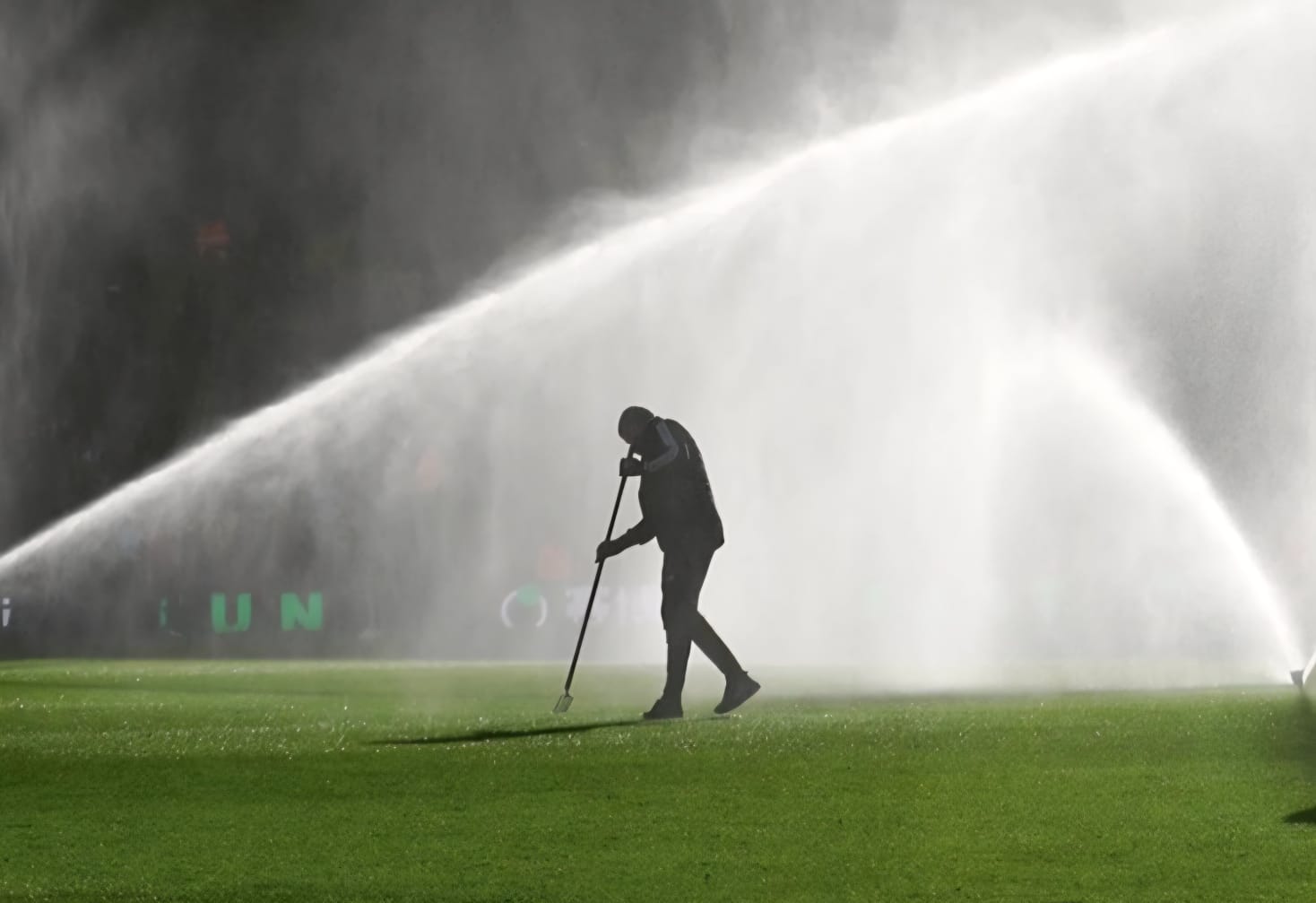
In reality, synthetic turf irrigation has nothing to do with keeping grass alive. Its primary purpose is to reduce surface temperatures before training sessions and matches, improving player comfort and helping manage heat-related safety risks. It can also be used to clean the field after matches.
Understanding how and when to irrigate artificial fields allows sports turf managers to maximize cooling while avoiding unnecessary water use.
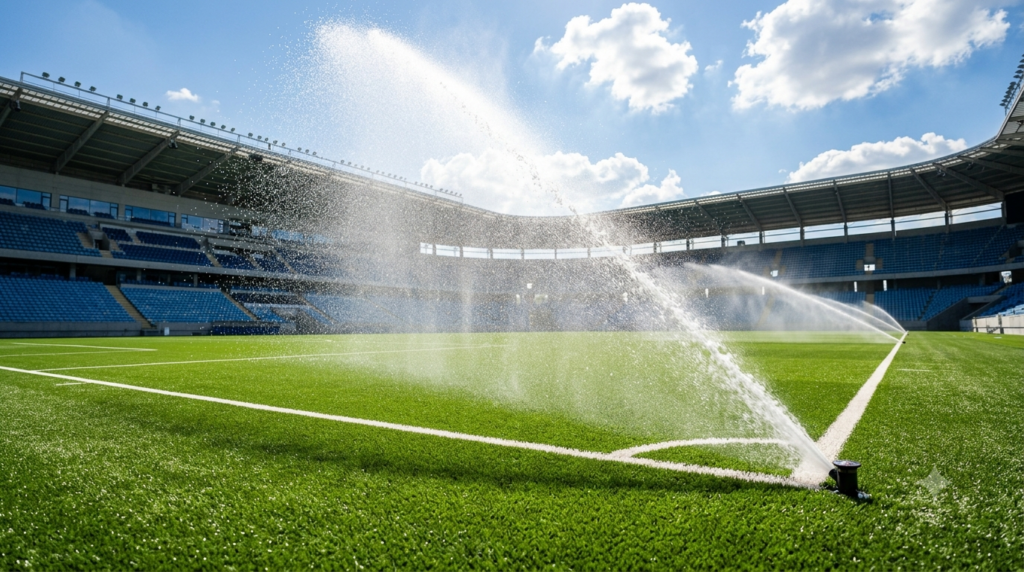
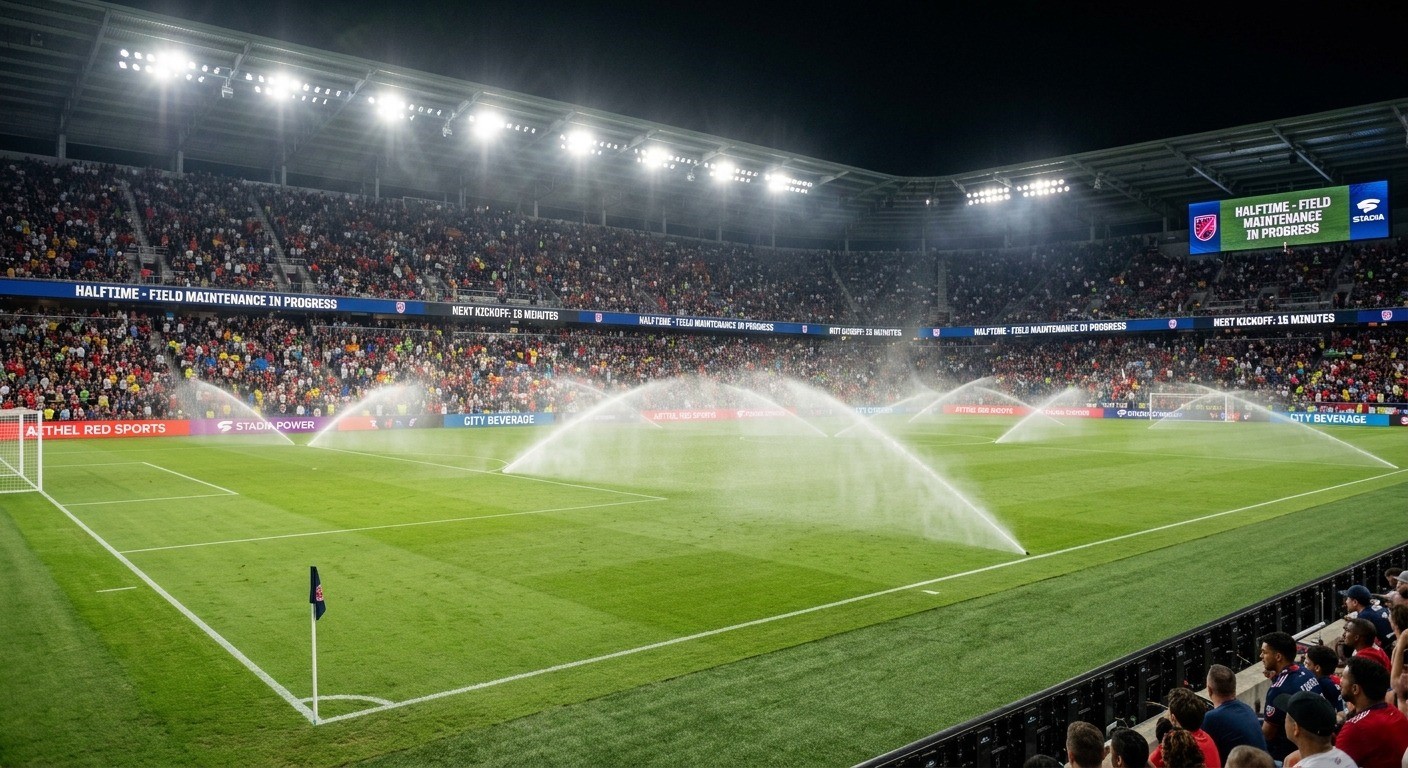
Figure 1. Cooling Synthetic Turf Before Kickoff at a Professional Soccer Stadium (AI Image).
Why Synthetic Turf Gets So Hot
Unlike natural grass, synthetic turf cannot cool itself through evapotranspiration.
Living turf continuously releases water vapor through its leaves, removing heat from the canopy and keeping surface temperatures relatively close to ambient air temperature.
Artificial turf lacks this natural cooling mechanism. Instead, synthetic fibers and infill materials absorb incoming solar radiation throughout the day, storing large amounts of heat.
As a result, surface temperatures often become dramatically higher than the surrounding air.
Under full sun, an artificial field exposed to an air temperature of 90°F (32°C) may reach 150°F to 200°F (66–93°C) at the infill surface, depending on solar radiation, infill type, wind speed, and cloud cover. Numerous university studies and industry field measurements have documented these extreme temperatures under summer conditions.
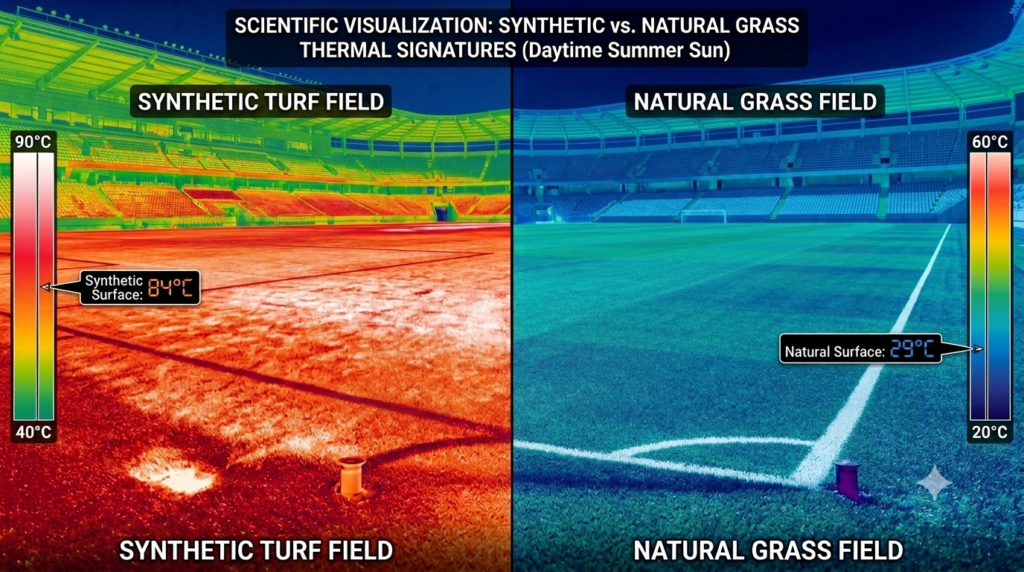
Figure 2. Thermal Comparison Between Synthetic Turf and Natural Grass (AI Image).
Why Irrigating Synthetic Turf Works
Cooling occurs through a simple physical process known as evaporative cooling.
As water changes from liquid to vapor, it absorbs latent heat from the turf surface. This process rapidly removes heat from the synthetic fibers and infill, temporarily lowering surface temperatures.
A properly timed irrigation cycle typically reduces surface temperatures by 30°F to 50°F within minutes, creating safer and more comfortable playing conditions.
However, the effect is temporary. Depending on solar radiation, humidity, wind speed, and air temperature, the cooling benefit generally lasts 30 to 60 minutes before the surface begins warming again.
Because of this, timing is often more important than applying additional water.
Professional Tip
Surface temperature—not air temperature—should drive irrigation decisions on synthetic turf.
An infrared thermometer provides far more useful information than relying solely on weather forecasts or ambient air temperature.
Recommended Surface Temperature Actions
| Surface Temperature | Recommended Action |
| Below 120°F | Irrigation generally not required for cooling purposes. |
| 120–140°F | Monitor conditions and consider pre-game cooling if temperatures continue rising. |
| Above 140°F | Pre-event cooling irrigation is strongly recommended to reduce heat stress and improve player comfort. |
Actual thresholds may vary depending on league policies, local climate, athlete exposure time, and facility management practices.
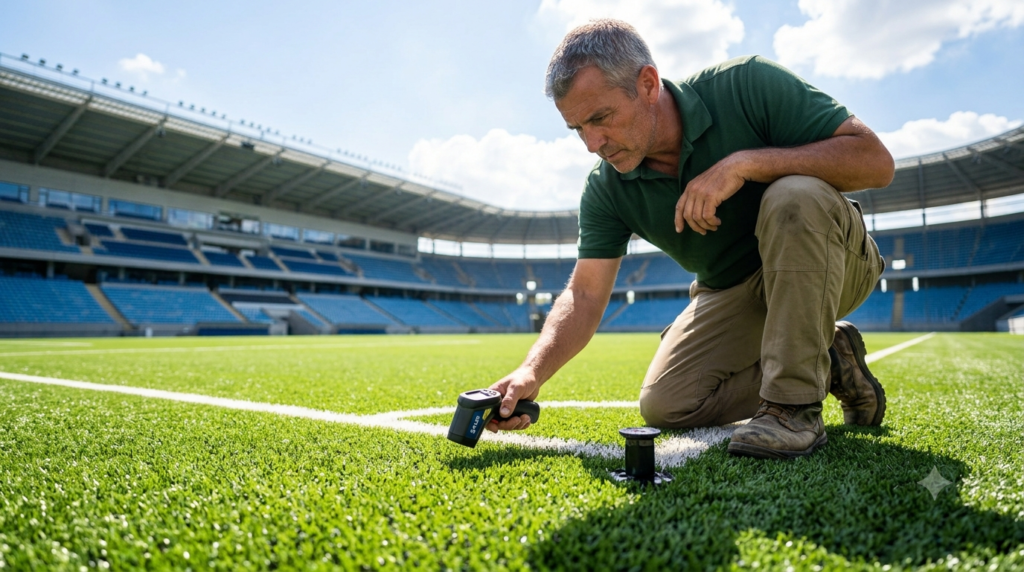
Figure 3. Groundskeeper measuring synthetic turf surface temperature using a handheld infrared thermometer before activating irrigation.
Best Practices for Irrigating Synthetic Turf
- Time Irrigation Correctly
Apply water 15 to 30 minutes before activity begins.
Watering too early allows the surface to reheat before athletes take the Field. If necessary, irrigation should be carried out during the halftime break, as this practice lowers the temperature and improves ball roll.
- Prioritize Uniform Surface Coverage
Synthetic turf does not require deep soil infiltration. The objective is to cool the playing surface evenly.
Properly designed sprinkler layouts, or dedicated cooling systems generally provide better temperature uniformity.
- Measure Surface Temperature
Air temperature alone is a poor indicator of field conditions.
Use an infrared thermometer or surface temperature sensor to determine when cooling irrigation is truly necessary and to verify that the desired temperature reduction has been achieved.
- Consider the Infill Material
Different infill materials absorb and release heat differently.
Crumb rubber generally retains heat longer than sand-based or organic infill systems, often requiring greater irrigation volumes or slightly longer lead times before events.
Understanding your field’s construction allows irrigation scheduling to be optimized.
- Document Field Conditions
Recording surface temperatures before and after irrigation helps facility managers evaluate cooling performance, improve scheduling decisions, support risk management documentation, and demonstrate the value of irrigation infrastructure.
Quick Field Checklist Before Irrigating Synthetic Turf
Before activating the irrigation system, ask yourself:
✔ Is the surface temperature above 120–140°F?
✔ Is a practice or game scheduled within the next 30 minutes?
✔ Are solar radiation levels still high?
✔ Are humidity and wind conditions likely to reduce or extend the cooling effect?
✔ Is the irrigation system providing uniform surface coverage?
If several answers are yes, a pre-event cooling cycle is likely justified.
Common Mistakes to Avoid
Even well-designed systems can perform poorly when irrigation is managed incorrectly.
Avoid these common mistakes:
- Irrigating too early, allowing the field to reheat before use.
- Using the same irrigation schedule as adjacent natural grass areas.
- Ignoring surface temperature measurements.
- Failing to consider humidity, wind speed, and solar radiation.
- Applying excessive water instead of improving irrigation timing and distribution.
Key Takeaway
Synthetic turf irrigation is a temperature-management strategy—not a plant-management practice.
Success depends less on how much water is applied and more on when it is applied, how uniformly it is distributed, and how accurately surface temperatures are monitored.
Facilities that integrate infrared temperature measurements, weather observations, and well-timed irrigation cycles can improve player comfort, support heat-risk management, and use water more efficiently.
Conclusion
With the irrigation of artificial turf the athletes benefit from properly cooled playing surfaces.
Modern sports field management increasingly relies on data-driven irrigation practices, combining surface temperature monitoring, weather conditions, and efficient irrigation scheduling to maximize cooling while minimizing unnecessary water use.
As synthetic turf continues to be widely used in professional, collegiate, and municipal sports facilities, understanding the science behind evaporative cooling has become an essential component of safe and sustainable athletic field management.
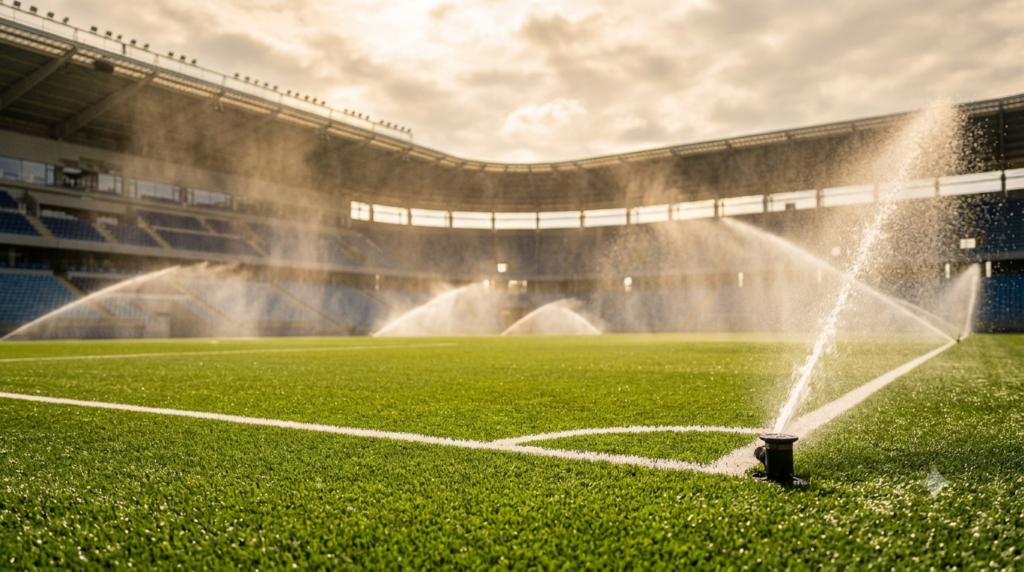
Figure 4. Pre-Game Irrigation Cooling an Artificial Soccer Field (AI Image).
Frequently Asked Questions
Why is synthetic turf irrigated?
Synthetic turf is irrigated to reduce dangerous surface temperatures before athletic activity. Unlike natural grass, it cannot cool itself through evapotranspiration.
How much can irrigation cool an artificial field?
A properly timed irrigation cycle typically lowers surface temperatures by 30°F to 50°F, although the effect usually lasts only 30 to 60 minutes depending on weather conditions.
Does air temperature indicate when irrigation is needed?
No. Surface temperatures on synthetic turf are often 50°F to 100°F higher than ambient air temperatures. Infrared thermometers provide much more reliable information.
Does infill type affect cooling?
Yes. Crumb rubber generally stores more heat than sand or organic infill, influencing both irrigation timing and cooling duration.
Is synthetic turf irrigation a waste of water?
Not when properly managed. Cooling irrigation uses relatively small amounts of water applied immediately before field use, helping reduce surface temperatures while improving athlete comfort and safety.
Looking for More Sports Turf Irrigation Insights?
Explore TurfWaterPro for practical, science-based guidance on irrigation scheduling, water management, irrigation audits, equipment selection, and best management practices for sports fields.
👉 Next Read: 10 Sports Turf Irrigation Mistakes That Waste Thousands of Gallons Every Year