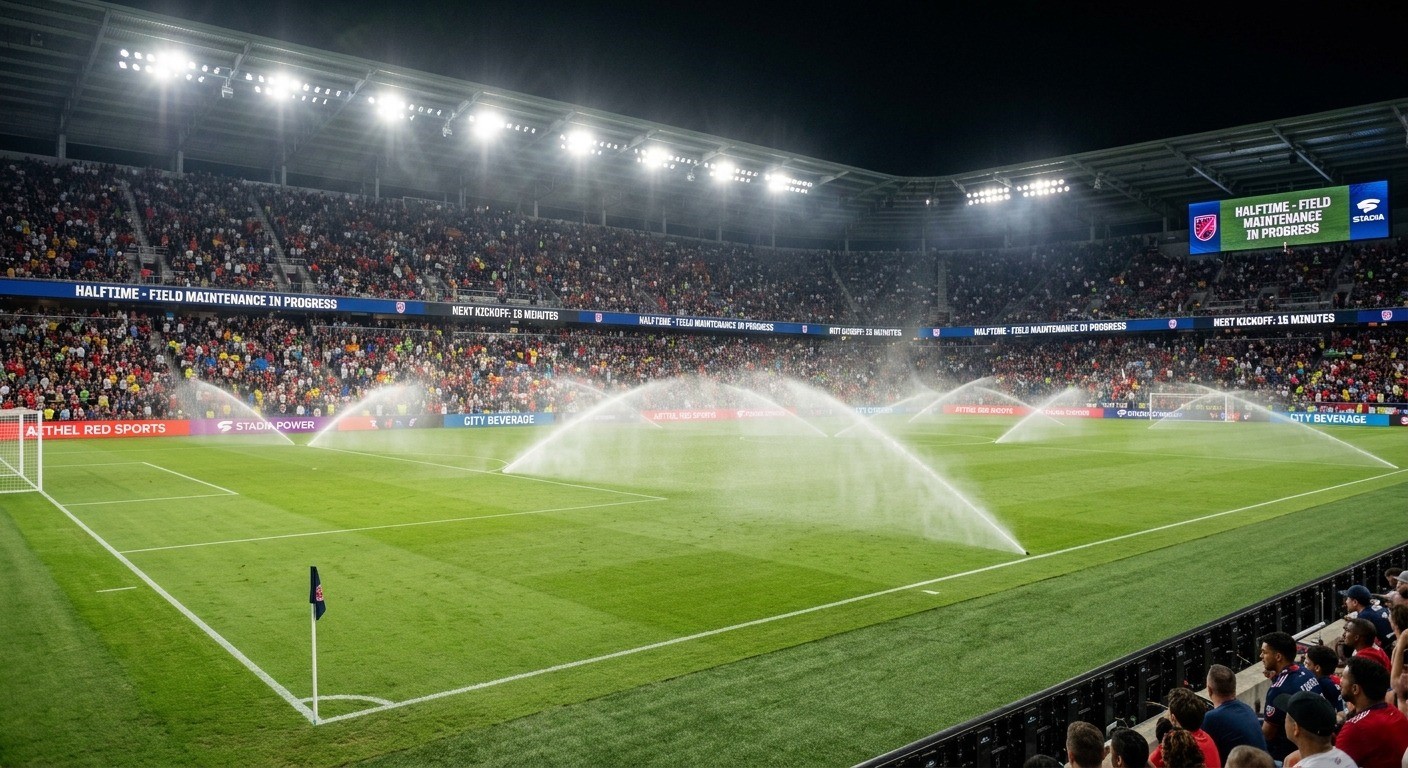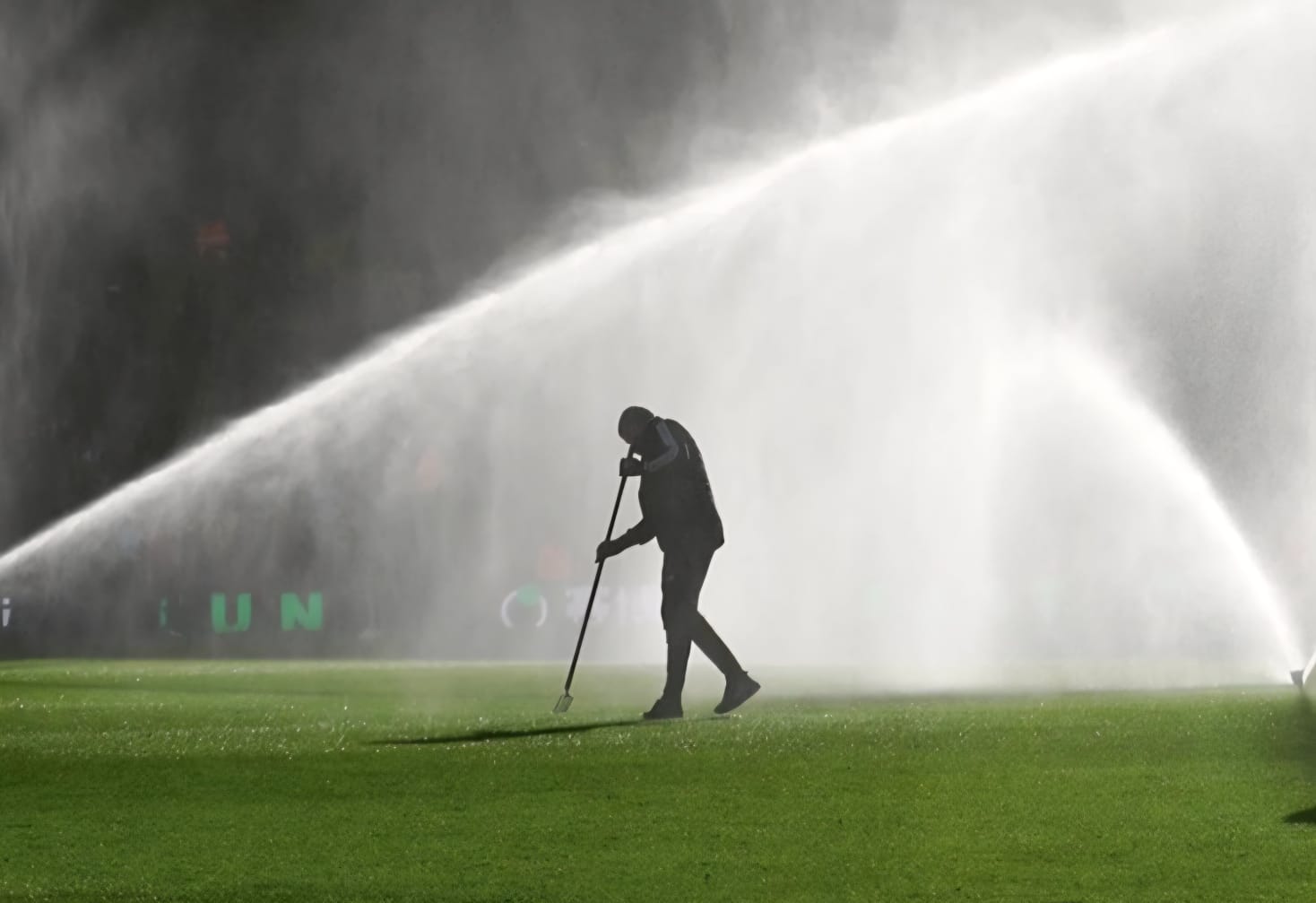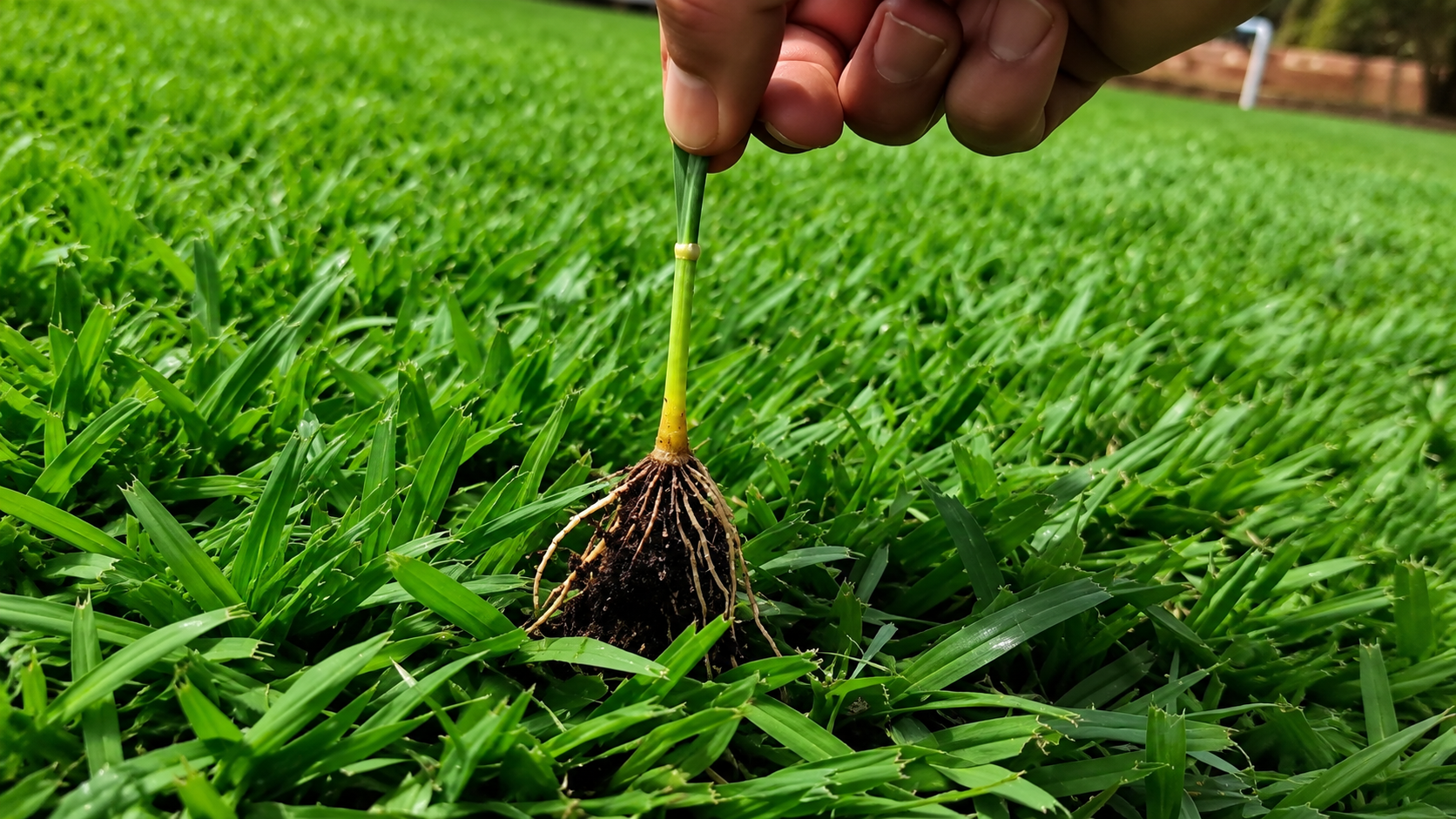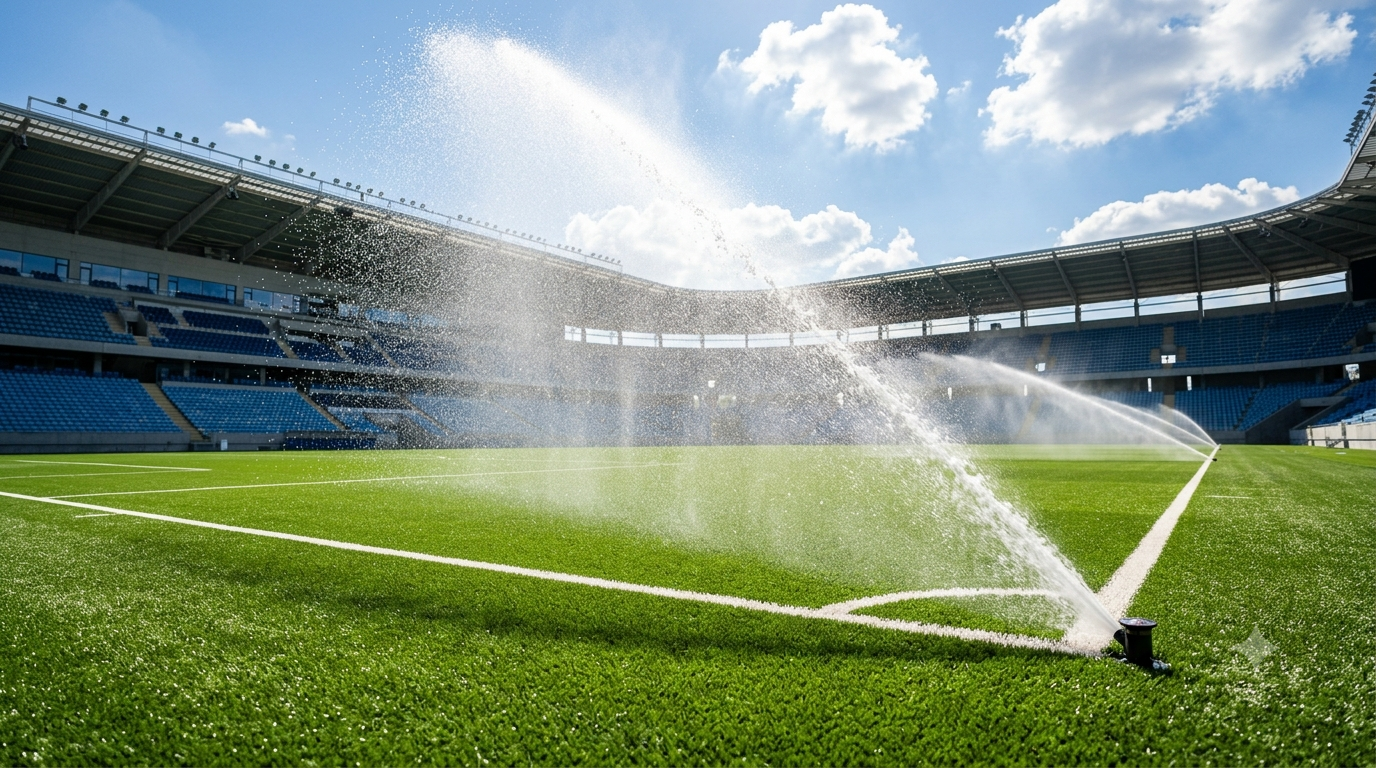


A reliable irrigation system is essential for maintaining a dense, healthy, and consistent soccer playing surface. This soccer field irrigation maintenance checklist helps sports turf managers inspect irrigation hardware, identify performance problems, and verify that water is being applied where and when the turf needs it. Regular inspections and irrigation audits can improve system performance, reduce water waste, and prevent dry spots, excessive wetness, and inconsistent turf growth.
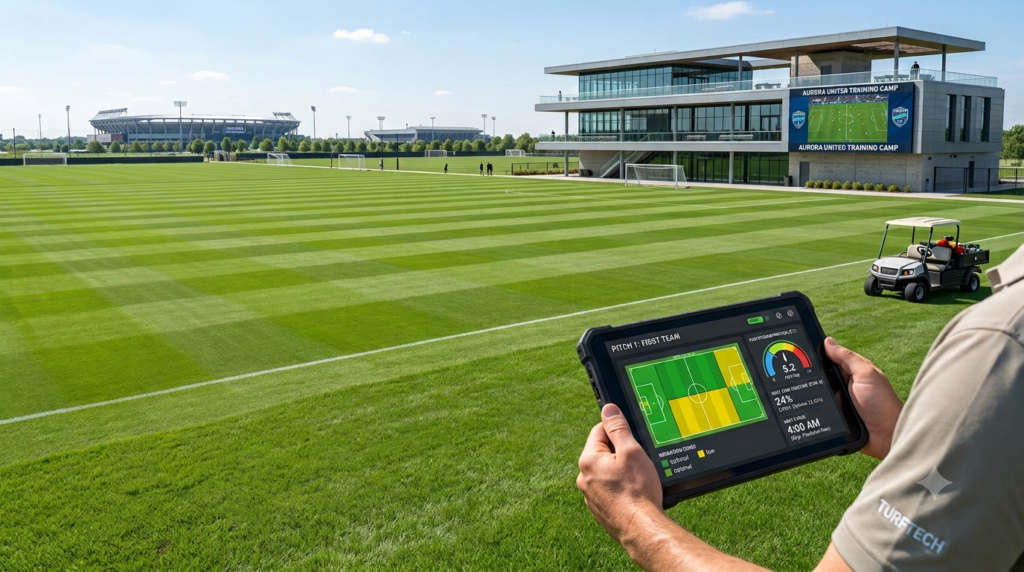
Figure: Inspection of soil moisture obtained by soil sensors installed below the surface of the turf in different zones of the field.
Soccer Field Irrigation Maintenance Checklist: 10 Checks
Use this checklist as part of routine field maintenance—not only when problems appear. A good inspection should move from the irrigation hardware to water distribution and finally to soil moisture and scheduling.
-
Inspect Every Sprinkler Head
Check for broken, clogged, tilted, buried, or sunken heads. Verify that each sprinkler is installed at the correct elevation, retracts properly, and operates according to the manufacturer’s specifications.
-
Check Nozzles for Damage or Blockage
Inspect nozzles for clogging, wear, or incorrect installation. Replacing a nozzle with the wrong type or flow rate can change the precipitation rate and create uneven coverage across a zone. See to best-sprinkler-for-soccer-field
-
Verify Rotation, Arc, and Coverage
A sprinkler that stops rotating or has an incorrect arc can create persistent dry areas. Check that each head reaches its intended coverage pattern and that head-to-head coverage has not been compromised.
-
Measure Operating Pressure
Pressure affects sprinkler radius, flow, and distribution. Measure pressure at representative sprinklers in each zone rather than relying only on the pump station or controller reading. Investigate zones with unusually low or high pressure.
-
Inspect Valves, Pipes, and Connections
Look for leaking valve boxes, damaged components, slow-closing valves, and unusual flow. If the system has flow monitoring, unexpected flow can help identify leaks or malfunctioning valves before they become visible in the field.
-
Test Precipitation Rate and Distribution Uniformity
A catch-can audit provides direct information about how much water is being applied and how evenly it is distributed. Measure precipitation rate and Low Quarter Distribution Uniformity (DUlq) to identify poorly performing zones.
SFMA irrigation-audit guidance notes that DU values above 70% are generally considered acceptable. However, values exceeding 80% are perfectly possible.
If uniformity is poor, correct the irrigation system before simply increasing runtime. Longer irrigation cycles may improve the driest areas while applying excessive water to areas that are already wet.
-
Review the Irrigation Controller
Check station assignments, run times, seasonal adjustments, rain shutoff devices, and zone sequencing. For advanced systems, review weather-based adjustments, ET inputs, flow monitoring, and remote alerts.
Most importantly, verify that programmed precipitation-rate information reflects actual field conditions. Nozzle changes, pressure variations, repairs, and sprinkler wear can make programmed values inaccurate.
-
Monitor Soil Moisture, Weather, and ET
Soil moisture, rainfall, weather data, and evapotranspiration (ET) provide different pieces of the irrigation-management puzzle.
ET helps estimate atmospheric water demand, while soil moisture indicates the current water status of the root zone at the measurement location. Use these measurements together with turf appearance, field use, and professional judgment rather than relying on a single data source.
For larger facilities, onsite weather stations and soil-moisture sensors can provide valuable decision-support data. They should complement—not replace—field scouting.
-
Recheck the System After Field Maintenance
Aeration, topdressing, renovation, construction work, and heavy equipment can damage, bury, or change the elevation of sprinkler heads. Always inspect sprinkler position and operation after major field work.
-
Document Repairs and Performance
Record inspection dates, pressure readings, nozzle changes, repairs, audit results, soil-moisture observations, and controller adjustments. A maintenance history makes recurring problems easier to identify and troubleshoot.
How Often Should You Inspect a Soccer Field Irrigation System?
There is no single schedule that fits every facility, but a practical maintenance program can include:
| Task | Suggested Frequency |
| Visual sprinkler inspection | Weekly during the active season |
| Controller/program review | Weekly and after seasonal changes during the year |
| Soil moisture monitoring | 2 to 3 times a week or depending on site conditions |
| Pressure verification | Periodically and after system changes |
| Catch-can irrigation audit | At least annually and after major modifications to the field |
| Complete system inspection | Before the main playing season |
Increase inspection frequency when the field develops recurring dry spots, excessive wetness or inconsistent turf growth.
A Simple Diagnostic Sequence for Dry Spots
When a dry area appears, do not immediately increase irrigation runtime.
Use this sequence:
Sprinkler → nozzle → pressure → rotation → coverage → soil moisture → irrigation schedule
This approach helps determine whether the problem is caused by the irrigation system, the root zone, or irrigation scheduling.
For example, a dry spot beneath an otherwise healthy turf canopy may result from a clogged nozzle or inadequate coverage rather than insufficient irrigation time.
Common Irrigation Maintenance Mistakes to Avoid
One of the most common mistakes is treating every dry spot as a scheduling problem. Increasing runtime can mask poor distribution while overwatering areas that are already receiving adequate water.
Another mistake is relying entirely on historical controller schedules. Weather, ET, rainfall, shade, traffic, and turf conditions change throughout the season.
Finally, do not assume that a green field is receiving water uniformly. Catch-can testing can reveal substantial differences in water application that are not obvious from visual inspection.
Conclusion
A professional soccer field irrigation maintenance checklist should go beyond checking whether sprinklers turn on. Inspect the hardware, verify pressure and coverage, measure precipitation rate and distribution uniformity, monitor soil moisture and ET, and document repairs and adjustments. When maintenance, irrigation auditing, and scheduling are treated as one management process, sports turf managers can improve field consistency while using water more efficiently.
For a deeper look at irrigation performance, read How Distribution Uniformity Affects Turfgrass Quality and Water Use to learn how catch-can testing can help diagnose uneven irrigation.
Looking for more practical irrigation and sports turf management insights?
Explore our complete resource library at TurfWaterPro, where we cover irrigation scheduling, water management, system maintenance, sports field performance, and best management practices for athletic turf.