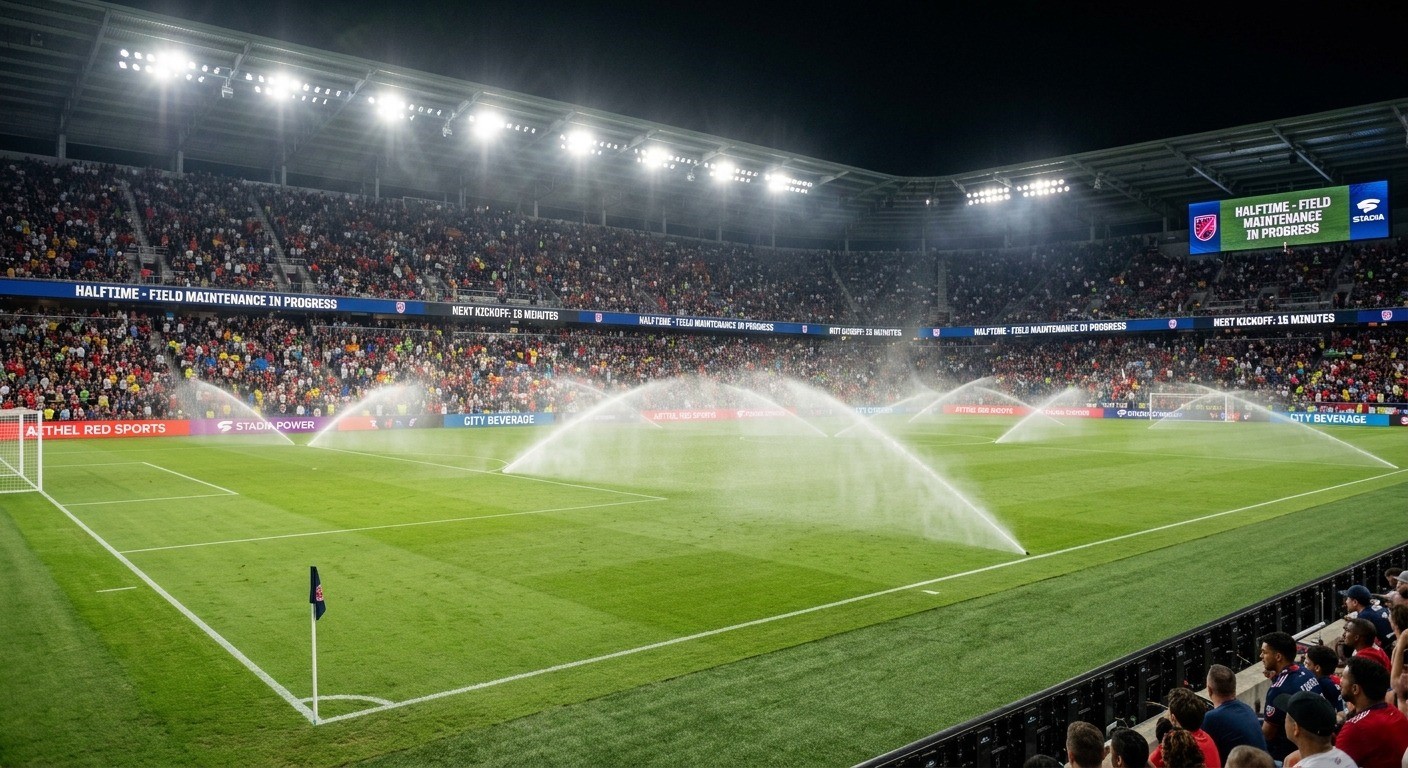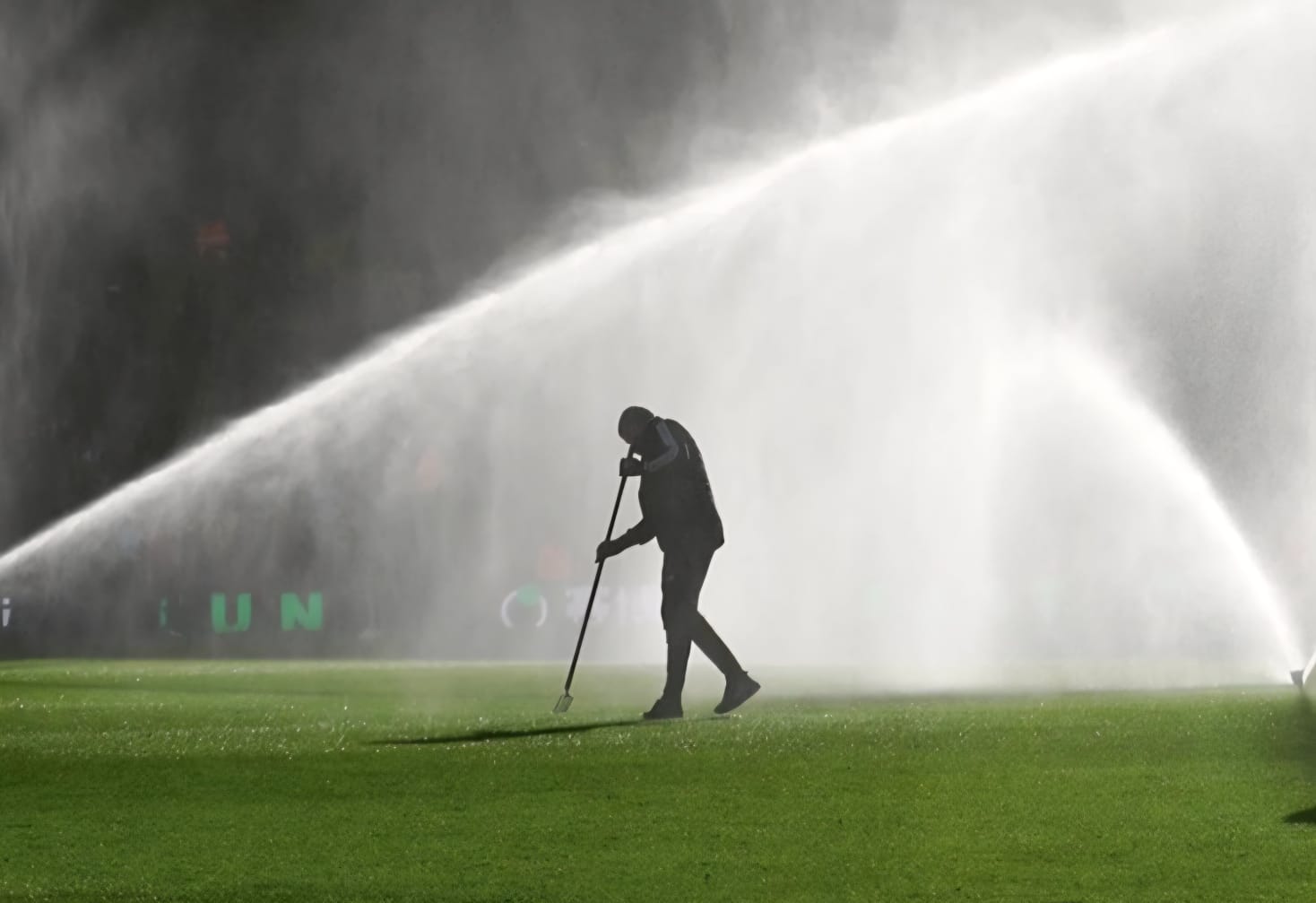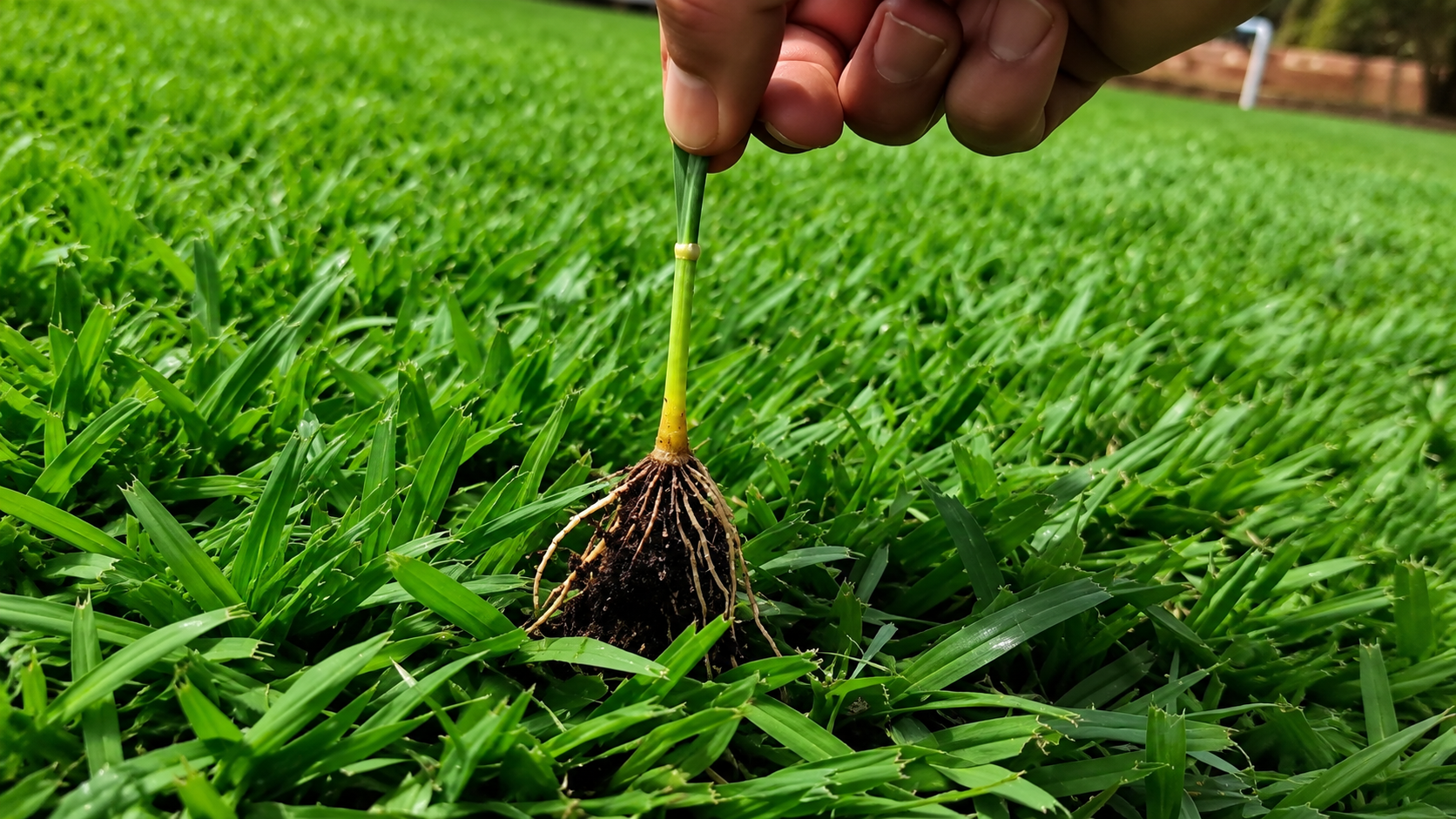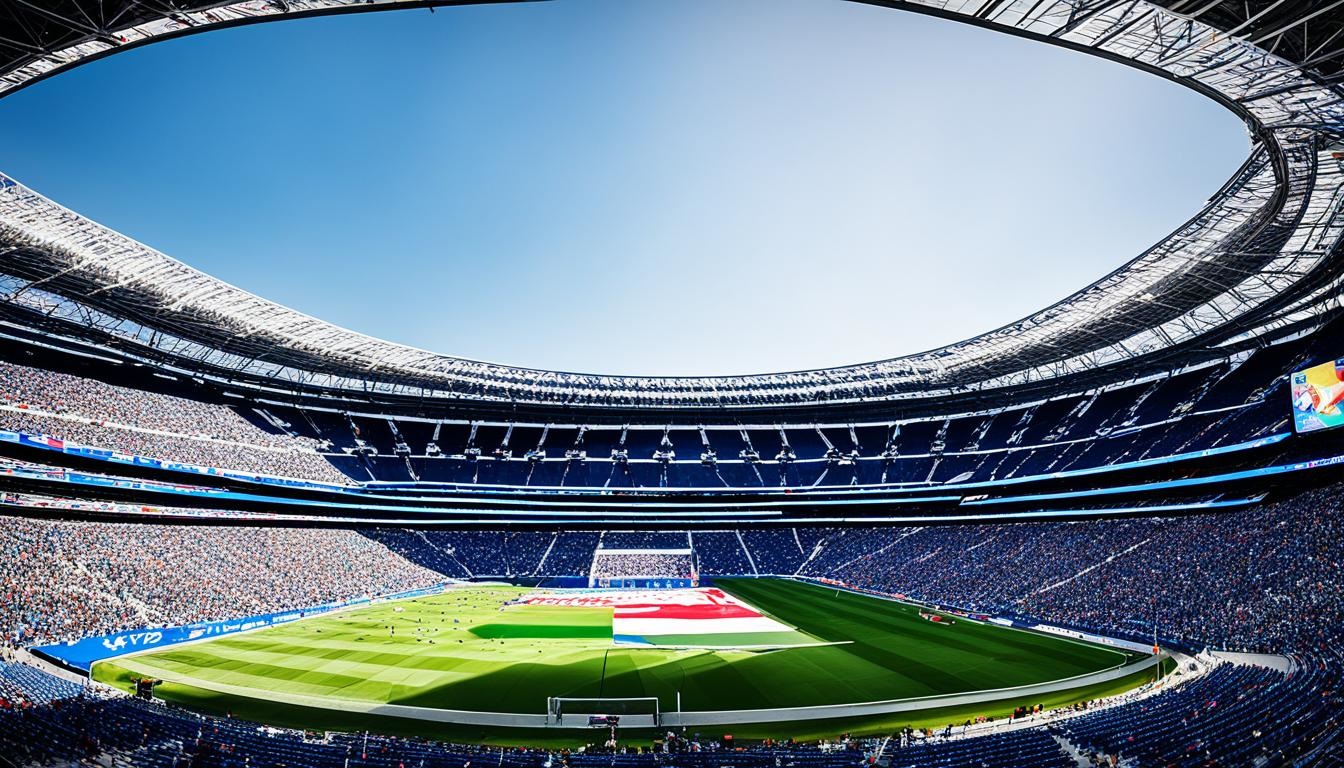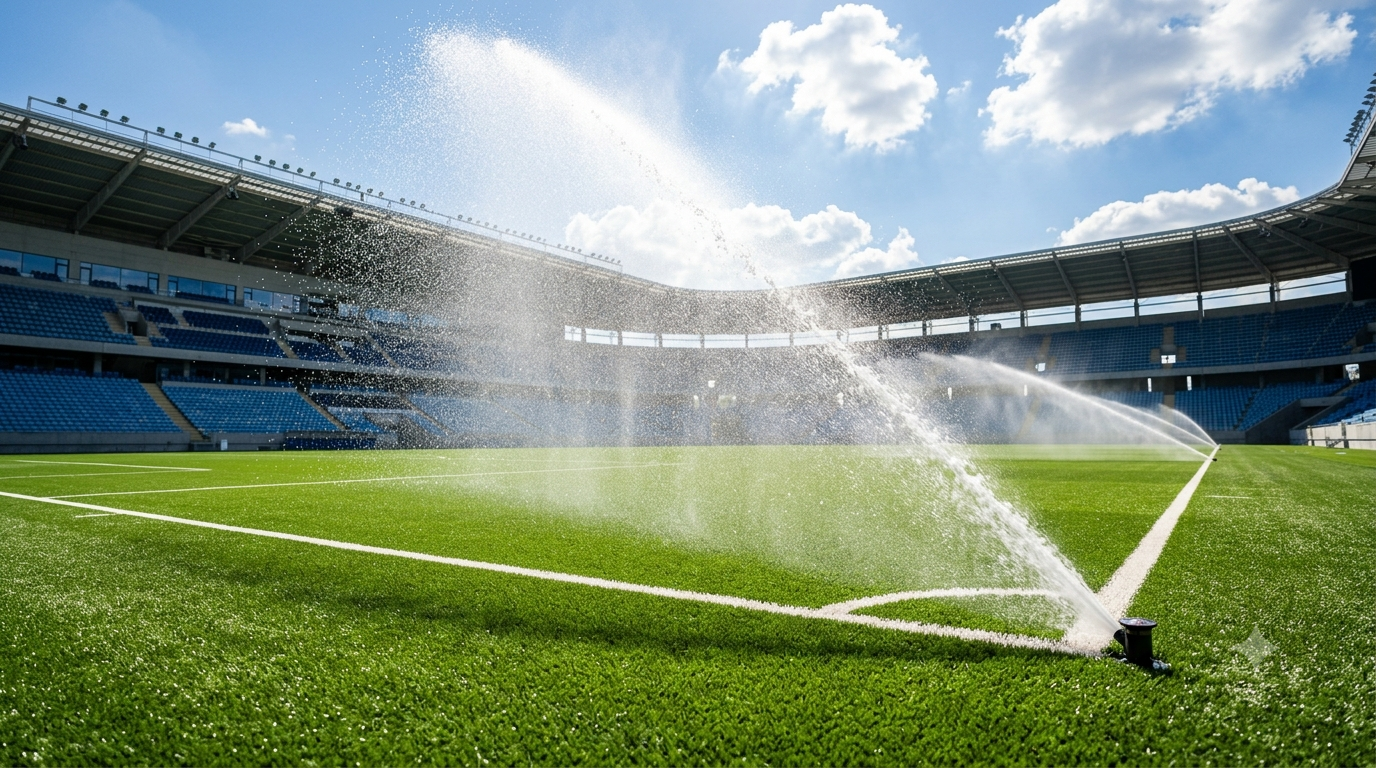


A single dry patch on a soccer field can affect ball roll, reduce traction, stress turfgrass, and create inconsistent playing conditions. On professional and high-use athletic fields, irrigation is far more than a maintenance task—it’s a critical component of field performance, player safety, and water management.
As sports turf facilities become larger and more complex, irrigation managers need control systems that provide reliable scheduling, efficient troubleshooting, and flexibility for future expansion. This is where the Rain Bird ESP-2WIRE controller stands out.
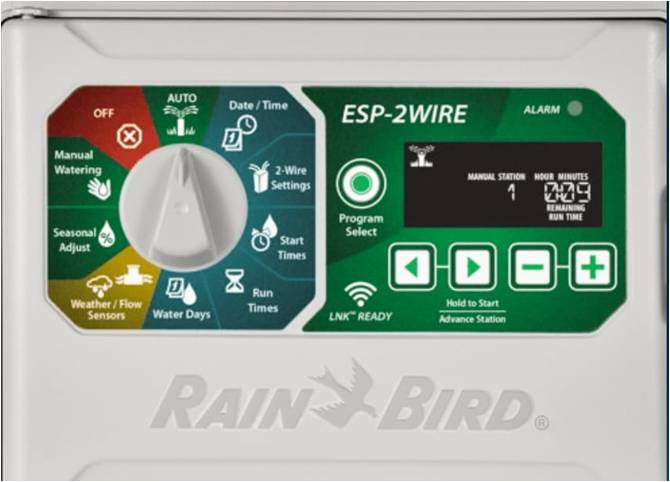
Figure 1. Rain Bird ESP-2WIRE Controller.
Using two-wire decoder technology, the ESP-2WIRE simplifies wiring, supports large numbers of irrigation stations, and provides the automation capabilities needed to manage modern sports turf irrigation systems efficiently.
This guide explains how the controller works, where it fits into soccer field irrigation programs, and whether it is the right solution for your facility.
ESP-2WIRE Quick Specifications
| Feature | Specification |
|---|---|
| Controller Type | Two-Wire Decoder Controller |
| Maximum Stations | 50 |
| Programs | 4 |
| Start Times | 6 per program |
| Decoder Auto-Address | Yes |
| Rain Delay | Yes |
| Remote Access | With LNK2 Wi-Fi Module |
| Suitable For | Sports Fields, Parks, Commercial Sites |
Quick Answer: What Is the Rain Bird ESP-2WIRE Controller?
The Rain Bird ESP-2WIRE is a decoder-based irrigation controller designed for commercial landscapes, sports fields, parks, and institutional properties. Unlike conventional multi-wire controllers, it uses a two-wire communication path to operate up to 50 irrigation stations while reducing wiring complexity, simplifying expansion, and improving system diagnostics.
For soccer field managers, it offers a scalable way to automate irrigation scheduling while maintaining flexibility for future field upgrades.
Why Soccer Fields Require Precision Irrigation Control
A regulation soccer field can cover more than 80,000 square feet of managed turfgrass. Maintaining consistent playing conditions across that entire surface requires precise irrigation management.
Even small differences in soil moisture can create:
- Variable turf density
- Inconsistent footing
- Uneven ball response
- Increased turf wear
- Greater disease pressure
- Reduced recovery after play
This is why irrigation professionals closely monitor distribution uniformity (DU).
Distribution uniformity measures how evenly water is applied across an irrigated area. While DU is primarily influenced by sprinkler spacing, pressure regulation, nozzle selection, wind conditions, and system maintenance, irrigation control plays an important supporting role.
Accurate scheduling and reliable zone operation help maintain more consistent soil moisture levels, allowing a properly designed irrigation system to perform as intended.
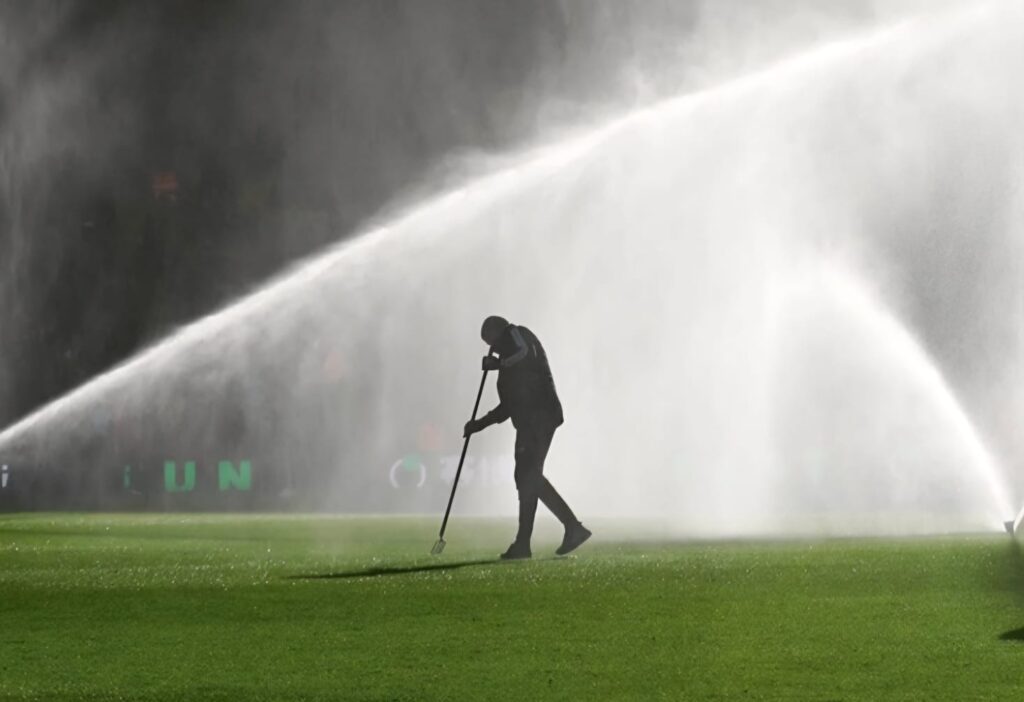
Figure 2. Precision Irrigation Control Supports Uniform Soccer Field Performance.
How the ESP-2WIRE Simplifies Soccer Field Irrigation
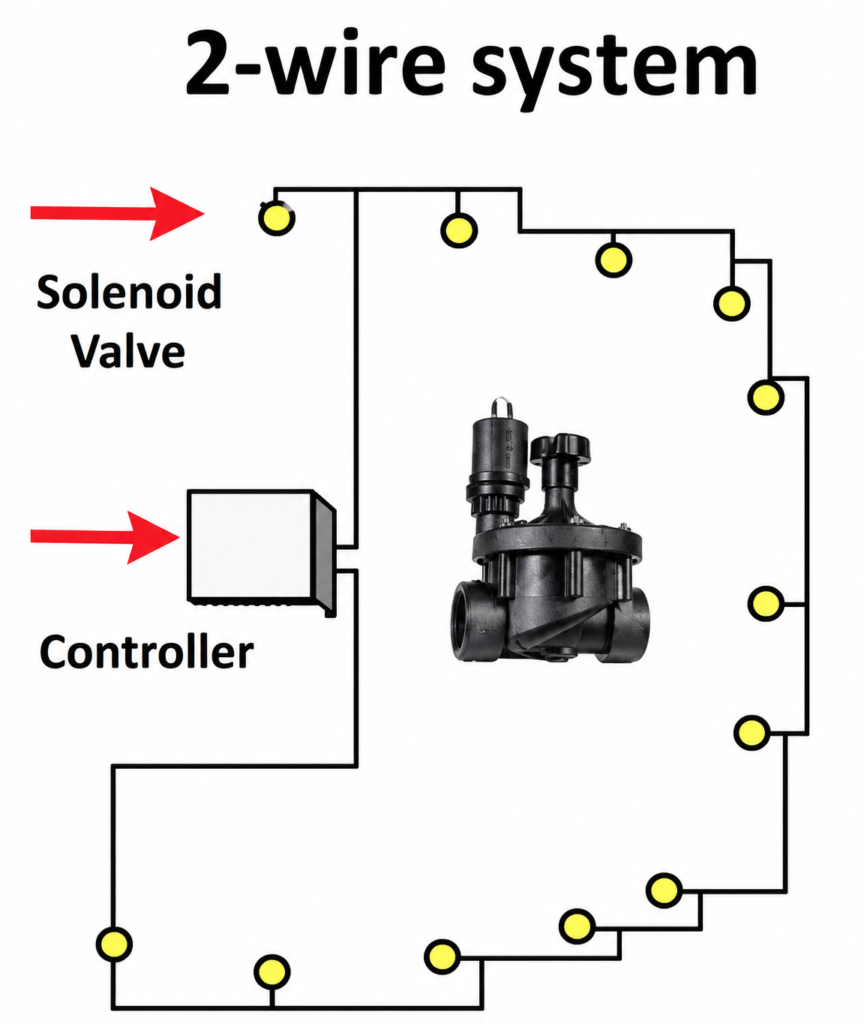
Traditional irrigation systems require individual control wires running from the controller to each valve.
As facilities expand, wiring complexity increases significantly.
The ESP-2WIRE takes a different approach.
Using decoder technology, multiple stations operate through a single two-wire communication path, reducing trenching, wiring, and installation complexity.
For soccer facilities managing numerous irrigation zones, this architecture offers several practical advantages.
Reduced Wiring Complexity
Conventional multi-wire systems become increasingly difficult to manage as valve counts increase.
A sports complex with:
- Multiple soccer fields
- Perimeter irrigation zones
- Training areas
- Landscape irrigation
may require dozens of valves.
With the ESP-2WIRE, these stations communicate through a single two-wire path rather than requiring dedicated field wires for every station.
Benefits include:
- Less wire in the ground
- Lower installation costs
- Simplified future expansion
- Easier troubleshooting
This can be especially valuable for municipal sports complexes and multi-field facilities.
Decoder Auto-Address Technology
One of the controller’s most useful features is Decoder Auto-Address.
Instead of manually assigning and matching station addresses, the controller automatically identifies connected decoders and assigns them to stations.
For a small soccer field, this may save only modest installation time.
However, on a facility with:
- 30 stations
- 40 stations
- 50 stations
the time savings become significant.
More importantly, it reduces human error during commissioning and future system modifications.
Flexible Scheduling for Sports Turf Management
Soccer field irrigation requirements change throughout the season.
Managers often need to balance:
- Deep root-zone irrigation
- ET replacement watering
- Tournament preparation
- Pre-game syringing
- Recovery after intense use
The ESP-2WIRE provides:
- Four independent programs
- Up to six start times per program
- Seasonal adjustment capabilities
- Rain delay functionality
This flexibility allows turf managers to develop irrigation schedules that align with agronomic goals rather than relying on fixed watering routines.
For example, deep irrigation events can be scheduled separately from light syringing cycles used to reduce canopy temperatures before matches.
Advanced Diagnostics and Troubleshooting
One of the most common frustrations in sports turf irrigation is locating electrical faults.
Over time, facilities often experience:
- Wire damage
- Construction-related cuts
- Decoder failures
- Short circuits
- Open circuits
- Valve malfunctions
Finding these issues across a large soccer complex can be time-consuming.
The ESP-2WIRE includes diagnostic LEDs at both the controller and decoder level, helping technicians quickly isolate problems.
For facilities with limited maintenance staff, faster troubleshooting can significantly reduce downtime and labor costs.
Integrating Soil Moisture Sensors and Weather Data
Modern irrigation management is increasingly driven by data rather than fixed schedules.
Many sports turf managers now rely on:
- Soil moisture sensors
- ET-based scheduling
- Weather station data
- Smart irrigation software
to optimize water applications.
Although the ESP-2WIRE itself does not directly improve distribution uniformity, it supports irrigation programs that use these technologies to make more informed decisions.
For example, soil moisture sensors can help determine:
- When irrigation is truly needed
- Whether root-zone moisture is adequate
- How quickly fields are drying between events
When combined with weather-based scheduling, these tools can reduce unnecessary irrigation while helping maintain consistent playing conditions.
This approach often improves water-use efficiency and reduces the risk of both overwatering and drought stress.
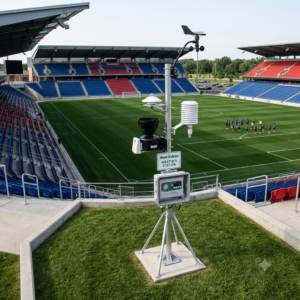
Figure 4. Weather Station Supporting Real-Time Irrigation Management on a Professional Soccer Field.
Remote Monitoring and Smart Irrigation Capabilities
When paired with the Rain Bird LNK2 Wi-Fi Module, the ESP-2WIRE gains remote access capabilities.
Managers can:
- Adjust schedules remotely
- Monitor system status
- Respond to weather conditions
- Implement seasonal adjustments
- Reduce unnecessary site visits
For facilities managing multiple fields, remote access can improve operational efficiency and allow quicker responses to changing conditions.
The controller also supports WaterSense-certified smart irrigation functionality when configured with compatible weather-based scheduling tools.
ESP-2WIRE vs Conventional Multi-Wire Controllers
Many irrigation professionals evaluating the ESP-2WIRE ask the same question:
Why choose a two-wire system instead of a traditional controller?
The answer depends on facility size, expansion plans, and system complexity.
| Feature | Conventional Multi-Wire | ESP-2WIRE |
|---|---|---|
| Wiring Complexity | High | Low |
| Expansion Flexibility | Moderate | Excellent |
| Installation Labor | Higher | Lower |
| Troubleshooting | Moderate | Easier |
| Trenching Requirements | Greater | Reduced |
| Future Scalability | Limited | Strong |
| Best for Large Sports Facilities | Good | Excellent |
For smaller facilities with only a few irrigation zones, a conventional controller may be sufficient.
For larger sports turf systems, two-wire technology often provides greater long-term flexibility.
Is the ESP-2WIRE Right for Your Facility?
The ESP-2WIRE is particularly well suited for:
Excellent Fit
- Professional soccer fields
- Municipal sports complexes
- University athletic facilities
- Multi-field training centers
- Facilities planning future expansion
Potentially More Than Needed
- Small practice fields
- Single-field recreational sites
- Properties with fewer than 10–12 stations
In these situations, a conventional controller may provide similar functionality at a lower initial investment.
Controller selection should always be evaluated alongside:
- Hydraulic capacity
- Sprinkler performance
- Pressure regulation
- Irrigation scheduling practices
- Long-term facility goals
Real-World Example: Where ESP-2WIRE Makes Sense
Consider a municipal sports complex managing:
- Three soccer fields
- Thirty-six irrigation stations
- Shared maintenance staff
- Plans for future expansion
A conventional multi-wire system may require extensive trenching and additional wiring whenever new zones are added.
With a two-wire architecture, expansion can often be completed with less disruption and lower labor costs.
Over the lifespan of the irrigation system, this flexibility can significantly reduce maintenance complexity while supporting future growth.
Best Facility Applications
| Facility Type | Recommended? |
|---|---|
| Professional Soccer Stadium | Yes |
| University Athletic Complex | Yes |
| Municipal Sports Complex | Yes |
| Multi-Field Training Center | Yes |
| High School Soccer Field | Yes |
| Small Practice Field | Maybe |
| Residential Turf | No |
Long-Term Benefits of Two-Wire Irrigation Systems
While two-wire systems often require a higher initial investment than conventional controllers, they can reduce installation labor, trenching requirements, wire usage, and future expansion costs. For sports complexes expecting additional fields or irrigation zones in the future, the long-term savings frequently outweigh the higher upfront equipment cost
Frequently Asked Questions
What is the Rain Bird ESP-2WIRE controller used for?
The ESP-2WIRE is a decoder-based irrigation controller designed for commercial landscapes, parks, sports fields, and institutional properties. It controls up to 50 stations through a two-wire communication path while simplifying installation and expansion.
How many stations can the ESP-2WIRE control?
The controller supports up to 50 irrigation stations plus a master valve or pump-start relay, making it suitable for many sports field applications.
How does Decoder Auto-Address help with soccer field installations?
Decoder Auto-Address automatically identifies connected decoders and assigns station numbers, reducing commissioning time and minimizing wiring-related errors.
Can the ESP-2WIRE improve distribution uniformity?
Not directly. Distribution uniformity is primarily determined by irrigation system design, sprinkler spacing, pressure regulation, and maintenance. However, the controller helps maintain consistent scheduling and reliable zone operation, which support uniform soil moisture management.
Can the ESP-2WIRE work with soil moisture sensors?
Yes. The controller can be incorporated into irrigation management programs that use soil moisture monitoring and weather-based scheduling tools to improve irrigation decision-making.
Does the ESP-2WIRE require proprietary wiring?
No. It works with standard direct-burial irrigation wire and conventional waterproof connectors, simplifying installation and reducing material costs.
Is remote monitoring available?
Yes. When paired with the Rain Bird LNK2 Wi-Fi Module, users can access remote monitoring and scheduling functionality.
Is a two-wire system better than a conventional controller?
Not always. For smaller systems, conventional controllers may be adequate. For larger sports facilities with many stations and future expansion plans, two-wire systems often provide greater flexibility and lower long-term maintenance complexity.
Final Thoughts
The Rain Bird ESP-2WIRE controller offers a practical and scalable irrigation automation solution for soccer fields and sports turf facilities.
Its combination of:
- Two-wire decoder technology
- Flexible scheduling
- Simplified expansion
- Advanced diagnostics
- Remote monitoring capabilities
makes it particularly attractive for facilities managing multiple irrigation zones and planning for future growth.
While controller selection alone cannot solve irrigation performance problems, pairing a reliable control platform with sound hydraulic design, proper sprinkler selection, pressure regulation, soil moisture monitoring, and effective scheduling practices creates the foundation for consistent, high-quality playing surfaces.
For sports turf managers seeking a balance between professional-grade functionality and manageable complexity, the ESP-2WIRE is one of the strongest decoder-based irrigation controllers currently available.
Ready to Upgrade Your Soccer Field Irrigation System?
Before selecting any controller, evaluate:
✅ Available flow (GPM)
✅ Static and dynamic pressure
✅ Number of irrigation zones
✅ Future expansion plans
✅ Soil moisture monitoring goals
✅ Smart irrigation requirements
Using two-wire decoder technology, the ESP-2WIRE simplifies wiring, supports large numbers of irrigation stations, and provides the automation capabilities needed to manage modern sports turf irrigation systems efficiently.
This guide explains how the controller works, where it fits into soccer field irrigation programs, and whether it is the right solution for your facility.
Related Reading
If you found this article useful, you may also enjoy:
- How Much Water Does a Soccer Field Need Per Week?https://www.turfwaterpro.com/soccer-field-water-needs-weekly/