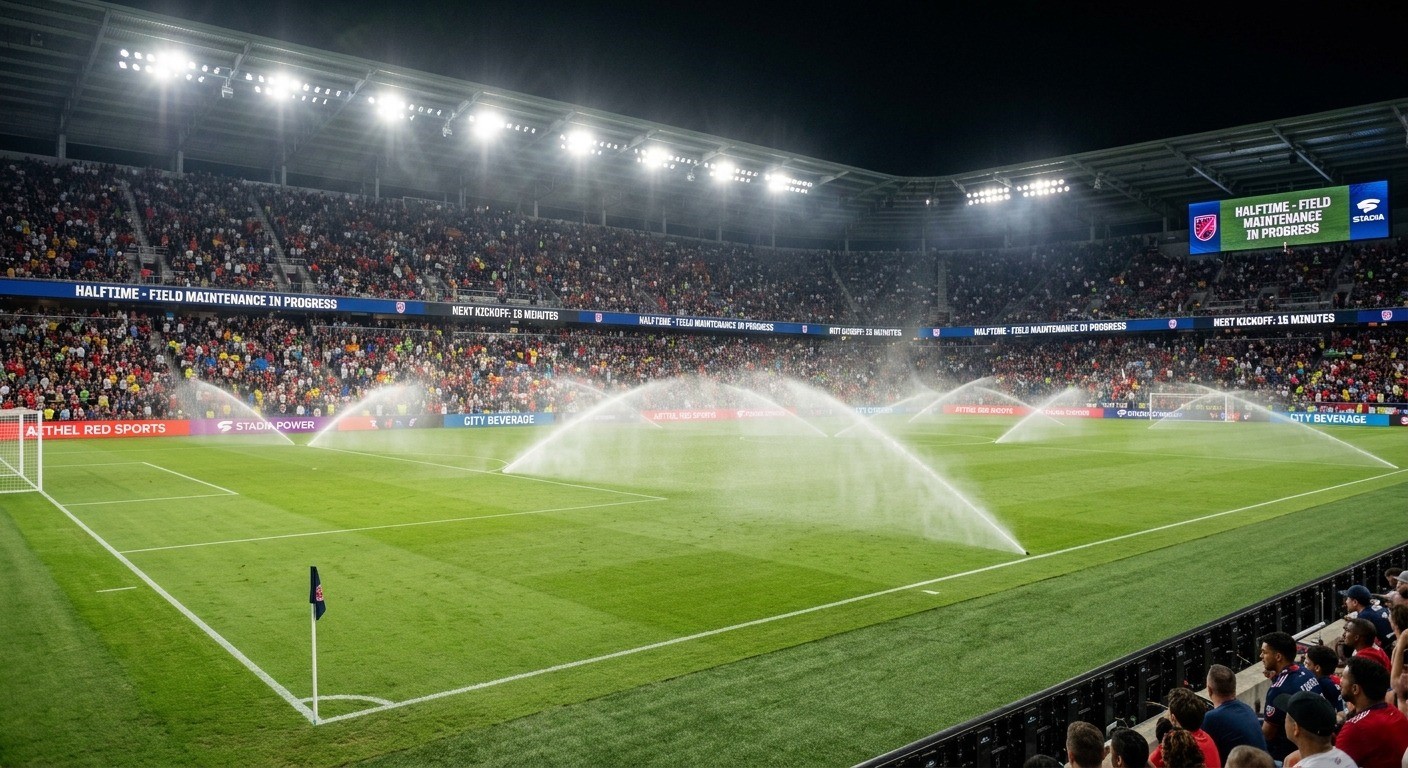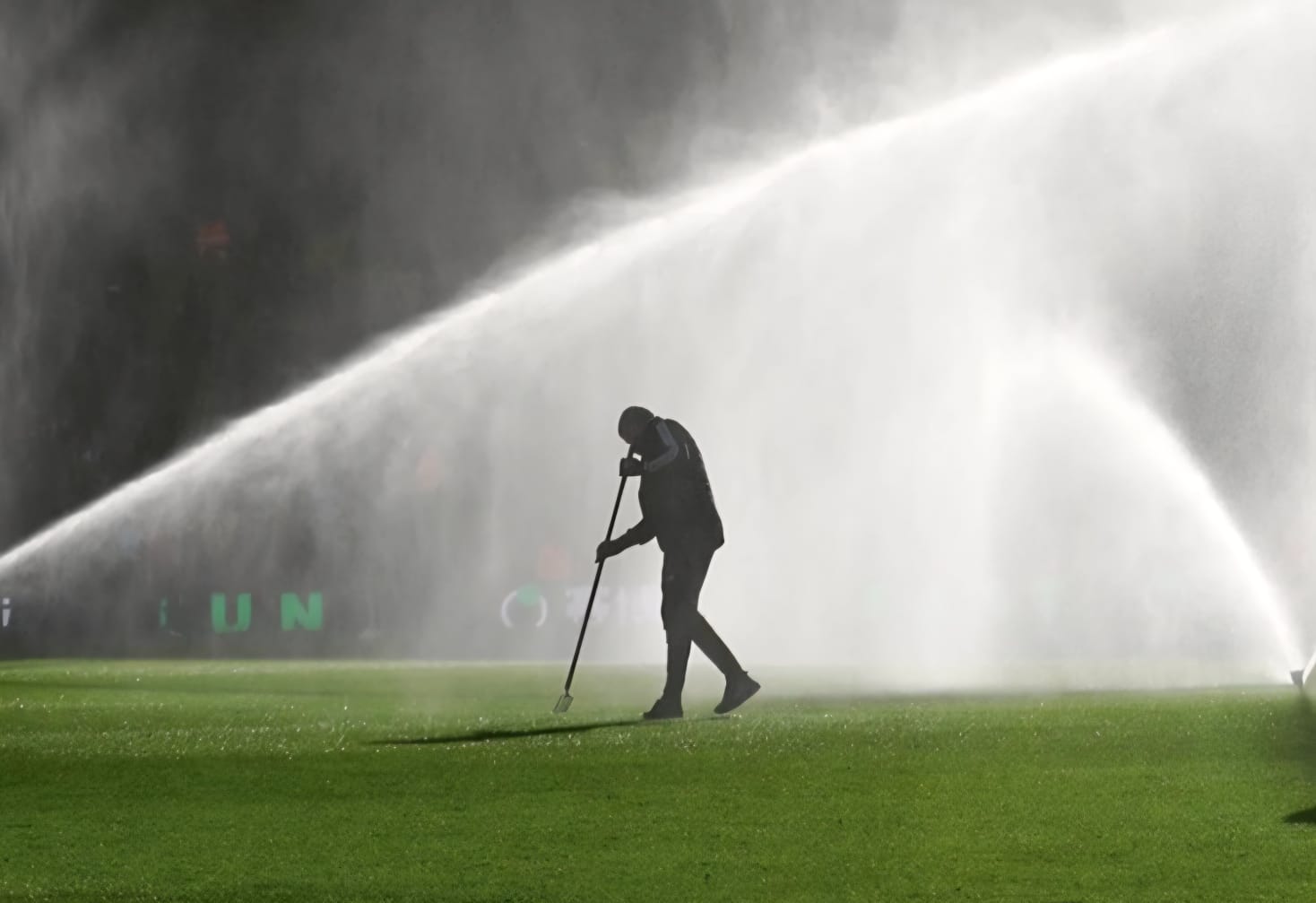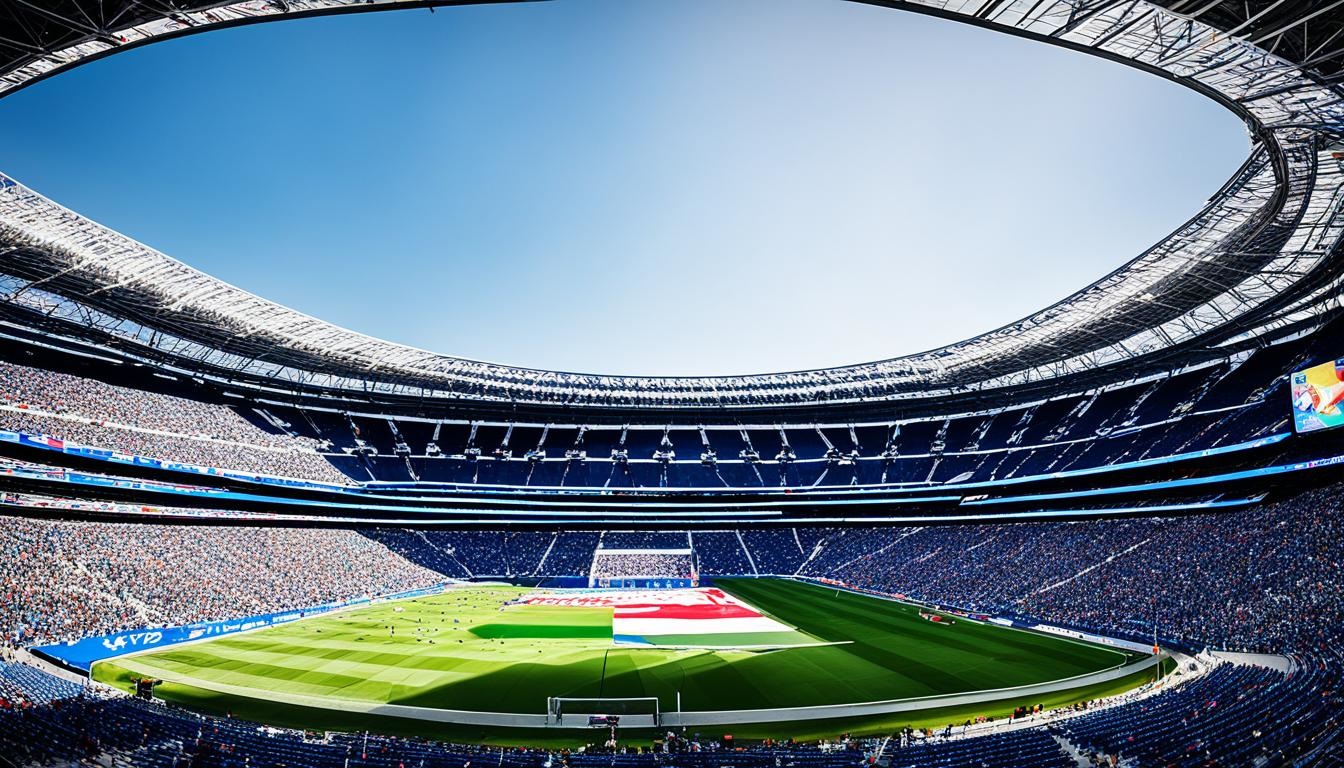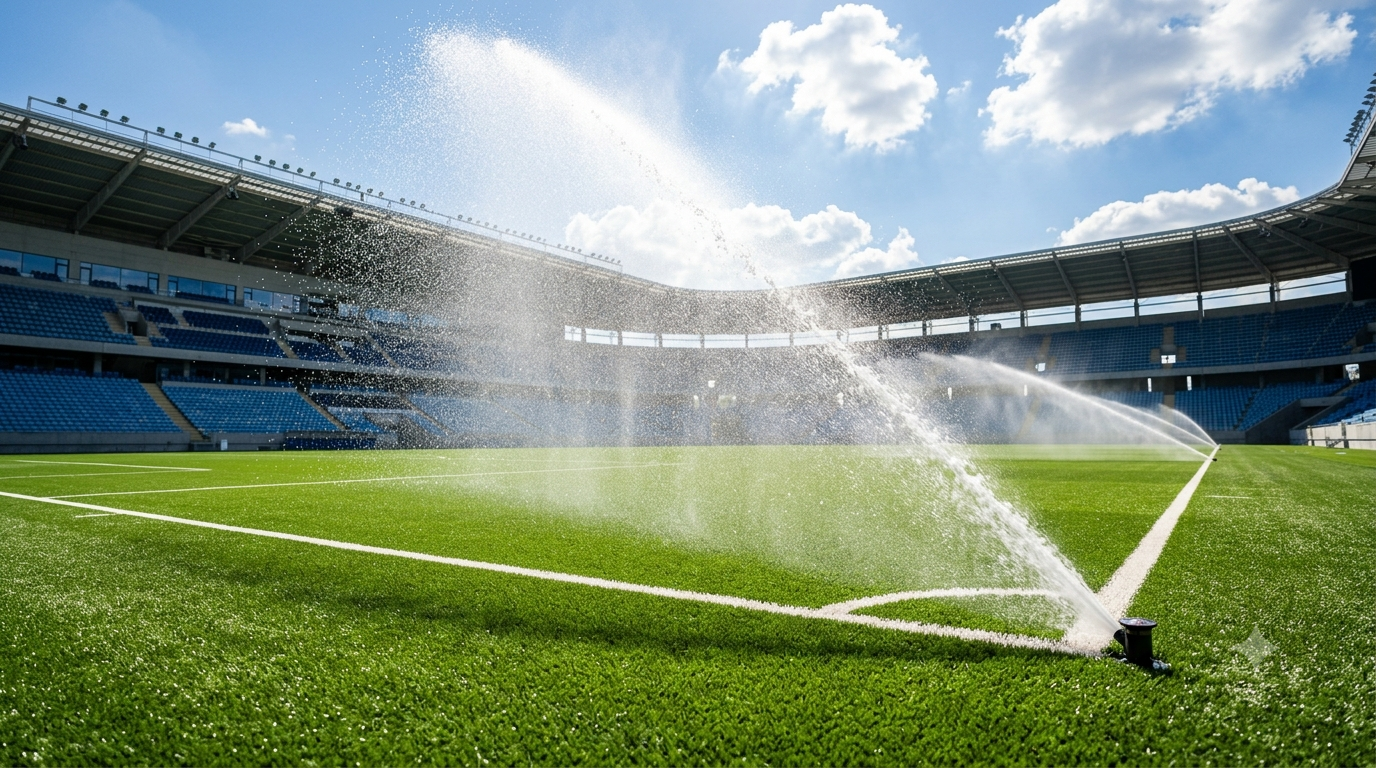


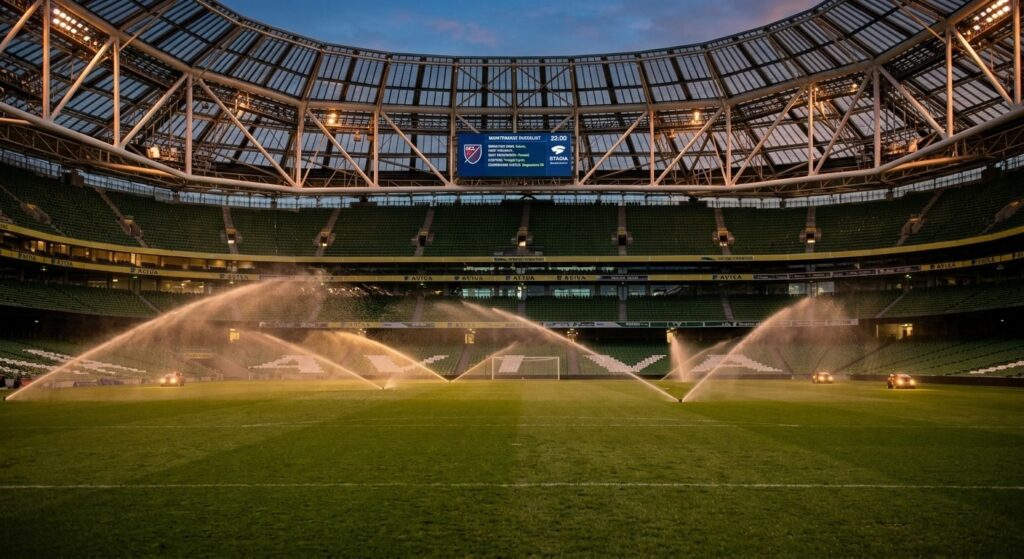
Watch any professional match closely and you’ll see it: sprinklers running across the pitch just before kickoff, and again when players head to the locker room at halftime. This isn’t a maintenance habit or a display for the cameras. Pre-match and halftime irrigation is a deliberate performance decision, and understanding why it matters gives sports turf managers a practical framework for their own matchday prep.
This article breaks down the science behind pre-game and halftime watering, what it actually changes about how the ball and players move, and how to apply the same logic on your own field.
Why Groundskeepers Water the Pitch Before Kickoff
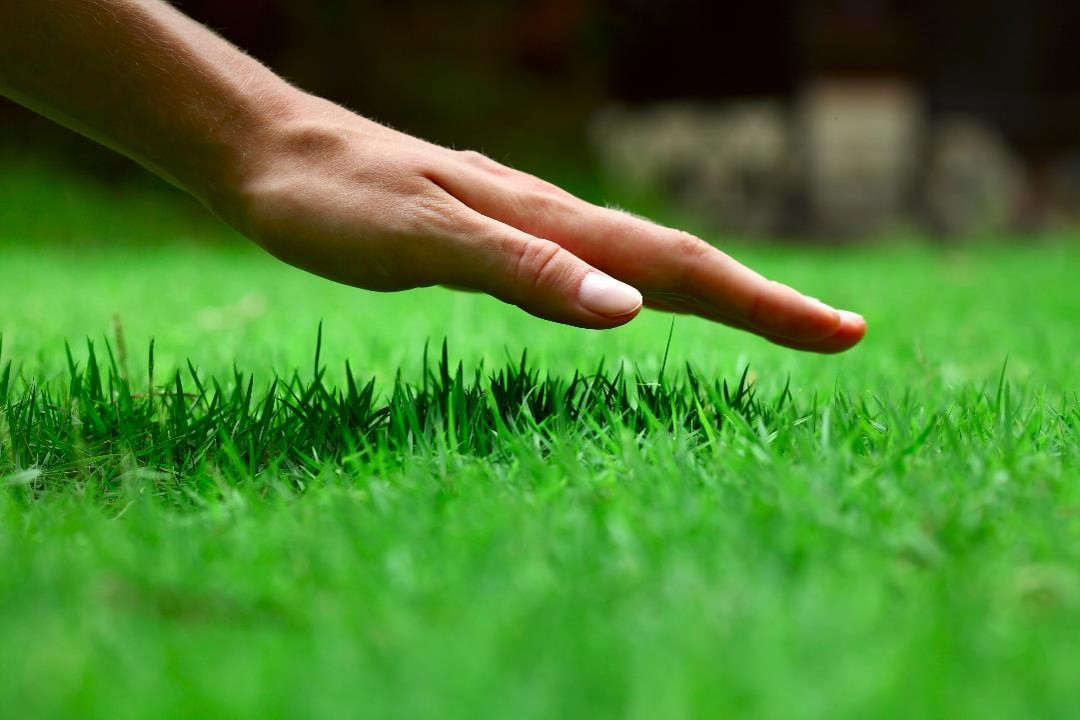
The primary reason is friction. Dry grass blades grip the ball as it rolls, slowing it down and making its path less predictable. A thin, even layer of surface moisture reduces that friction significantly, letting the ball skim across the turf instead of catching on it. That translates directly into faster passing, quicker ball circulation, and more consistent conditions across the entire surface — exactly what elite competition demands.
Moisture also softens the top layer of the rootzone just enough to reduce injury risk. A slightly cushioned surface gives players more forgiving footing during cuts, slides, and sudden stops compared to a hard, dry pitch.
At professional venues, this watering typically finishes well before warmups begin, so the surface is evenly moist — not saturated. The target is a light, consistent coating, not standing water. Overwatering creates the opposite problem: an unpredictable, hydroplaning ball and a surface that becomes a slip hazard rather than a performance asset.
Why the Field Gets Watered Again at Halftime
Over 45 minutes of play, sun exposure, wind, player movement, and ambient temperature all pull moisture out of the surface. By halftime, the pitch is drier and more worn than it was at kickoff — particularly in high-traffic zones like the center circle and penalty areas.
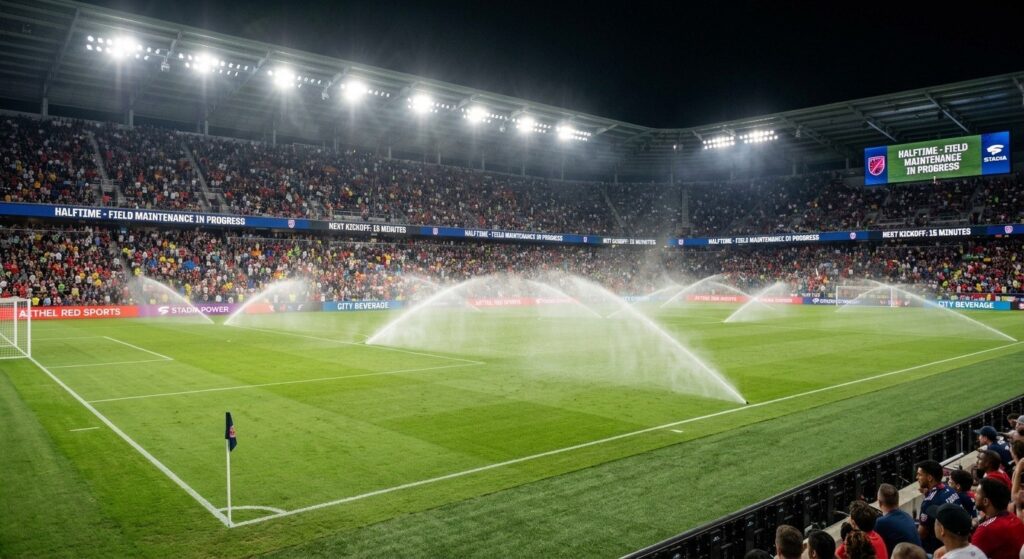
A quick halftime irrigation cycle — typically just a few minutes, since teams only get about 15 minutes in the locker room — restores surface conditions close to their pre-match state. This keeps ball speed and surface behavior consistent through the second half instead of letting the pitch gradually slow down and harden as the match progresses.
Key Recommendations for Matchday Irrigation
1. Time pre-match irrigation to finish before warmups, not during them. Water needs a few minutes to settle evenly into the canopy. Running sprinklers too close to kickoff leaves puddles instead of a uniform moisture layer.
2. Calibrate volume to weather and soil conditions, not a fixed routine. A hot, dry, windy day needs more pre-match water than a cool, humid one. Check recent rainfall and current soil moisture before setting run times — a fixed schedule ignores conditions that change every matchday.
3. Keep halftime cycles short and targeted. With only about 15 minutes between halves, halftime irrigation has to be fast and efficient. Use zones and run times calibrated in advance so the system can complete its cycle well within the break.
4. Coordinate watering decisions with coaching staff when possible. At the professional level, pitch moisture is sometimes treated as a tactical variable — a wetter, faster surface favors quick passing teams, while a drier pitch slows tempo. Understanding what style of play your facility supports helps align irrigation decisions with performance goals.
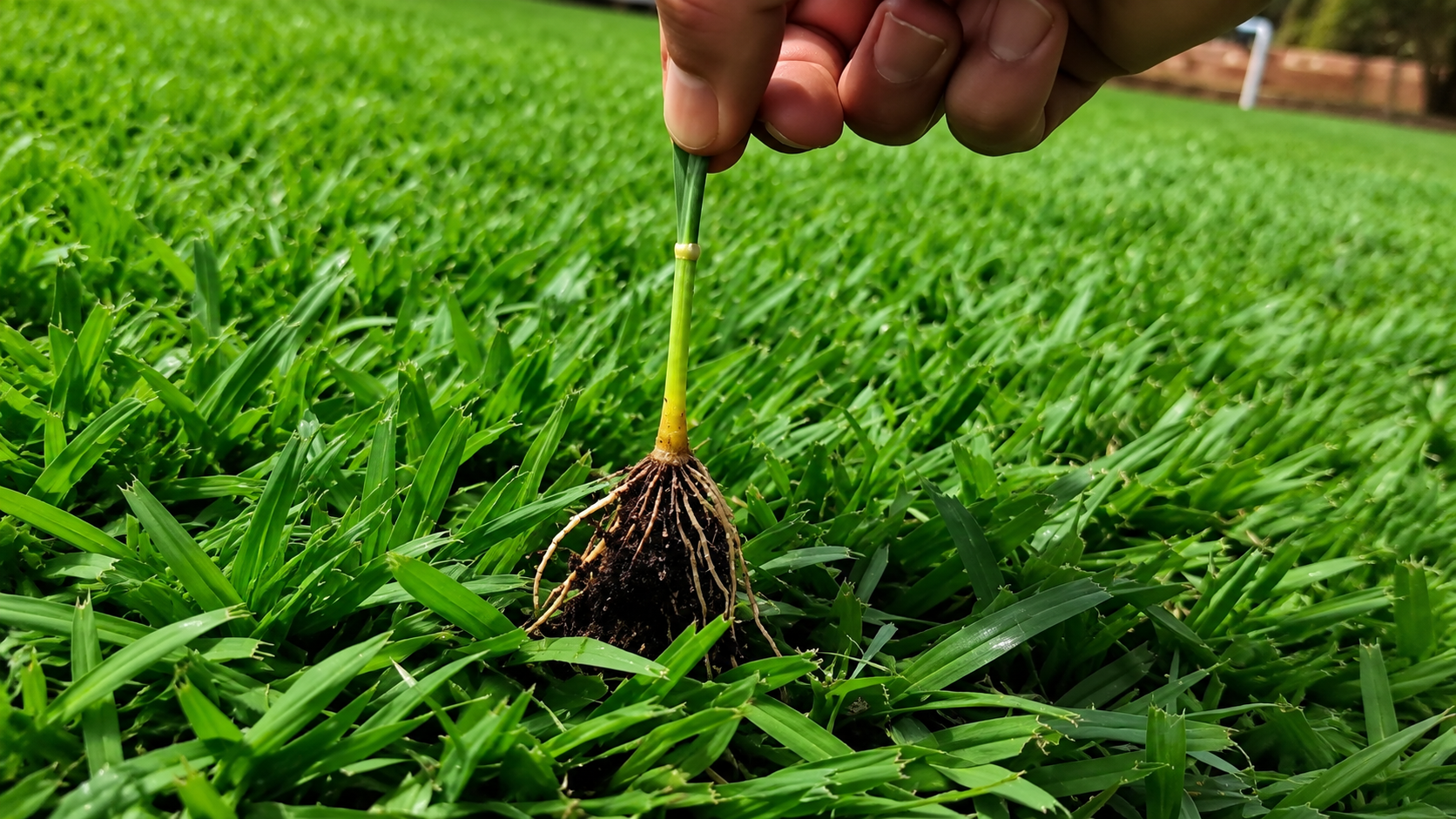
5. Monitor soil moisture at the root zone, not just the surface. A surface that looks adequately wet can still have a dry rootzone underneath, or vice versa. Soil moisture sensors give a more reliable picture than visual inspection alone, especially when matchday irrigation decisions have to be made quickly.
Common Mistakes to Avoid
Overwatering instead of applying a light, even layer. Excess water on the surface creates puddles, causes the ball to hydroplane unpredictably, and turns the pitch into a slip hazard rather than improving performance.
Watering too close to kickoff. Sprinklers still running or water still settling when players take the field disrupts warmups and can create uneven surface conditions right where they matter most.
Applying the same routine regardless of weather. A watering plan built for a hot, dry August match will oversaturate a cool, humid October pitch. Conditions should drive the schedule, not the calendar.
Skipping halftime irrigation on a field that clearly needs it. Skipping this step on a hot, dry day lets the surface harden and slow down through the second half, creating uneven bounce and increasing injury risk during a period when player fatigue already raises that risk.
Conclusion
Watering the pitch before the game and at halftime isn’t about appearances — it’s a calculated part of pitch management that directly shapes ball speed, playing consistency, and player safety. Getting the timing and volume right, and adjusting for weather rather than following a fixed routine, is what separates a pitch that performs like elite competition demands from one that just looks green.
FAQ
Why is the soccer pitch watered before the game? Watering before kickoff reduces friction between the ball and the grass, allowing passes to travel faster and more predictably. It also softens the top layer of turf slightly, reducing injury risk from hard, dry ground during tackles and sudden direction changes.
Why do they water the field again at halftime? Over the course of the first half, sun, wind, and player traffic dry out the surface. A short halftime irrigation cycle restores moisture levels close to pre-match conditions, keeping ball speed and surface behavior consistent through the second half.
How much water is applied before a match? The goal is a light, even coating across the surface — not standing water. Groundskeepers calibrate volume based on weather, soil type, and recent rainfall, since the same routine applied on every matchday would oversaturate the pitch under some conditions and underwater it in others.
Does watering the pitch actually make the ball move faster? Yes. Dry grass blades grip the ball as it rolls, creating drag and slowing its path. A thin layer of surface moisture reduces that friction, letting the ball skim across the grass rather than catching on it — which is why teams built around quick passing often prefer a wetter surface.
Can overwatering the pitch cause problems? Yes. Too much water creates puddles, causes the ball to hydroplane unpredictably, and turns the surface into a slip hazard. The target is always a light, consistent moisture layer — never standing water.
Looking for more practical irrigation and sports turf management insights? Explore our complete resource library at TurfWaterPro, where we cover irrigation scheduling, water management, system maintenance, sports field performance, and best management practices for athletic turf.
👉 Next read: What Is a High-Performance Soccer Field? The Complete Technical Guide