

What Are Bare Spots on Soccer Fields? Causes, Turfgrass Wear and Recovery
What You’ll Learn in This Series
Bare spots on soccer fields require more than a quick repair. Understanding why they develop and how to restore healthy turf is essential for maintaining consistent playing conditions and long-term field performance.
In this four-part series, we’ll explore the problem from diagnosis to prevention:
- Understanding Bare Spots: What bare spots are and the main factors that cause turf loss on soccer fields.
- Diagnosing the Problem: How to identify the underlying causes before choosing a repair strategy.
- Repairing Bare Spots: Practical approaches to restore turf, including soil cultivation, overseeding, irrigation management, and sod installation.
- Preventing Future Damage: How to manage traffic, soil conditions, and irrigation to reduce recurring bare spots.
Each article will provide practical insights and management strategies to help sports turf professionals make better decisions in the field.
Bare spots on soccer fields are more than a aesthetic problem. They can affect traction, footing, surface consistency, and the overall playability of the field.
In most cases, turf loss occurs when player traffic and environmental stress exceed the grass’s ability to recover. Concentrated wear, soil compaction, poor drainage, uneven irrigation, and inadequate turfgrass establishment can to contribute to thinning and bare areas.
But there is an important distinction between repairing a bare spot and solving the problem that caused it.
Adding seed or installing sod may restore green coverage temporarily. However, if the underlying irrigation, soil, drainage, or traffic problem remains, the damage is likely to return.
Successful recovery starts with a systematic diagnosis. Sports turf managers need to understand why the turf failed, select the appropriate repair method, and manage water carefully throughout establishment.
This article explains the main causes of bare spots on soccer fields, how to diagnose them, and how to restore healthy, durable turf while protecting field performance. Read also: the article on ring-shaped dry areas in irrigated fields
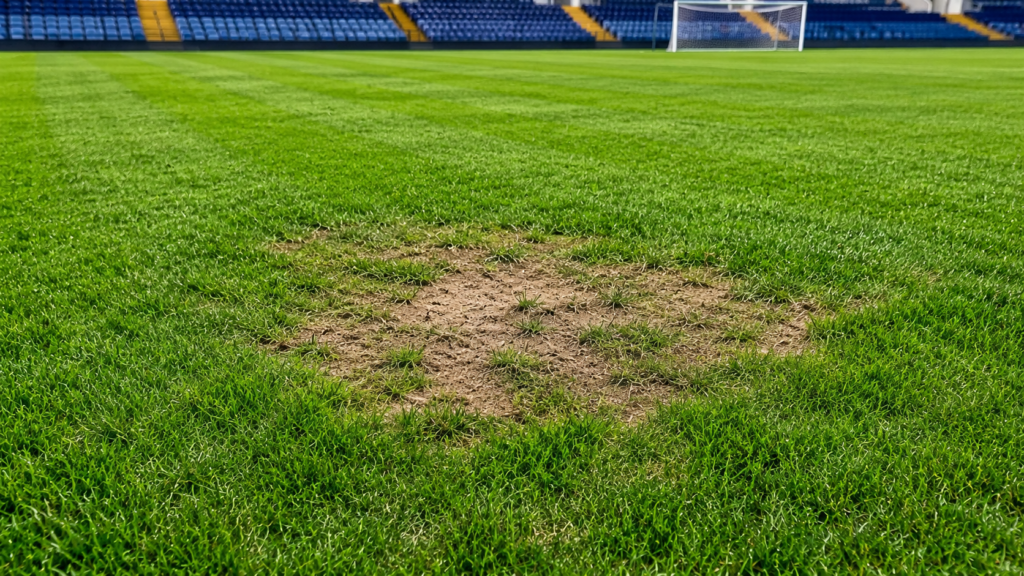
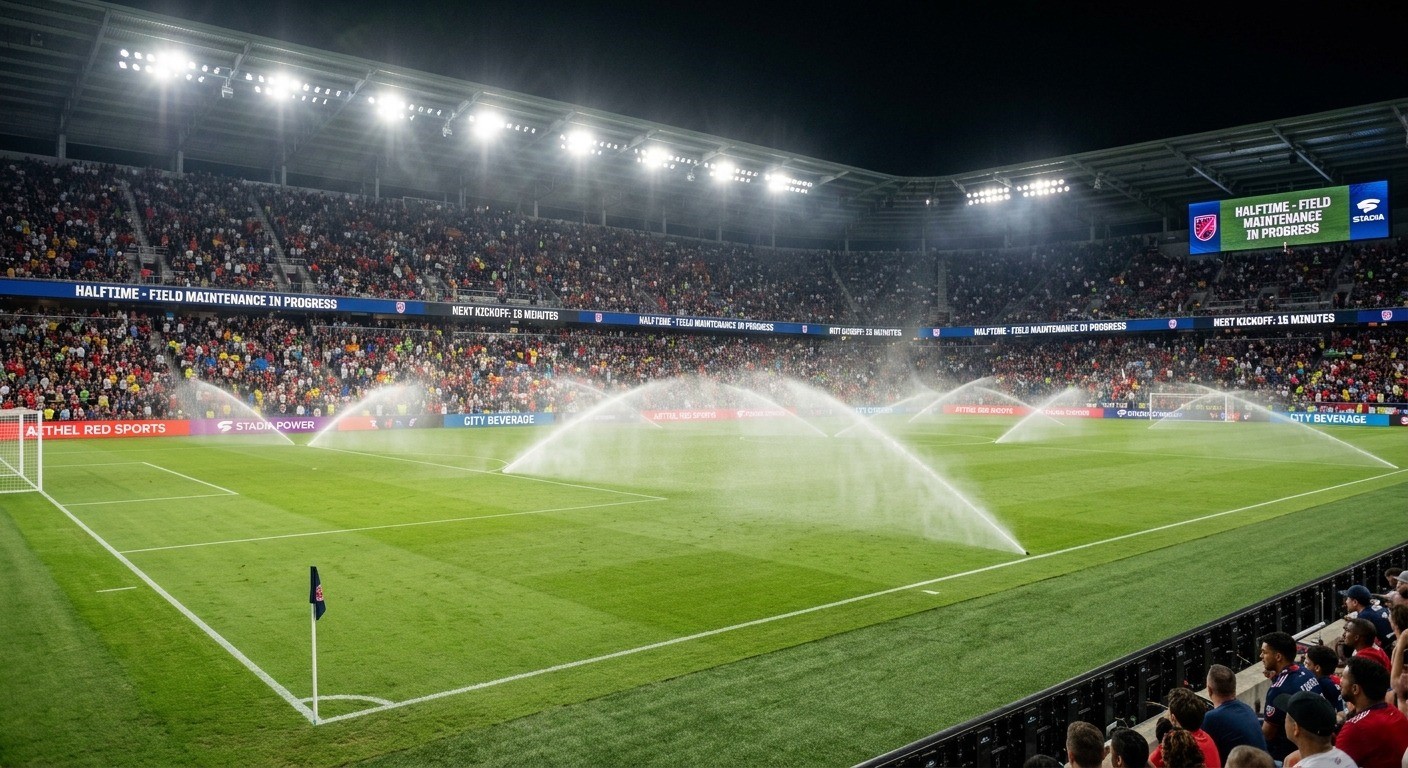
Figure 1. Bare spots on professional soccer field.
What Causes Bare Spots on Soccer Fields?
Bare spots develop when turfgrass plants are removed, damaged, or unable to produce new and fast growth enough to replace losses. Several factors can contribute to this process, and they often occur together.
1. Concentrated Player Traffic and Turf Wear
Soccer fields experience repeated mechanical stress from running, turning, sliding and changes of direction. This stress is rarely distributed evenly across the playing surface.
Goalmouths, penalty areas, sidelines, and heavily used practice zones often receive much more traffic than the rest of the field.
Repeated wear damages leaves and growth structures. As turf density declines, exposed soil becomes more vulnerable to further damage, weed invasion, and surface deterioration.
When traffic continues faster than the grass can recover, thin areas eventually become bare.
Management priority: Identify recurring wear patterns, rotate practice activities, move portable goals when possible, and protect heavily used areas during periods of active recovery.
2. Soil Compaction and Poor Drainage
Repeated player movement and equipment traffic can compact the rootzone, particularly when the soil is wet.
Compaction reduces the volume of soil macropores, restricting air exchange and limiting water movement. It can also make root penetration more difficult and reduce the ability of turfgrass to recover from wear.
The consequences may include:
- Reduced root development.
- Slower water infiltration.
- Increased surface runoff and puddling.
- Poor soil aeration.
- Reduced turfgrass tolerance to traffic and environmental stress.
However, not every wet or bare area is caused by compaction. Surface grading, soil texture, drainage infrastructure, and irrigation patterns should also be investigated.
Management priority: Examine soil structure, rooting depth, infiltration, and surface drainage before choosing an aeration or renovation strategy.
3. Uneven Irrigation and Inconsistent Soil Moisture
Water availability is essential for turfgrass growth and recovery. Uneven irrigation can create significant differences in soil moisture across a soccer field, even when the irrigation controller applies the same runtime to an entire zone.
Areas receiving insufficient water may develop drought stress, weak roots, poor seed germination, and slow turf recovery.
Other areas may receive excessive water, resulting in saturated soil, reduced surface strength, and conditions that increase the risk of damage under player traffic.
Common irrigation-related causes include:
- Clogged, damaged, or incorrectly adjusted sprinkler heads.
- Inadequate operating pressure.
- Incorrect sprinkler spacing or poor head-to-head coverage.
- Differences in sprinkler precipitation rates.
- Inappropriate irrigation scheduling.
- Variations in soil infiltration and water-holding capacity.
A dry patch should not automatically trigger longer irrigation runtimes. Increasing the runtime without identifying the cause can overwater other parts of the same zone.
Management priority: Inspect the irrigation system, evaluate distribution uniformity, and compare soil moisture conditions across representative field locations. Read also: Article on Soccer field water requirements.
4. Grass Species, Environmental Stress, and Other Damage
The ability of a soccer field to recover from wear also depends on the turfgrass species and cultivar.
Cool-season grasses such as Kentucky bluegrass and perennial ryegrass are commonly used on athletic fields in northern and transitional regions of the United States. Warm-season grasses, including bermudagrass, are widely used in warmer regions.
These grasses differ in growth habits, establishment rates, seasonal growth patterns, and recovery potential.
Other factors can also contribute to bare areas:
- Excessive shade.
- Insect damage.
- Turfgrass diseases.
- Improper mowing.
- Nutrient deficiencies or unsuitable soil pH.
- Poor surface grading.
- Inadequate growing conditions during establishment.
Before beginning repairs, confirm that the selected grass species is appropriate for the region, field conditions, and expected use.
Follow TurfWaterPro and stay tuned for the next articles in this series as we explore how to build healthier, more resilient, and better-performing soccer fields.