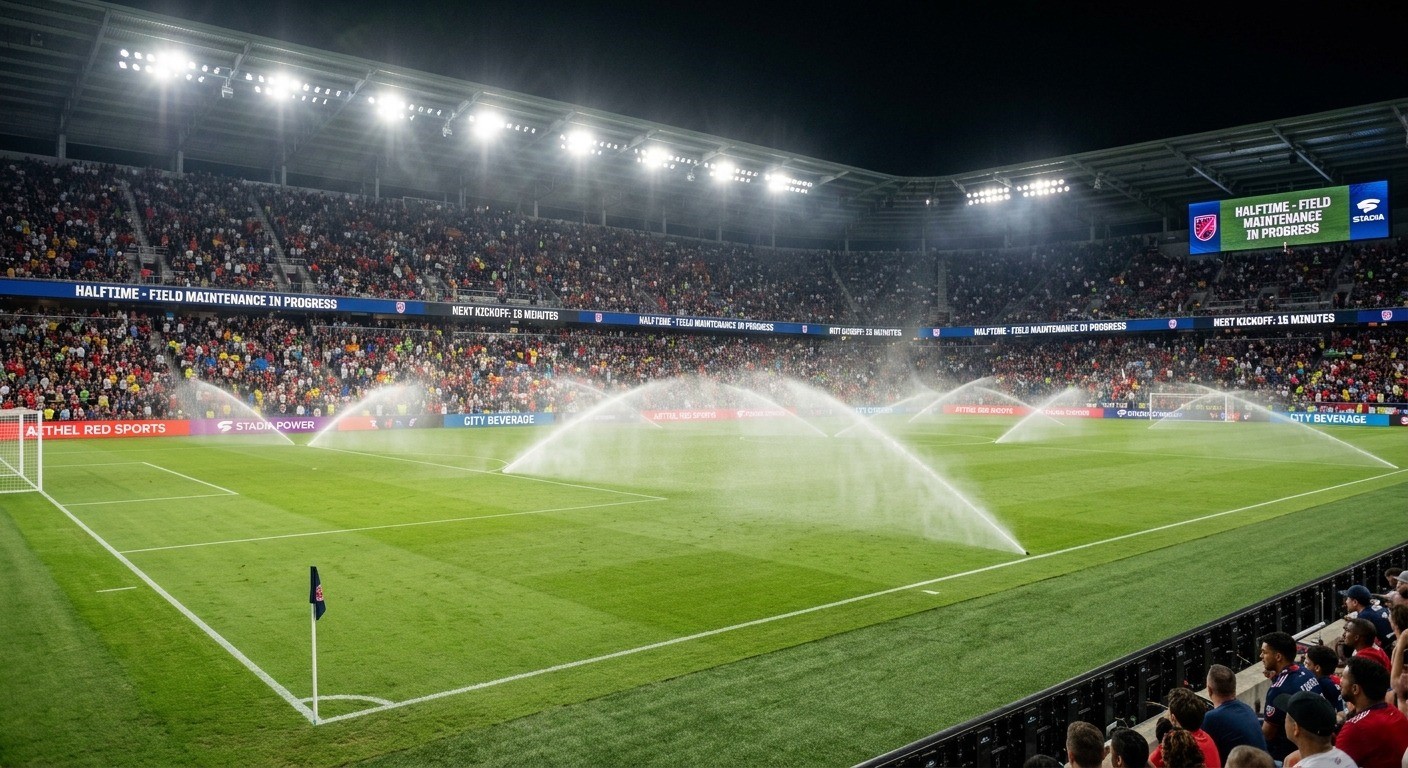


Choosing the right irrigation window is an important part of sports turf management. Timing affects water losses, rootzone moisture, and how long turfgrass leaves remain wet—all factors that influence turf health, water-use efficiency, and playing conditions.
Early-morning irrigation is often a practical starting point, particularly when foliar disease pressure is a concern. However, there is no single schedule that works best for every athletic field or golf course. Climate, turfgrass species, rootzone characteristics, sprinkler performance, and field use all influence the decision.
This guide compares morning, evening, and midday irrigation and explains how sports turf managers can build an efficient schedule based on actual field conditions rather than a fixed rule.
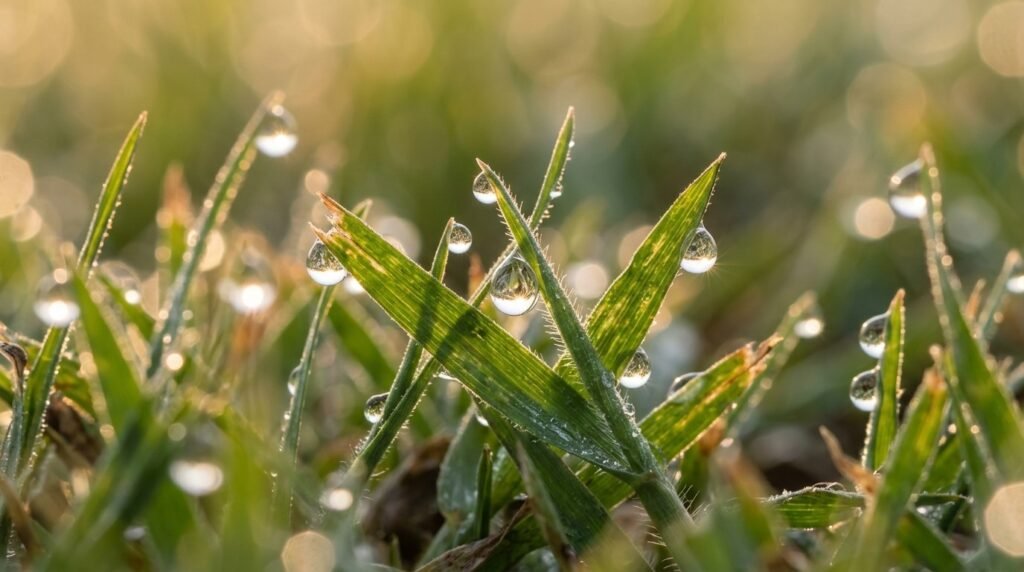
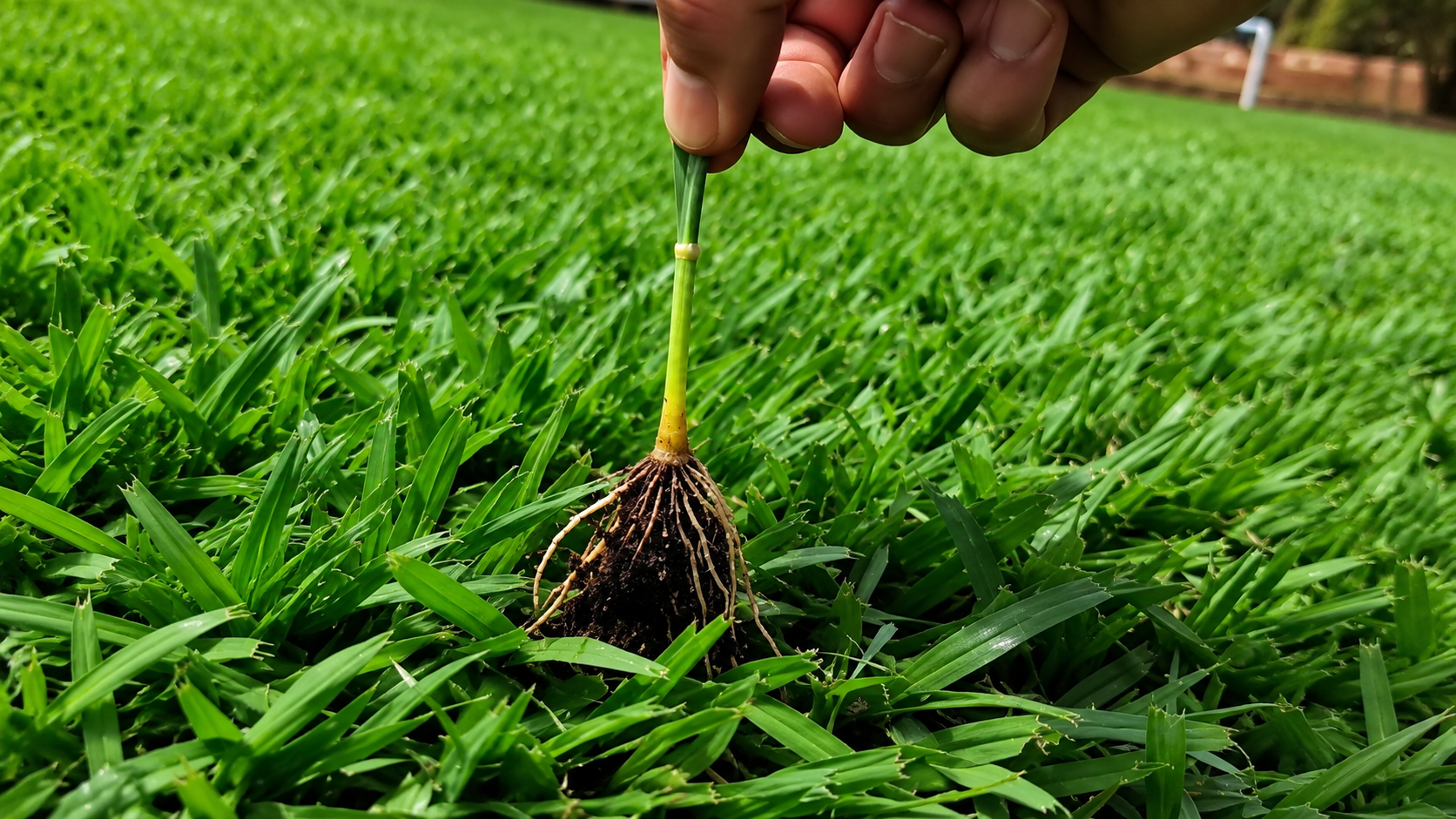
Fig. 1. Leaf Wetness and Dew on Turfgrass Blades.
Why Irrigation Timing Matters
Irrigation timing affects more than how much water evaporates during application. It also influences how long the canopy remains wet, when water reaches the rootzone, and whether the irrigation system can operate efficiently under local weather conditions.
Three factors deserve particular attention.
Water-use efficiency. Wind can distort sprinkler patterns, while high temperatures, low relative humidity, and solar radiation can increase evaporative demand. Irrigating during strong winds may also reduce distribution uniformity, leaving some areas too dry and others receiving excess water.
Leaf wetness and disease pressure. Many turfgrass diseases develop more readily when susceptible plants remain wet under favorable environmental conditions. Evening irrigation can extend leaf wetness overnight, but disease risk also depends on temperature, humidity, pathogen presence, turfgrass species, and other management practices.
Rootzone moisture. The purpose of irrigation is to replenish water in the rootzone without applying more than the soil can retain and the turf can use. The appropriate timing and runtime depend on current soil moisture, recent rainfall, evapotranspiration (ET), root depth, and the physical properties of the rootzone.
The objective is not simply to irrigate at a particular hour. It is to apply the required amount of water efficiently while maintaining healthy turf and suitable playing conditions.
Morning vs. Evening vs. Midday Irrigation
Each irrigation window has potential advantages and limitations. The best choice depends on the site’s climate, system performance, and management priorities.
| Irrigation window | Potential advantages | Main concerns | Management approach |
|---|---|---|---|
| Late night | Often lower evaporative demand and lighter winds | May extend leaf wetness through the night | Use when operationally necessary; avoid unnecessary irrigation and excessive moisture |
| Early morning | Can provide time for the canopy to dry during the day | Poorly timed applications may prolong leaf wetness | Schedule around sunrise, weather, and total system runtime |
| Midday | Can address urgent water needs under certain conditions | Higher evaporative demand and potentially greater wind-related losses | Check wind, application uniformity, and actual turf water requirements |
| Early evening | May fit facility schedules and operational restrictions | Can extend canopy wetness overnight | Evaluate disease pressure and whether another window is practical |
These are general tendencies, not guaranteed outcomes. Actual irrigation performance depends on weather, sprinkler type, application rate, and field conditions.
1. Use Early-Morning Irrigation as a Starting Point
For many sports turf facilities, early morning is a sensible starting point because it can balance irrigation needs with the opportunity for the canopy to dry after sunrise.
University extension guidance commonly recommends avoiding routine evening irrigation when it would unnecessarily extend leaf wetness. Mississippi State University Extension explains that irrigation timing should account for existing dew and how long the turf remains wet. Clemson Cooperative Extension also recommends early-morning irrigation for many landscape situations, while noting that the appropriate schedule depends on local conditions.
However, a fixed finish time is not appropriate for every site.
A field with a sand-based rootzone, a field with heavier soil, and a golf green may have very different infiltration rates, water-holding capacities, and irrigation requirements. A large athletic complex may also need several hours to complete all scheduled zones.
Practical recommendation: Start with an early-morning window, then adjust it according to rootzone moisture, weather, disease pressure, and the time required for the system to deliver the necessary water.
If the field routinely develops foliar disease, pay particular attention to how long the canopy stays wet after irrigation and whether the schedule can be adjusted to allow earlier drying.
2. Calculate Irrigation Start Times from Total Runtime
For large athletic complexes, irrigation scheduling requires more than selecting a start time on a controller.
First, determine how much water each zone needs. Then calculate the operating time required to deliver that amount, accounting for the system’s measured precipitation rate and distribution uniformity.
For a simplified example, consider a facility where the scheduled irrigation sequence requires five hours of total operation.
If the goal is to finish near sunrise, the manager must work backward from the target completion time. The calculation should include all zones, cycle-and-soak intervals, operational pauses, and any restrictions on when the system can operate.
If the required runtime does not fit the preferred window, do not simply shorten every zone’s runtime. Instead, consider whether the irrigation can be distributed across more than one window, whether the zone sequence can be improved, and whether the scheduled water volume is justified by current conditions.
A controller can execute the schedule, but it cannot determine by itself whether the selected application depth is appropriate.
Use system performance data
Before changing runtimes, verify:
- Sprinkler precipitation rates.
- Distribution uniformity across each zone.
- Operating pressure and nozzle condition.
- Rootzone infiltration and water-holding capacity.
- Current soil moisture and recent rainfall.
- Whether the applied water is reaching the intended root depth.
Catch-can audits and field observations help identify areas where poor uniformity, rather than incorrect timing, is causing dry spots.
For additional guidance, see our article on distribution uniformity and turfgrass quality.
3. Adjust Irrigation Timing to Climate and Disease Pressure
Irrigation timing becomes especially important when environmental conditions favor turfgrass diseases.
Prolonged leaf wetness can contribute to disease development, but irrigation timing is only one part of the equation. Temperature, relative humidity, turfgrass susceptibility, nitrogen availability, drainage, and the presence of a pathogen also influence disease severity.
For example, brown patch is favored by warm, humid conditions, extended leaf wetness, and excess soil moisture. Pythium diseases have different environmental requirements depending on the species involved, but excessive soil moisture and poor drainage can be important risk factors.
If disease pressure increases, review the entire management program rather than assuming that changing the irrigation start time will solve the problem.
Consider these actions:
- Check whether the rootzone is remaining wetter than necessary.
- Review irrigation frequency and application depth.
- Confirm that drainage is functioning properly.
- Evaluate nitrogen applications and other cultural practices.
- Monitor how long the canopy remains wet after irrigation.
- Consider suitable dew-removal practices where appropriate.
The USGA Green Section has described how removing dew early in the morning can shorten leaf wetness and help reduce disease severity on golf course turf. Practices such as mowing, brushing, dragging, or rolling may be appropriate depending on the playing surface and maintenance program.
The goal is to reduce unnecessary wetness without creating drought stress or compromising playing conditions.
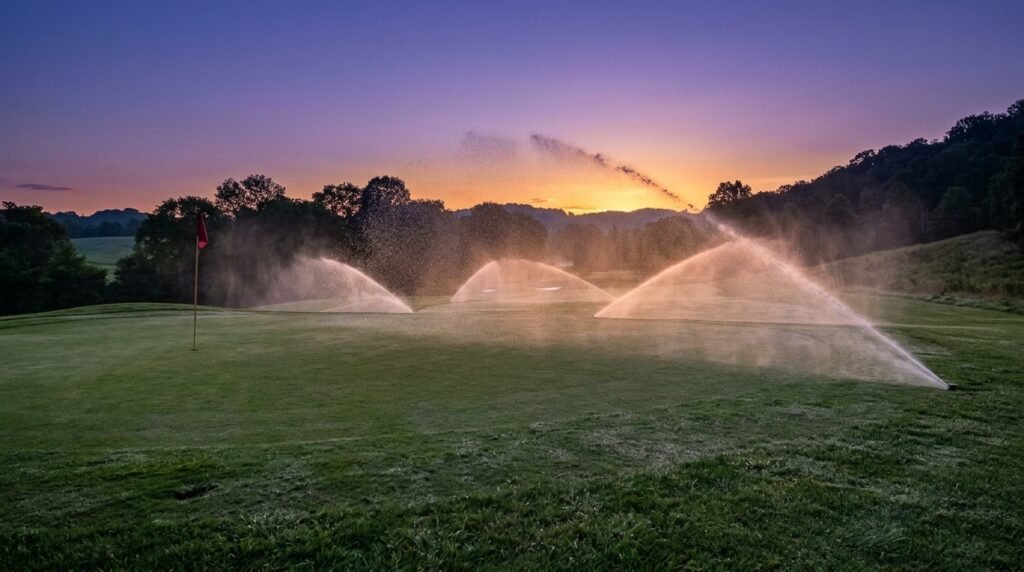
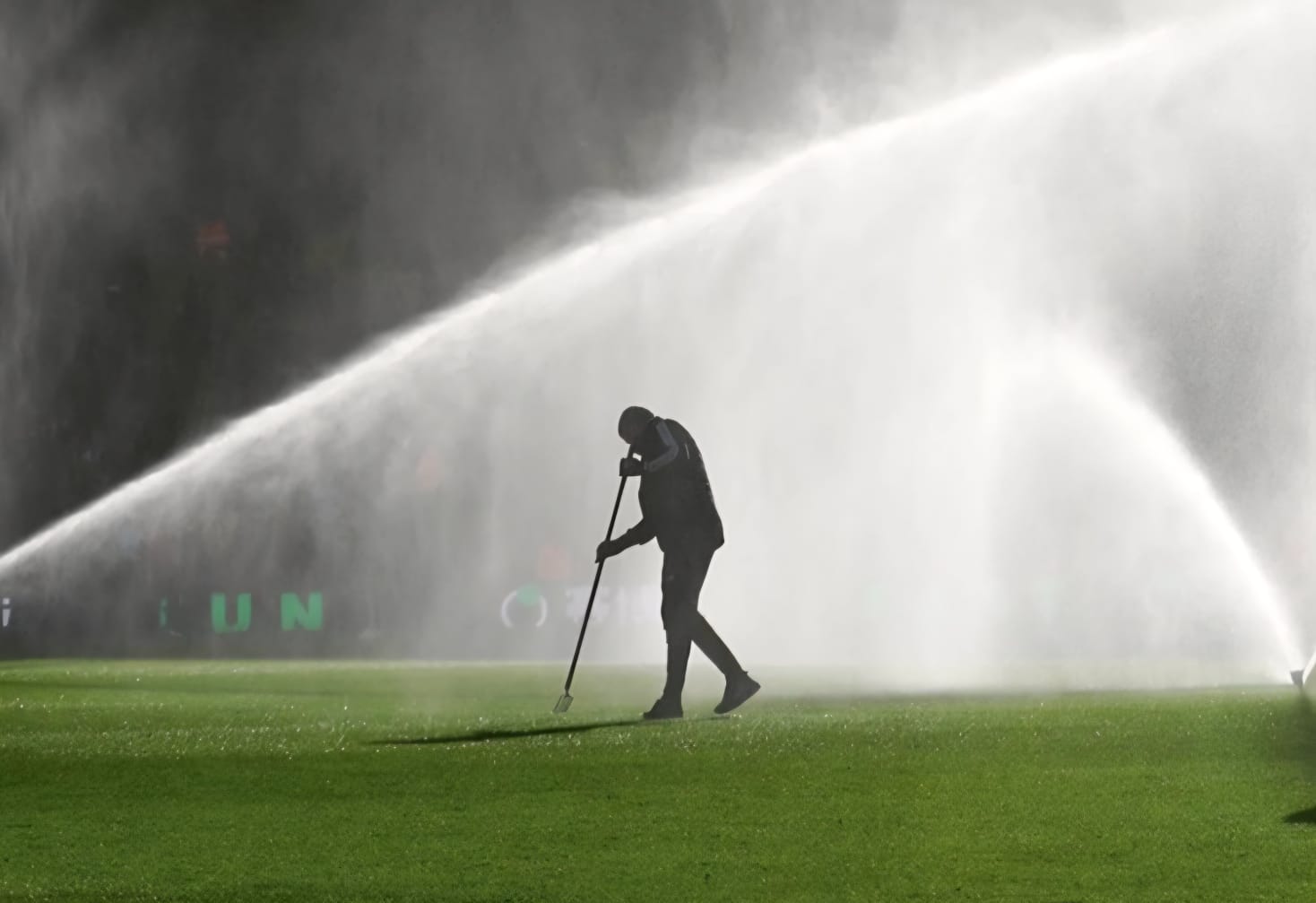
Fig. 2. Evening Irrigation on a Golf Course Fairway.
4. Balance Water Losses Against Turf Water Requirements
Wind, temperature, relative humidity, and solar radiation influence irrigation performance.
During hot, dry, windy weather, water may evaporate more rapidly and sprinkler patterns may become distorted. These conditions can reduce the amount of water reaching the intended target and make application less uniform.
Nighttime irrigation may reduce evaporative demand, but that advantage does not automatically make it the best choice. If irrigation keeps the canopy wet throughout the night, the potential water savings must be weighed against disease-management concerns.
Avoid relying on universal percentages to estimate how much water will be saved by changing the irrigation window. The actual difference depends on the local climate, sprinkler characteristics, operating pressure, wind conditions, and application method.
Instead, focus on measurable performance:
- Check local wind conditions before irrigation.
- Use weather data to understand current and forecast evaporative demand.
- Verify distribution uniformity.
- Compare applied water with estimated turf water requirements.
- Monitor soil moisture and field conditions after irrigation.
When wind is excessive, delaying a cycle may improve application uniformity. However, the decision should account for the field’s actual water needs and any operational restrictions.
5. Adjust the Schedule Throughout the Season
A schedule that works in one season may be inappropriate in another.
Temperature, day length, humidity, rainfall, turfgrass growth, and disease pressure change throughout the year. Field use and maintenance operations can also affect when irrigation is practical.
Use evapotranspiration estimates as a starting point for determining turf water requirements, then adjust them based on rainfall, soil moisture, rootzone characteristics, and field observations.
Soil moisture sensors can help determine whether the rootzone needs additional water. Weather stations can provide useful information about rainfall, temperature, humidity, solar radiation, and wind. Smart controllers can use this information to support scheduling decisions, but their recommendations still depend on appropriate setup and reliable inputs.
Remember that soil moisture sensors do not directly measure leaf wetness. If canopy wetness is a significant disease concern, combine soil measurements with weather observations, field scouting, and, where appropriate, leaf-wetness sensors.
Review the schedule whenever weather patterns, field conditions, or disease pressure change.
Common Irrigation-Timing Mistakes to Avoid
Assuming evening irrigation is always wrong
Evening irrigation can reduce evaporative demand, but it may extend leaf wetness under certain conditions. Evaluate the trade-off for the site’s climate, disease history, and operational requirements.
Irrigating without checking soil moisture
A preferred irrigation window does not justify applying water when the rootzone already contains sufficient moisture. Unnecessary irrigation can contribute to excess soil moisture, drainage problems, and disease pressure.
Using the same schedule all year
Water requirements and disease pressure change with the seasons. Revisit runtimes and scheduling decisions as weather and turfgrass conditions change.
Ignoring wind and sprinkler performance
Poor distribution uniformity can create dry spots even when total runtime appears adequate. Check pressure, nozzles, spacing, and catch-can results before increasing irrigation duration.
Shortening runtimes without checking water requirements
Reducing runtime to fit a preferred window can leave parts of the rootzone too dry. Calculate the required application depth and verify that the system can deliver it effectively.
Treating irrigation timing as the only disease-management tool
Irrigation is one component of an integrated turfgrass management program. Drainage, mowing, fertility, airflow, turfgrass selection, and pathogen-specific management also influence disease outcomes.
Frequently Asked Questions
What is the best time of day to irrigate turfgrass?
Early morning is a practical starting point for many sports turf facilities, particularly where prolonged overnight leaf wetness is a concern. The final schedule should reflect local weather, rootzone conditions, turfgrass water requirements, and irrigation-system performance.
Is evening irrigation bad for turfgrass?
Not necessarily. Evening irrigation may reduce evaporative demand, but it can extend leaf wetness overnight and contribute to disease development under favorable conditions. The risk depends on the environment, turfgrass species, pathogen pressure, and how much water is applied.
Is night irrigation more efficient than morning irrigation?
Night irrigation may reduce wind drift and evaporation under certain conditions. However, efficiency also depends on sprinkler uniformity, wind, application rate, infiltration, and whether the water is needed. Lower evaporative demand alone does not make night irrigation the best overall choice.
Does midday irrigation harm turfgrass?
Not inherently. Midday irrigation may be necessary in some situations, but high evaporative demand and wind can reduce application efficiency. Check the turf’s water requirements and operating conditions before deciding whether to irrigate.
How can I reduce leaf wetness on a sports field?
Avoid unnecessary irrigation and limit repeated wetting of the canopy. Where appropriate, practices such as mowing, brushing, dragging, or other dew-removal methods can help shorten leaf wetness. Choose methods that suit the playing surface and maintenance program.
Can soil moisture sensors determine the best irrigation time?
Soil moisture sensors help assess water availability in the rootzone, but they do not directly measure leaf wetness. Combine sensor readings with weather data, irrigation-system performance, field observations, and disease monitoring to make better scheduling decisions.
Should athletic fields and golf course greens use the same irrigation schedule?
Not automatically. Rootzone composition, drainage, turfgrass species, mowing height, playing requirements, and system design can differ substantially between facilities. Each area should be scheduled according to its water requirements and management objectives.
Conclusion
For many sports turf facilities, early-morning irrigation offers a useful balance between meeting turfgrass water needs and limiting unnecessary overnight leaf wetness. However, there is no single schedule that works best under every climate, rootzone, and operating condition.
Build the schedule around actual water requirements, sprinkler performance, weather, and field use. Monitor rootzone moisture, avoid unnecessary irrigation, and track how long the canopy remains wet when disease pressure is high.
The best irrigation window is the one that delivers the required water efficiently while supporting healthy turf and reliable playing conditions.
At TurfWaterPro, we focus on practical, evidence-informed strategies for sports turf irrigation and water management. Explore our guides to distribution uniformity, overwatering problems, and irrigation scheduling mistakes to improve your field’s irrigation performance.
References and Further Reading
- Clemson Cooperative Extension — Landscape Irrigation Management, Part 5: Irrigation Time of Day
- Mississippi State University Extension — The Plant Doctor: Watering and Plant Disease
- USGA Green Section — Displacing Dew Decreases Disease Development
- University of Georgia Extension — Turfgrass Diseases: Quick Reference Guide
Note: Some extension recommendations cited above were developed for lawns or landscape turf. They provide useful background on irrigation timing and leaf wetness, but professional sports turf managers should adapt them to their specific rootzone, turfgrass species, irrigation system, playing requirements, and local climate.