

A reliable soccer field maintenance plan starts well before the first match. Whether you manage a community recreation field or a high-performance stadium pitch, your plan should reflect the field’s condition, available resources, seasonal growth, and playing schedule.
The goal is to maintain a safe, consistent playing surface without wasting water, labor, or materials. These six steps provide a practical framework for planning field maintenance throughout the season.
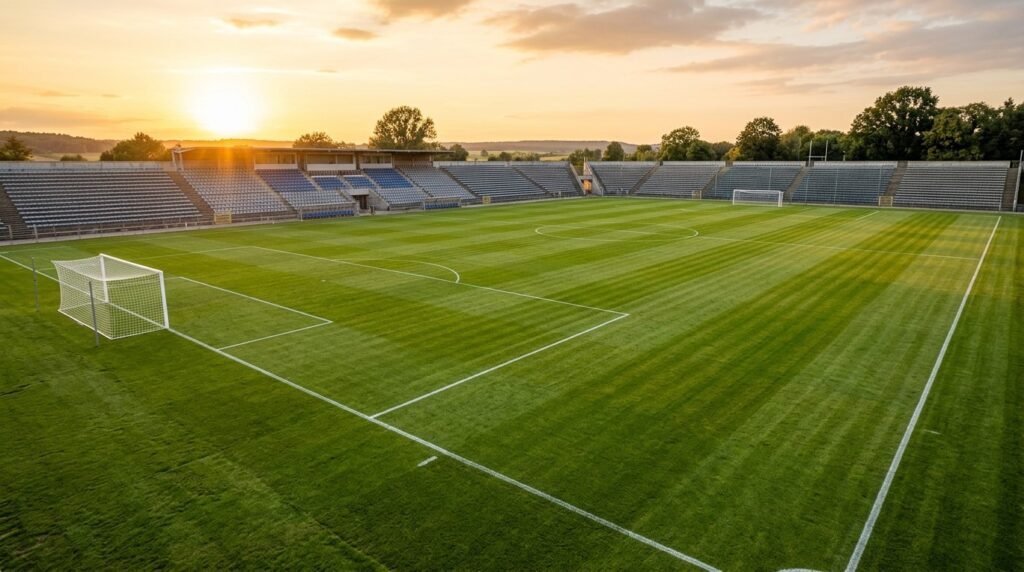
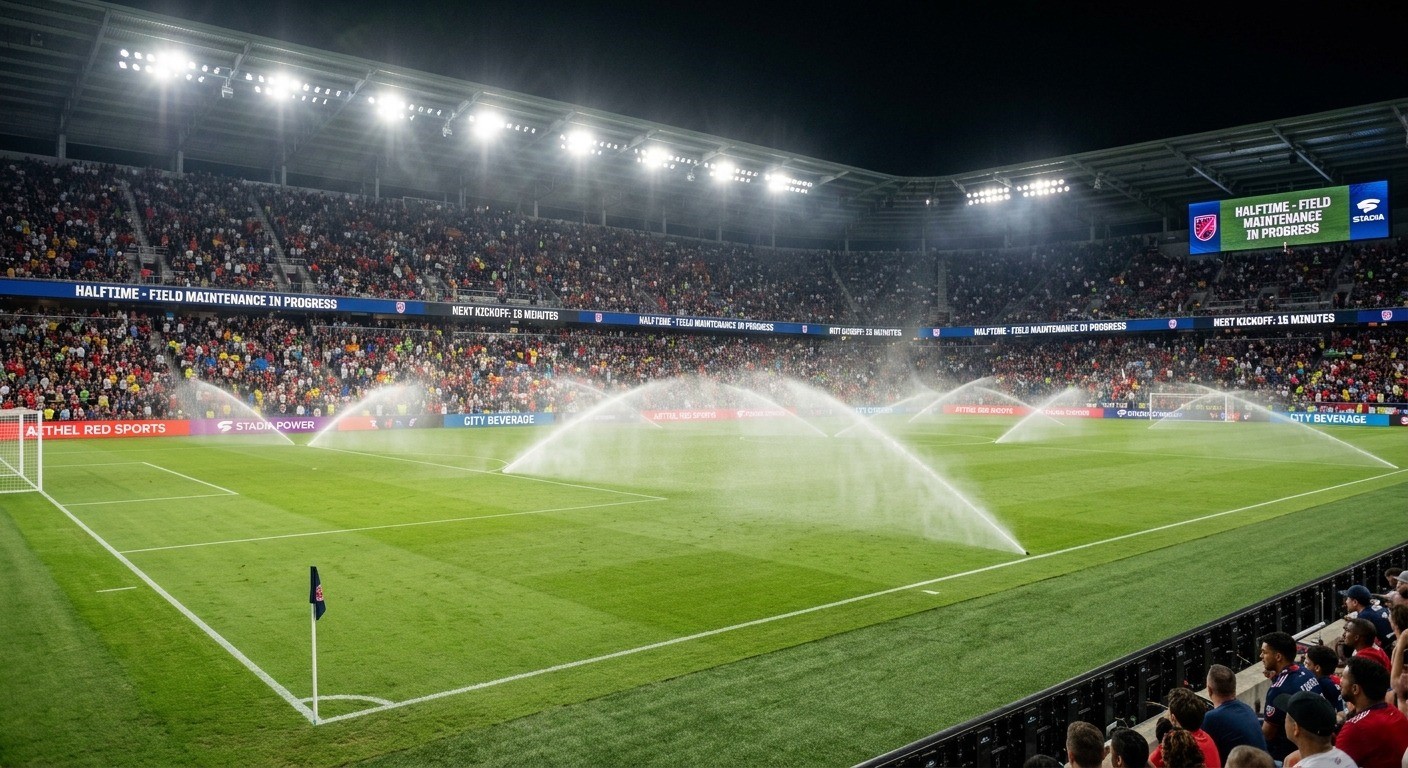
Fig. 1 Natural Grass Soccer Field Ready for Match Day.
The 6 Essential Steps in Soccer Field Maintenance Planning
1. Plan Staffing and Train Your Crew
Start by identifying the work required to maintain the field, including mowing, irrigation, aeration, fertilization, pest monitoring, and turf repairs. Estimate the labor needed for each task and assign responsibilities based on staff availability, experience, and equipment.
Train full-time and seasonal employees in equipment operation, irrigation procedures, field inspection, recordkeeping, and safety. For supervisors seeking professional development, the Sports Field Management Association’s Certified Sports Field Manager (CSFM) credential is a useful benchmark. The certification supports professional development, but it does not replace task-specific training for the entire crew.
Learn more about the SFMA Certified Sports Field Manager program.
2. Schedule Equipment Maintenance
A maintenance plan is only as reliable as the equipment used to carry it out. Inspect mowers, reels, blades, irrigation components, and application equipment regularly. Track operating hours and follow manufacturer recommendations rather than relying on a fixed maintenance frequency for every machine.
Sharp mower blades produce a cleaner cut than dull blades, which can leave ragged leaf tissue and reduce turf appearance. Inspect cutting quality frequently, and schedule sharpening or reel servicing when performance indicates that maintenance is needed.
Include irrigation-system inspections in the equipment schedule. Check sprinkler heads for damage, clogging, misalignment, and uneven operation. Verify that controllers, valves, and other components function as intended, and document recurring problems so they can be corrected before they affect field conditions.

Fig.3. Reel Mower Maintenance for Sports Turf.
3. Prioritize Turf Repairs and Reestablishment
Inspect high-wear areas such as goalmouths, the center of the field, and frequently used practice zones. Record the size and severity of damaged areas, then prioritize repairs according to safety, expected recovery time, budget, and the next scheduled use.
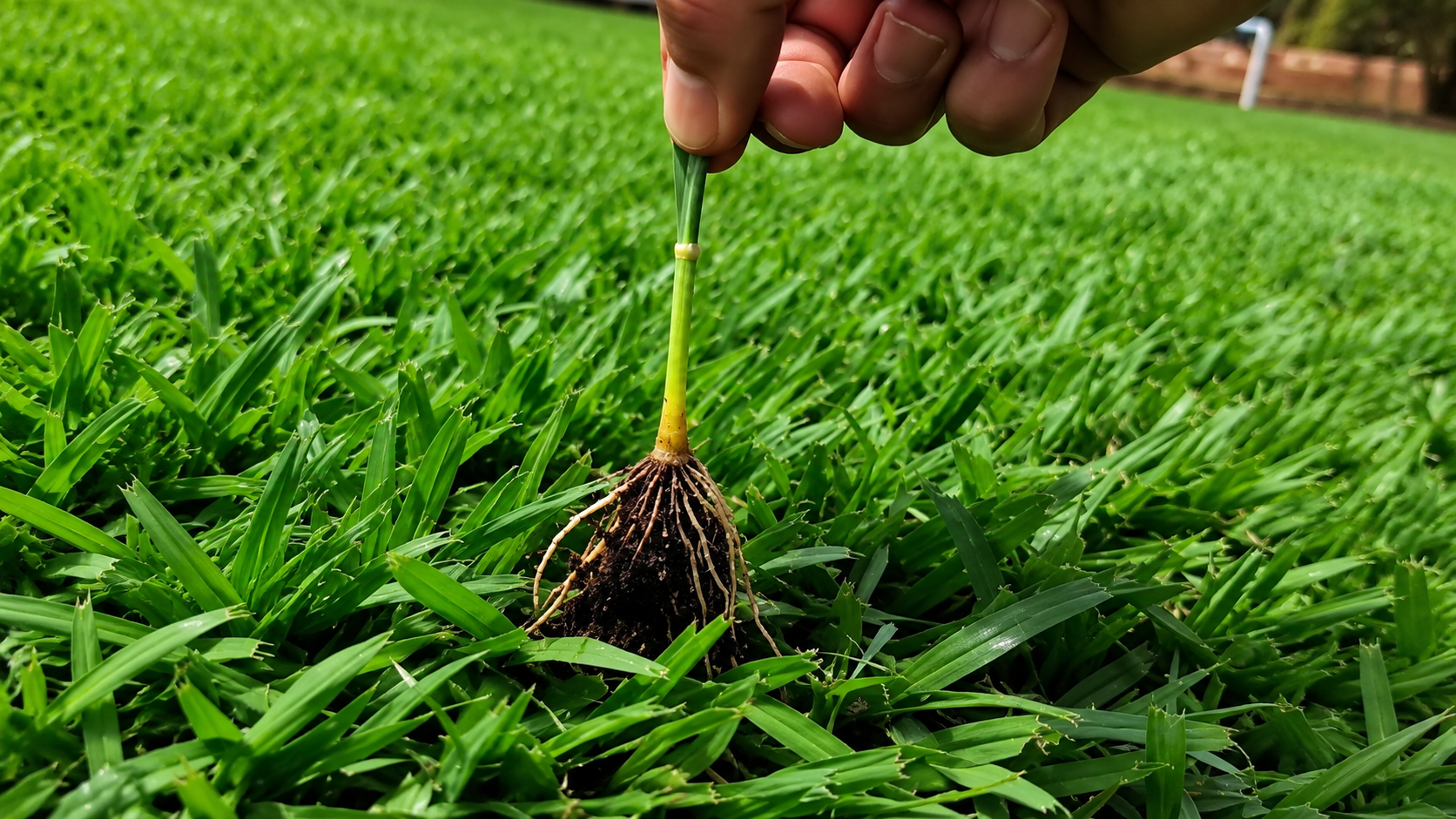
Sod can provide faster initial cover than seeding, but successful establishment depends on good soil contact, suitable moisture, rooting, and surface stability. Perennial ryegrass can germinate within a few days under favorable conditions, but germination alone does not mean the area is ready for play.
Before reopening a repaired area, evaluate turf cover, rooting, footing, and resistance to displacement. Allow additional recovery time when conditions are unfavorable or heavy traffic is expected.
For high-use fields, schedule repairs around the match and practice calendar whenever possible. If a field has several worn areas, prioritize those that create the greatest safety or playability concerns rather than treating every area at the same time.
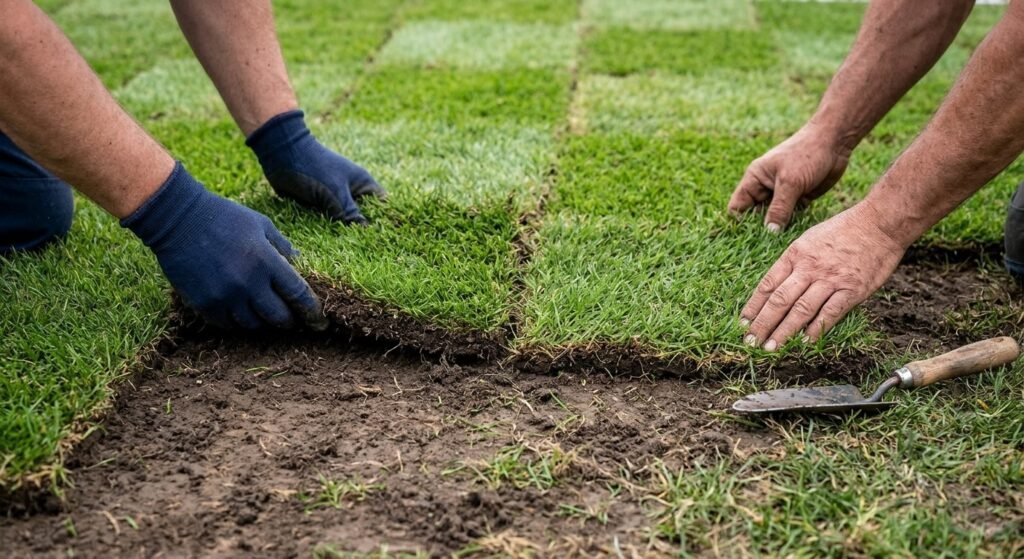
Fig. 2. Repair With Sod on a Soccer Field.
4. Build a Soil-Test-Based Fertility Program
Use soil-test results to guide pH adjustments and phosphorus and potassium applications. Many commonly grown turfgrasses perform well in a soil pH range of approximately 6.0 to 6.5, but the appropriate target depends on the turfgrass species, soil conditions, and regional recommendations.
Develop a fertility program that supports healthy growth and recovery without excessive nutrient applications. Adequate nutrition can help turf recover from wear, but fertilizer cannot compensate for poor drainage, excessive traffic, compaction, or inadequate rest.
Follow regional soil-testing guidance, and test again when symptoms or significant management changes justify additional analysis. Base fertilizer applications on soil-test results, turfgrass requirements, and the field’s growth and recovery needs rather than applying nutrients automatically.
5. Establish an Integrated Pest Management Program
Use integrated pest management (IPM) to monitor diseases, weeds, and insects before deciding whether treatment is necessary. Record the location, extent, and timing of problems, along with relevant weather and management conditions.
Set action thresholds based on the potential effect on turf health, safety, playability, and appearance. A small area of cosmetic damage may not require the same response as a problem that affects footing or damages roots and crowns.
Use monitoring records to identify recurring problems and evaluate whether changes in irrigation, drainage, mowing, fertility, or traffic management could reduce future risk. For example, persistent wet areas may indicate a drainage or irrigation-distribution problem that should be investigated before applying a pesticide.
When chemical controls are necessary, follow the product label and applicable regulations. Keep records of treatments and evaluate whether the action resolved the problem.
6. Decide Whether Winter Overseeding Fits Your Goals
Overseeding dormant bermudagrass with perennial ryegrass can provide a green winter surface, but the decision involves more than appearance. Consider the local climate, expected field use, establishment time, budget, and the plan for returning to bermudagrass in spring.
Young ryegrass seedlings may not provide the traction or wear tolerance expected from mature turf. Overseeding also adds seed, labor, irrigation, and transition costs, and perennial ryegrass may require active management or removal in spring.
The University of Kentucky’s guidance on overseeding bermudagrass sports fields explains that the benefits and disadvantages depend on the intended use and management objectives. Its recommendations reflect regional conditions and should not be treated as universal guidance for every climate.
Choose the seeding window using regional turfgrass guidance and local growing conditions rather than relying on a single date relative to the first killing frost. If winter color is not a priority, dormant bermudagrass may be a reasonable option when the field can meet its performance requirements.
Include Irrigation in Your Maintenance Plan
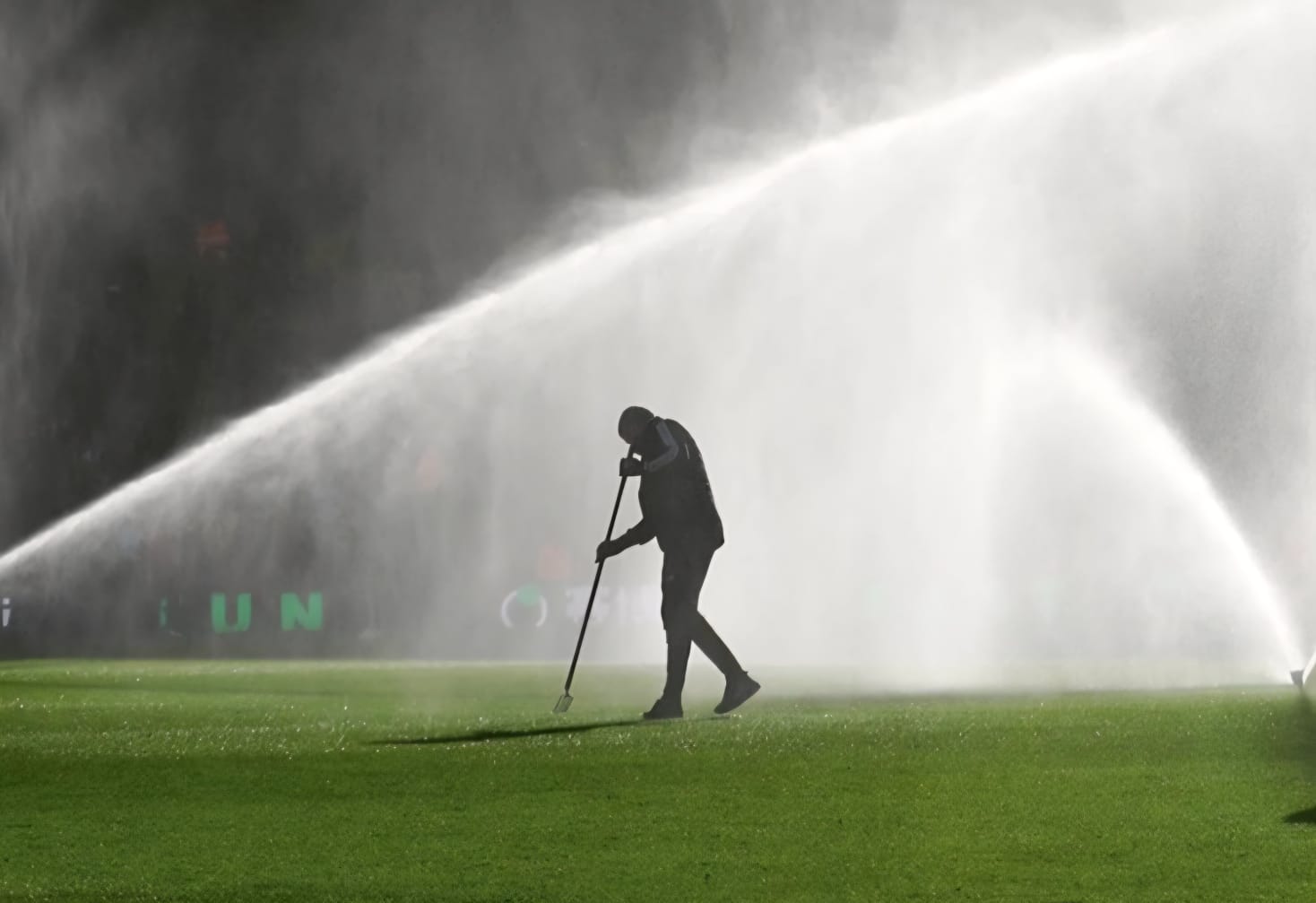
Irrigation should be planned alongside mowing, fertility, and turf repair. Inspect sprinkler operation, identify dry and wet areas, and check distribution uniformity to determine whether the system is applying water consistently.
A catch-can test can help quantify irrigation performance. Place identical catch cans across the irrigated area, operate the system for a measured period, and compare the amounts collected. The results can reveal uneven application that may otherwise lead managers to increase runtime to compensate for dry areas, potentially overwatering other parts of the field.
Use evapotranspiration (ET), rainfall, soil moisture, and rootzone conditions to guide irrigation scheduling. ET estimates help indicate atmospheric water demand, while soil moisture measurements help assess conditions at the sensor location. Neither should be used in isolation.
Weather-based controllers and soil moisture sensors can improve decision-making, but they should support regular field inspections rather than replace them. Sensor placement, calibration, sprinkler performance, and the characteristics of the rootzone all influence how useful the data will be.
Pay particular attention to areas that remain wet or dry despite normal irrigation. Differences in compaction, drainage, shade, soil texture, and sprinkler performance may require targeted adjustments instead of increasing irrigation across the entire field.
Cornell University’s sports field watering guidance provides practical advice on soil moisture, ET, irrigation timing, and catch-can testing. Its recommendations also emphasize that water requirements vary with soil conditions, weather, and field use.
For more guidance on irrigation performance, read TurfWaterPro’s article on distribution uniformity and turfgrass quality.
Common Soccer Field Maintenance Planning Mistakes
- Planning without clear priorities. Define the required playing conditions, safety expectations, budget, and seasonal deadlines.
- Ignoring equipment condition. Inspect performance and schedule maintenance before equipment problems disrupt field operations.
- Repairing turf too late. Allow enough time for establishment and evaluate the surface before reopening it.
- Fertilizing without soil-test guidance. Use test results and turfgrass requirements to avoid unnecessary applications.
- Treating overseeding as automatic. Consider the benefits, costs, climate, field-use requirements, and spring transition plan.
- Following a fixed irrigation schedule without checking conditions. Adjust applications to rainfall, ET, soil moisture, rootzone characteristics, and field observations.
- Increasing irrigation to compensate for poor uniformity. Investigate sprinkler performance and distribution before extending runtime across the entire field.
- Ignoring contingencies. Prepare for heavy rain, heat, equipment breakdowns, staffing shortages, and schedule changes.
Frequently Asked Questions
What should a soccer field maintenance plan include?
A soccer field maintenance plan should cover staffing, equipment upkeep, turf repairs, soil fertility, pest monitoring, irrigation scheduling, and seasonal priorities. Tasks should be scheduled around turf growth, weather, budget, and field use.
How often should I test the soil on a soccer field?
Follow your regional soil-testing laboratory’s recommendations for routine testing. Additional testing may be useful when turf shows unexplained growth problems or when management practices change. Use the results to guide pH adjustments and nutrient applications.
Should I use sod or seed to repair goalmouths?
Sod can provide faster initial cover, while seed may be more economical for larger repair areas when sufficient establishment time is available. The best option depends on the turfgrass species, season, budget, site preparation, and expected traffic. Do not assume that rapid germination means a seeded area is ready for play.
Is overseeding a bermudagrass soccer field worth it?
Overseeding can improve winter color, but its value depends on the field’s goals, climate, use, and budget. Consider establishment risks, potential effects on traction, and the cost and effort required to manage the transition back to bermudagrass in spring. Consult regional extension guidance before deciding whether overseeding is appropriate for your facility.
How often should mower blades be sharpened?
There is no single schedule that suits every mower and field. Inspect cutting quality regularly, track operating hours, and follow manufacturer recommendations. Sharpen or service blades when performance indicates that maintenance is needed.
How can I improve irrigation uniformity on a soccer field?
Start by inspecting sprinkler heads, nozzles, pressure, spacing, and alignment. A catch-can test can measure how evenly water is distributed across the field. Use the results to identify areas that need adjustment before changing the overall irrigation schedule.
Build a More Reliable Soccer Field Maintenance Plan
A dependable maintenance program combines trained staff, properly maintained equipment, timely turf repairs, sound fertility management, active pest monitoring, and irrigation based on field conditions. Review the plan throughout the season and adjust it as weather, turf performance, and playing demands change.
Effective field management is not about applying more water, fertilizer, or labor. It is about identifying the field’s needs, prioritizing the work, and evaluating whether each decision improves turf health and playing conditions.
For more practical guidance, explore TurfWaterPro’s article on common irrigation scheduling mistakes in sports turf management.
Technical References
- Sports Field Management Association (SFMA). Certified Sports Field Manager Program. Professional certification and development for sports field managers.
- Cornell University. Watering Athletic Fields. Guidance on irrigation needs, soil moisture, ET, and irrigation-system checks.
- University of Kentucky, Turfgrass Science. Overseeding Bermudagrass Sports Fields. Regional guidance on the benefits, limitations, and management considerations of overseeding.
- TurfWaterPro. Distribution Uniformity and Turfgrass Quality. Practical discussion of irrigation uniformity and its implications for turf quality.
- TurfWaterPro. Common Irrigation Scheduling Mistakes in Sports Turf Management. Practical guidance on weather, soil moisture, and irrigation scheduling.