

A sports field rarely fails because of a single catastrophic irrigation problem. More often, performance declines gradually as small management mistakes accumulate over time. A controller that hasn’t been adjusted for the season, a clogged nozzle, poor irrigation uniformity, or a fixed watering schedule may seem insignificant individually. Together, however, these issues can waste thousands of gallons of water every year while reducing turf quality, increasing disease pressure, and shortening the lifespan of the playing surface.
Whether you manage a stadium, training facility, municipal athletic complex, or school sports field, avoiding these common mistakes can improve irrigation efficiency, reduce operating costs, and produce healthier, safer turf.
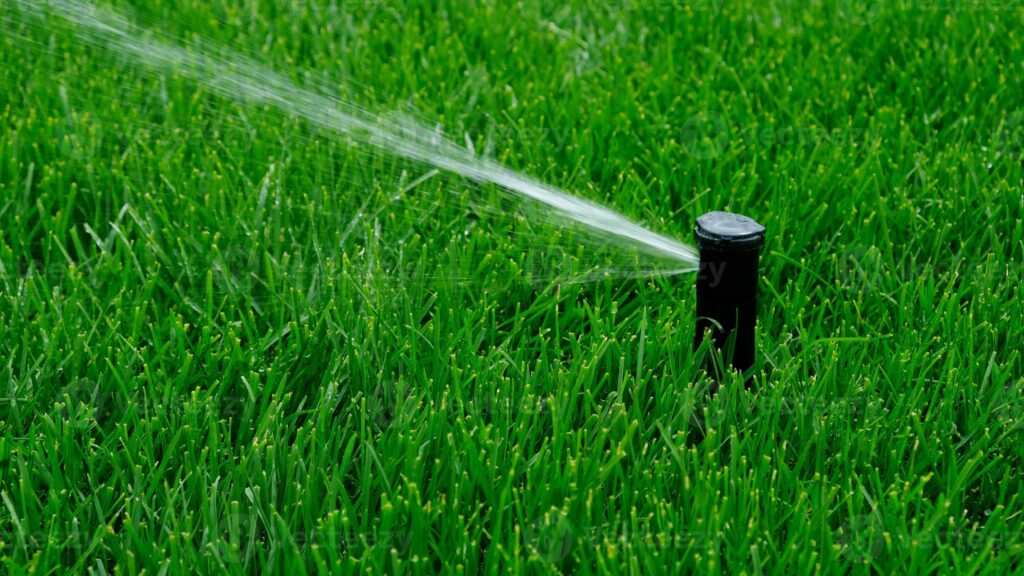
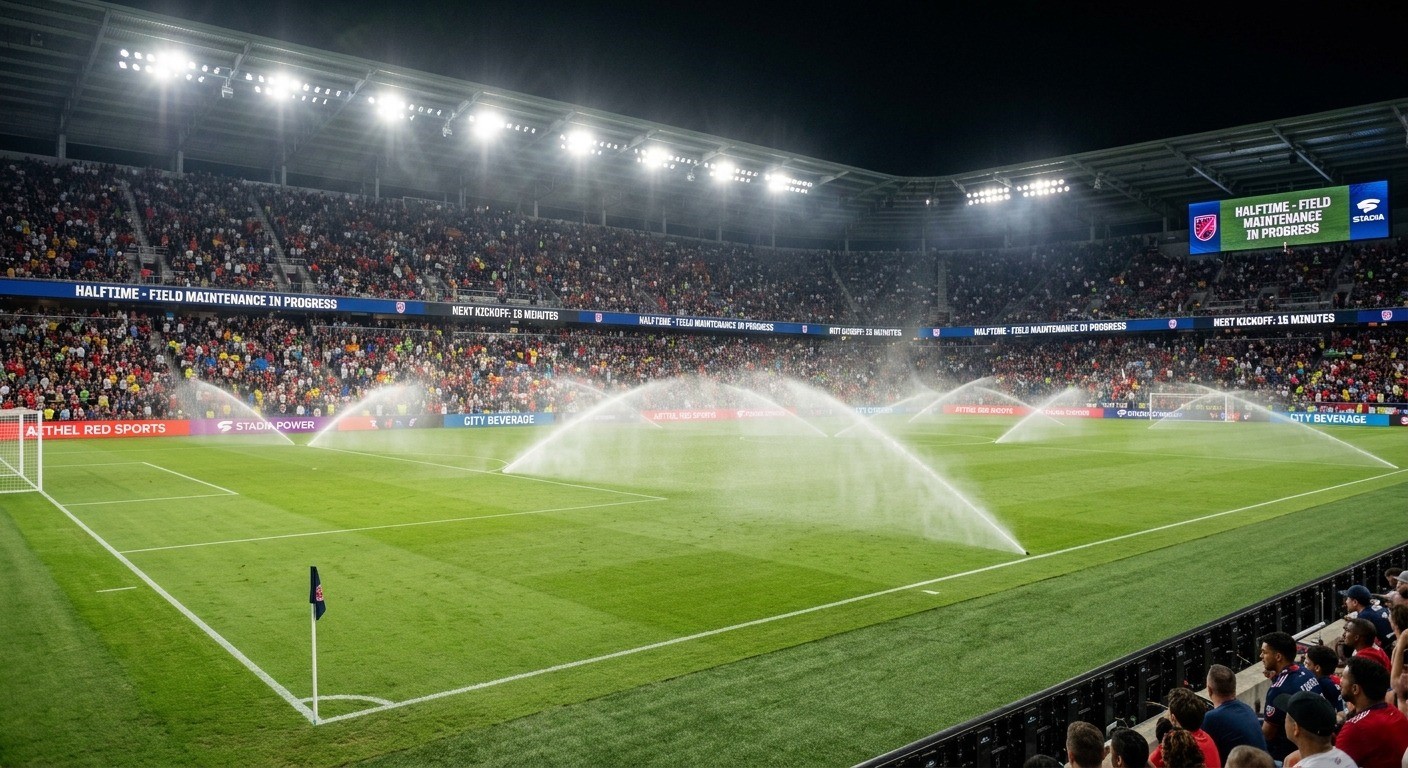
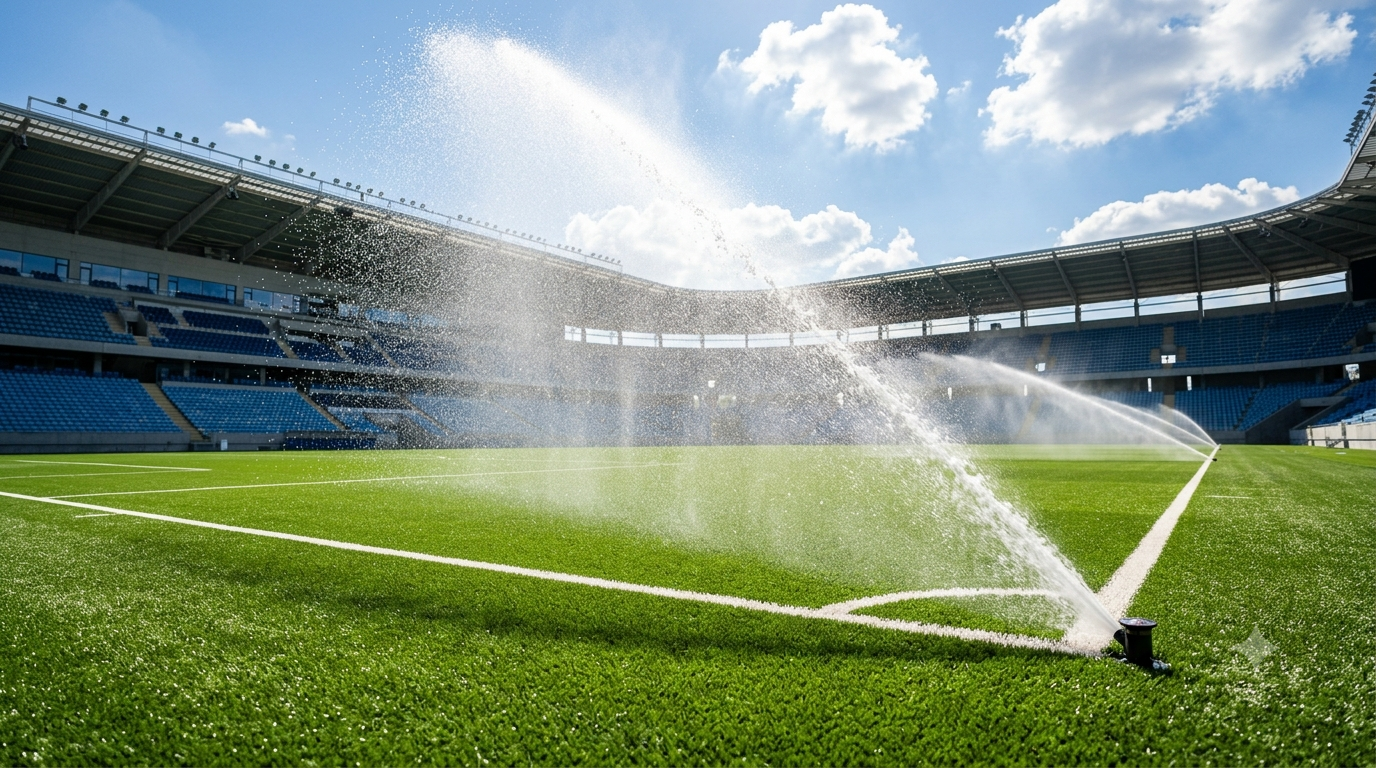
Figure 1: Pop-up sprinkler irrigation.
Quick List: 10 Sports Turf Irrigation Mistakes
1. Running Fixed Irrigation Schedules Year-Round
One of the most common irrigation mistakes is programming the controller once and never updating it.
Turfgrass water requirements change continuously with temperature, solar radiation, humidity, wind, rainfall, and evapotranspiration (ET). A schedule that performs well during midsummer will almost certainly overirrigate the field during spring and fall.
Fix: Use ET-based scheduling or a weather-connected smart controller that automatically adjusts irrigation runtimes according to current environmental conditions.
2. Ignoring Soil Moisture Conditions
Scheduling irrigation solely by the calendar—or by turf appearance—often leads to poor decisions.
Visible drought symptoms usually appear only after the root zone has already experienced moisture stress or prolonged saturation.
Fix: Install soil moisture sensors at approximately 4-inch and 8-inch depths to monitor water availability throughout the active root zone and irrigate only when needed.
Professional Tip: Combining soil moisture sensors with ET-based scheduling provides one of the most effective strategies for improving irrigation efficiency while maintaining high-quality sports turf.
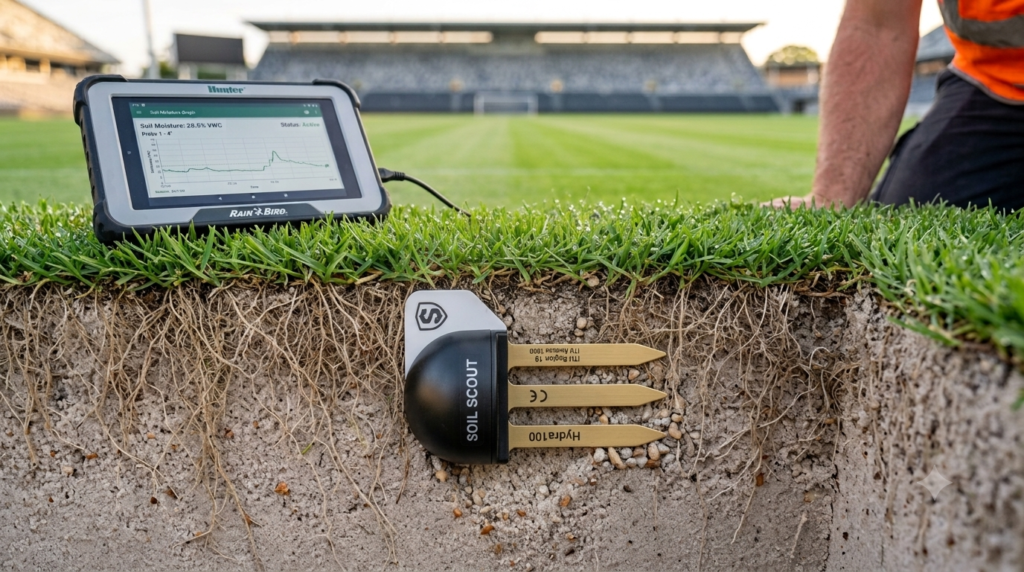
Figure 2. Soil Moisture Sensor Installation on Athletic Field.
3. Watering Every Day
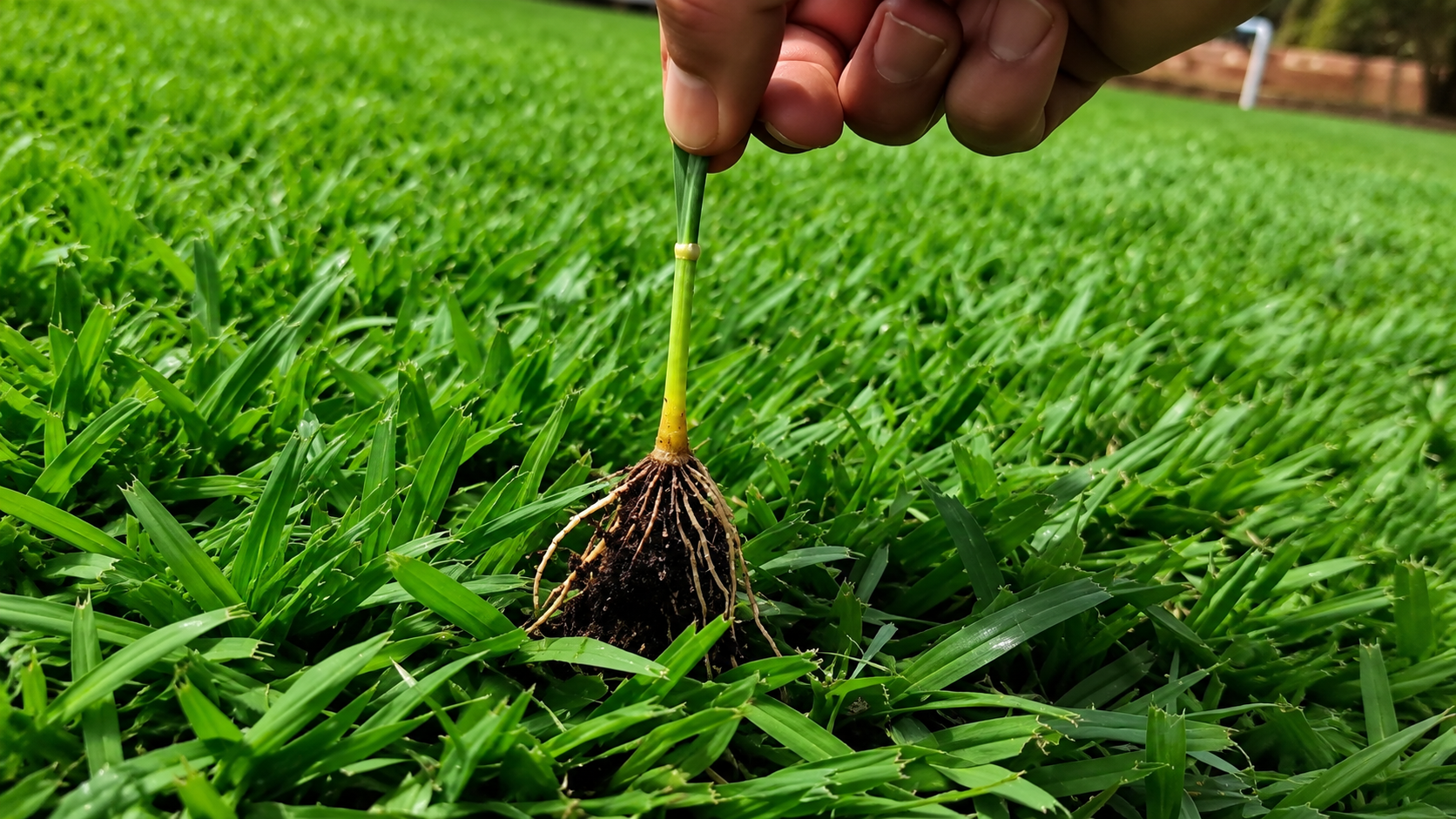
Daily irrigation keeps the upper soil profile continuously wet, encouraging shallow root development.
Shallow-rooted turf becomes more susceptible to drought stress, traffic damage, heat stress, and disease while becoming increasingly dependent on frequent irrigation.
Fix: Apply water deeply and less frequently, allowing the upper soil profile to partially dry between irrigation events whenever soil conditions permit.
4. Skipping Irrigation System Audits
Even a well-designed irrigation system gradually loses efficiency.
Tilted sprinkler heads, partially clogged nozzles, incorrect pressure, worn components, or poor head alignment reduce distribution uniformity long before obvious dry spots appear.
Fix: Perform a catch-can irrigation audit at least once each season. Evaluate sprinkler alignment, nozzle performance, operating pressure, precipitation rate, and overall distribution uniformity.
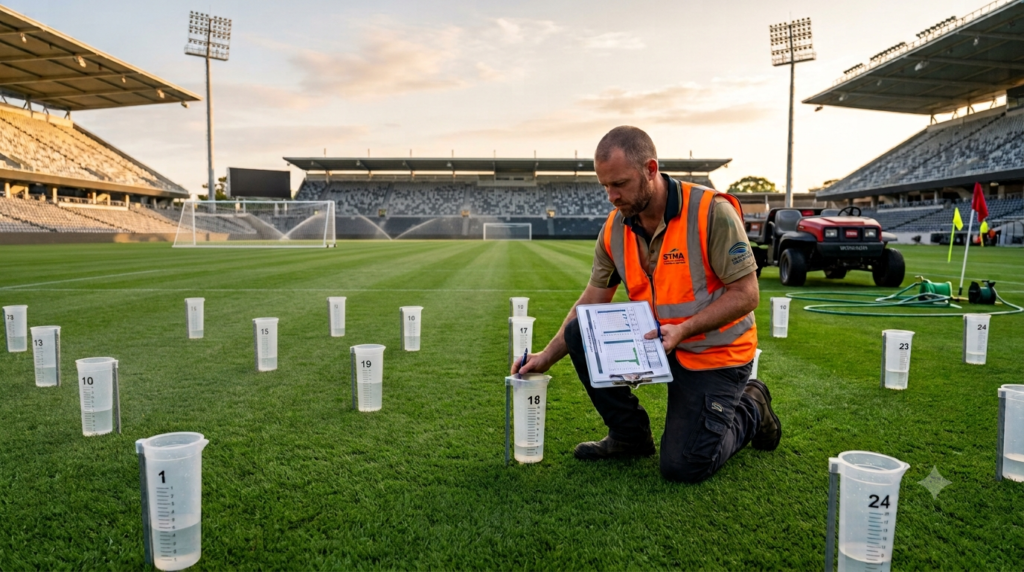
Figure 3: Sports Field Irrigation Audit in Progress.
5. Ignoring Low-Head Drainage
Low-head drainage occurs when water continues draining from the lowest sprinkler heads after the irrigation cycle ends.
These persistent wet areas are often mistaken for overwatering when the actual cause is the absence—or failure—of internal check valves.
Fix: Verify that low-lying sprinkler heads are equipped with properly functioning Seal-A-Matic (SAM) or equivalent check valves.
6. Mixing Different Precipitation Rates Within the Same Zone
Using sprinklers or nozzles with different precipitation rates within a single irrigation zone creates uneven water application.
Some areas become chronically overwatered while others consistently receive insufficient irrigation.
Fix: Always that possible, create zones with rotors that have the same rotation angle. For example, one zone only with rotors operating at 90 degrees (corners).
7. Irrigating at the Wrong Time of Day
Timing significantly affects irrigation efficiency.
Midday irrigation increases evaporation losses, while late-evening irrigation prolongs leaf wetness and may increase disease pressure.
Fix: That will depend on the soil type and weather conditions, but whenever possible complete irrigation between 4:00 a.m. and 6:00 a.m., when wind speeds, temperatures, and evaporative demand are typically lowest.
8. Treating Every Turf Problem with More Water
Yellow turf, thinning areas, and declining performance do not automatically indicate drought stress.
Similar symptoms can result from soil compaction, poor drainage, nutrient deficiencies, disease, excessive moisture, or root damage.
Adding more irrigation without identifying the underlying cause often makes the problem worse.
Fix: Before adjusting irrigation, inspect soil moisture, evaluate root depth, review recent weather conditions, and determine the actual cause of turf decline.
9. Operating Without Flow Monitoring
Leaks, broken sprinkler heads, malfunctioning valves, or stuck solenoids can waste enormous volumes of water before becoming visually obvious.
Without flow monitoring, these problems may remain undetected for weeks.
Fix: Install a flow meter integrated with the irrigation controller to detect abnormal flow rates and automatically generate system alerts.
10. Neglecting Preventive Maintenance
Like any mechanical system, irrigation equipment gradually wears over time.
Filters clog, diaphragms deteriorate, seals wear, and pressure regulation components lose efficiency. These problems reduce irrigation performance even when no visible damage exists.
Fix: Conduct a complete preventive maintenance inspection before each irrigation season. Replace worn components proactively to maintain optimal system performance throughout the year.
Quick Field Checklist: Is Your Irrigation System Wasting Water?
Before making changes to your irrigation schedule, take five minutes to inspect your system.
✔ Is every sprinkler head rotating and retracting properly?
✔ Are there any clogged or partially blocked nozzles?
✔ Are wet spots appearing near low-head drainage areas?
✔ Has the irrigation schedule been adjusted for the current season?
✔ Are soil moisture sensors or ET data being used to support irrigation decisions?
✔ Has the system been audited within the last 12 months?
✔ Are all sprinkler heads providing head-to-head coverage?
If you answered “No” to any of these questions, your irrigation system may be operating below its potential. Correcting even one issue can significantly improve water-use efficiency, turf quality, and long-term system performance.
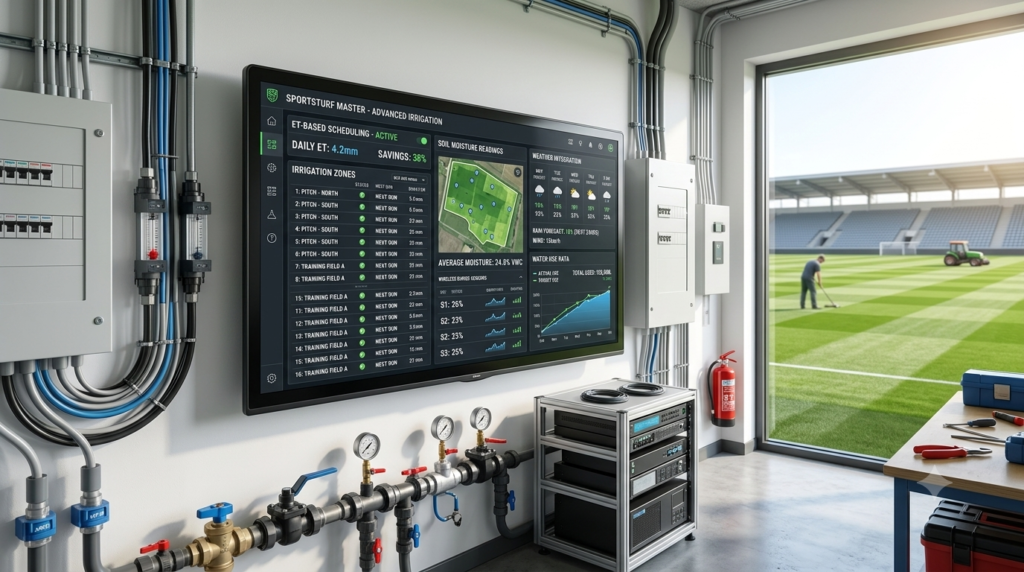
Figure 4.Smart Irrigation Controller for Sports Fields.
Frequently Asked Questions
What is the most common irrigation mistake on sports fields?
Using fixed irrigation schedules throughout the year without adjusting for seasonal weather conditions or evapotranspiration demand.
How often should a sports field irrigation system be audited?
At least once per irrigation season. High-use stadiums and training facilities benefit from additional mid-season audits, especially after major events or heavy maintenance activities.
Can overwatering damage sports turf?
Yes. Excessive irrigation reduces oxygen availability in the root zone, promotes shallow rooting, increases disease pressure, and decreases turf resilience under athletic traffic.
What is the best time to irrigate a sports field?
Early morning—typically between 4:00 a.m. and 6:00 a.m.—offers the best balance between minimizing evaporation losses and allowing foliage to dry before field use.
Do smart irrigation controllers actually save water?
Yes. Research from university extension programs consistently shows that ET-based controllers and sensor-assisted irrigation scheduling can significantly reduce water use while maintaining or improving turf quality when properly installed and managed.
Final Thoughts
Improving irrigation efficiency rarely requires more water or more equipment—it requires better management.
Small adjustments in scheduling, system maintenance, soil moisture monitoring, and irrigation auditing can substantially improve turf quality while reducing water use and operating costs.
For sports field managers committed to delivering safe, high-performance playing surfaces, smarter irrigation decisions often produce the greatest long-term returns.
Continue Learning
Looking to take your irrigation knowledge further?
Explore more practical guides on TurfWaterPro covering irrigation auditing, soil moisture management, sports turf water conservation, sprinkler selection, and professional irrigation system design.
Next Recommended Article:
How to Choose the Best Sprinkler for a Soccer Field: 6 Critical Factors Every Turf Manager Should Know