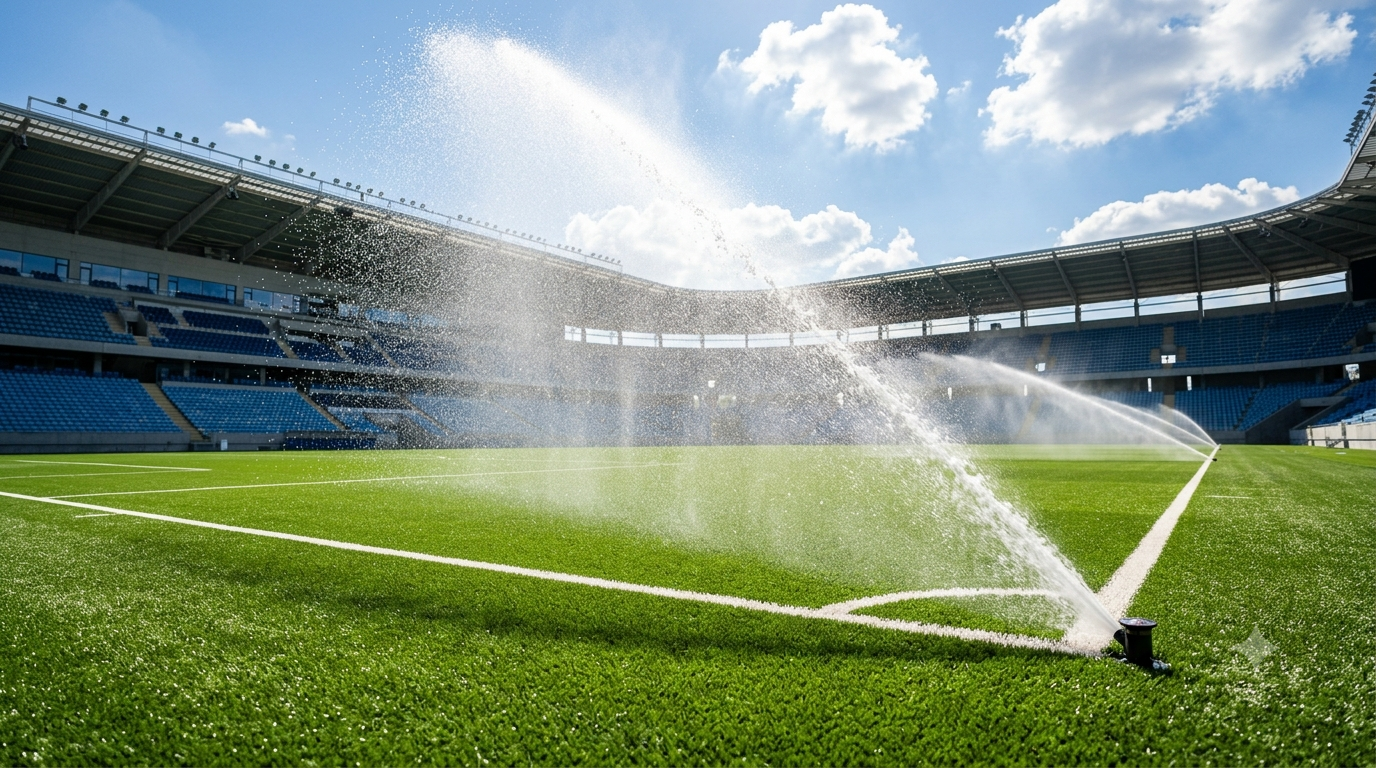


Every sports turf manager wants a dense, green, and resilient playing surface—but the healthiest athletic fields aren’t created by luck or expensive products. They’re built through consistent management decisions made throughout the year.
Most field problems don’t begin with disease outbreaks or irrigation failures. Instead, they develop gradually through small mistakes that accumulate over time: watering too often, mowing at the wrong height, skipping aeration, or relying on guesswork instead of data.
Whether you manage a professional stadium, a municipal sports complex, or a school athletic field, these ten proven practices will help improve turf health, increase player safety, reduce water waste, and lower long-term maintenance costs.
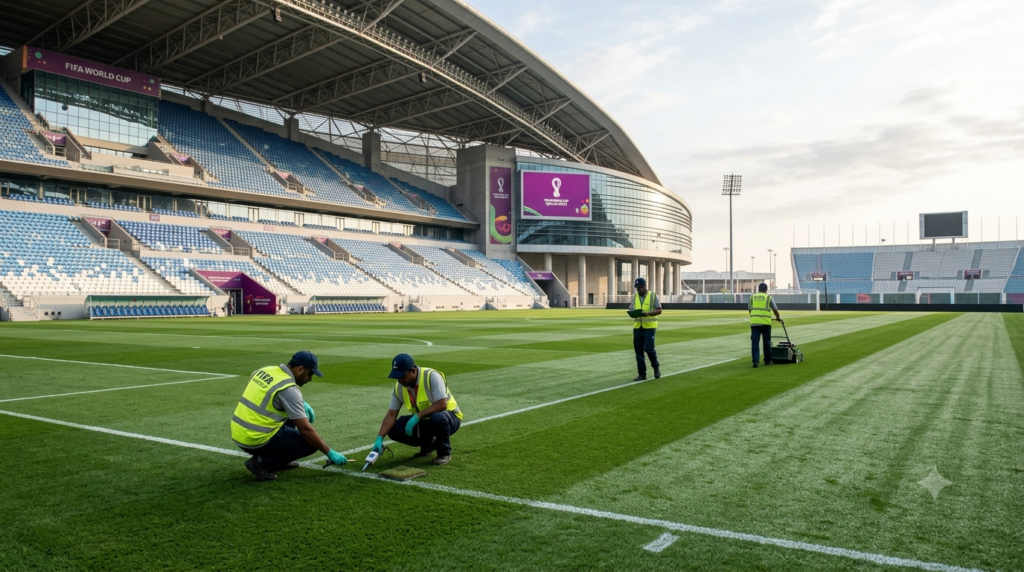
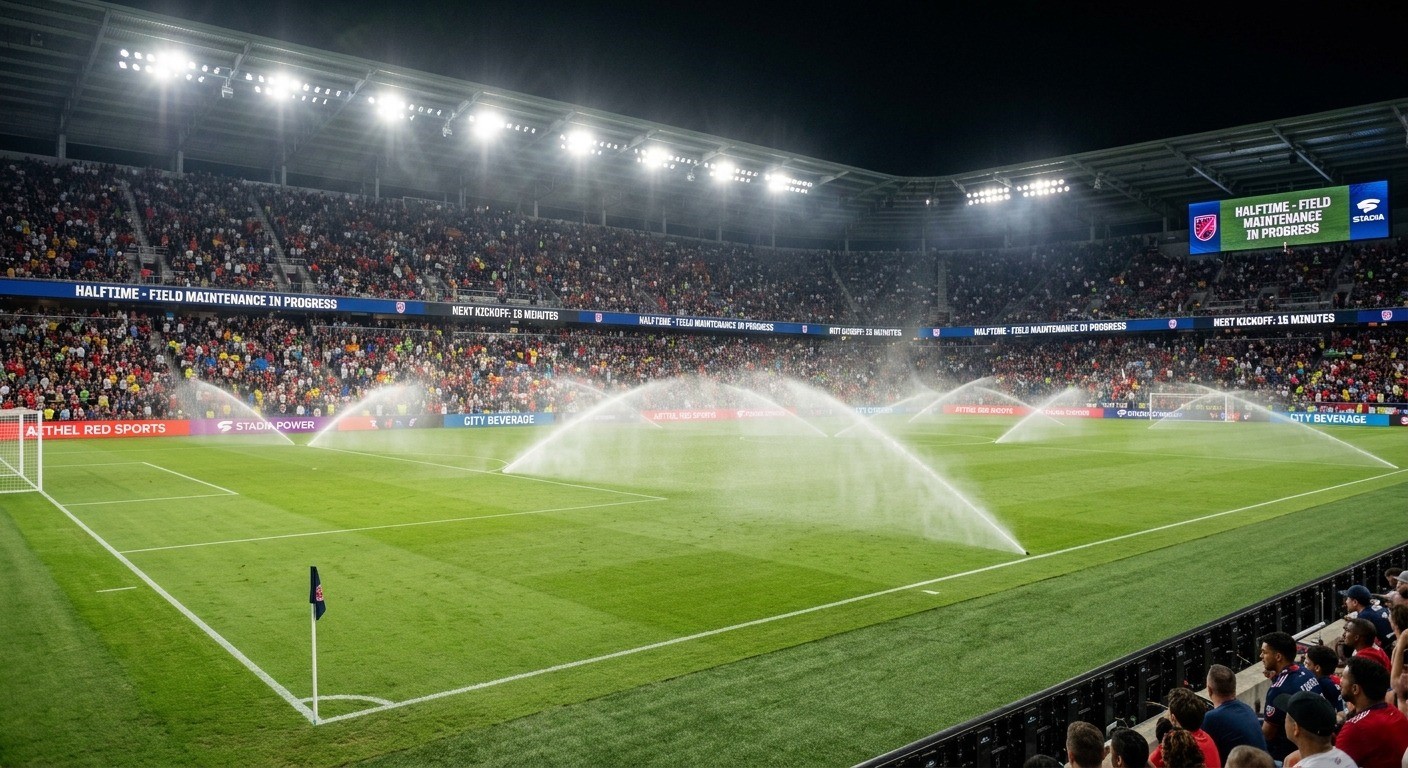
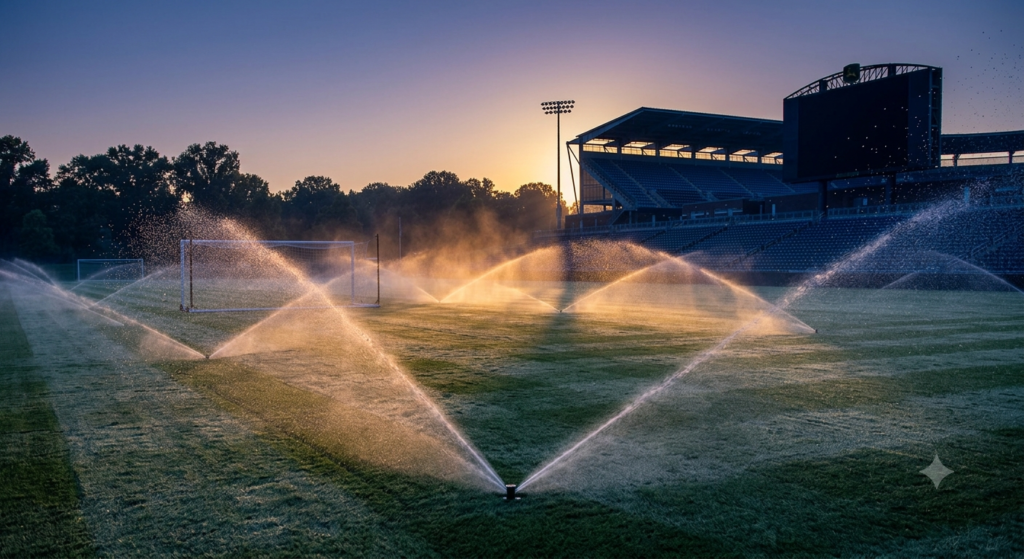
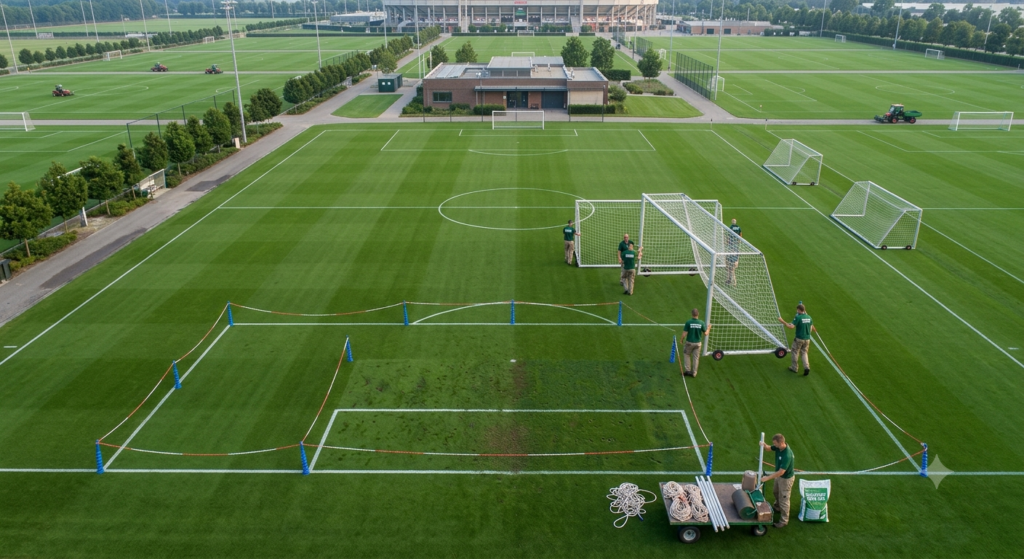
Figure 1.Professional Athletic Field Maintenance Before Match Day.
✅ Quick Field Checklist
Before diving into the details, ask yourself:
✔ Is your grass species adapted to your climate?
✔ Do you irrigate deeply instead of daily?
✔ Have you audited your irrigation system this season?
✔ Do you monitor soil moisture instead of relying on appearance?
✔ Is your fertility program based on a recent soil and tissue testing ?
✔ Are you mowing at the recommended height?
✔ Is your field aerated regularly?
✔ Does irrigation finish before sunrise?
✔ Do you rotate high-traffic areas ?
✔ Do you follow a post-season recovery plan?
If you answered “no” to any of these questions, there’s an opportunity to improve your field.
1. Choose the Right Grass Species for Your Climate
Nothing influences long-term turf performance more than selecting the appropriate grass species.
A warm-season grass growing in a cool climate—or a cool-season grass exposed to prolonged summer heat—will struggle regardless of how much fertilizer, irrigation, or maintenance it receives.
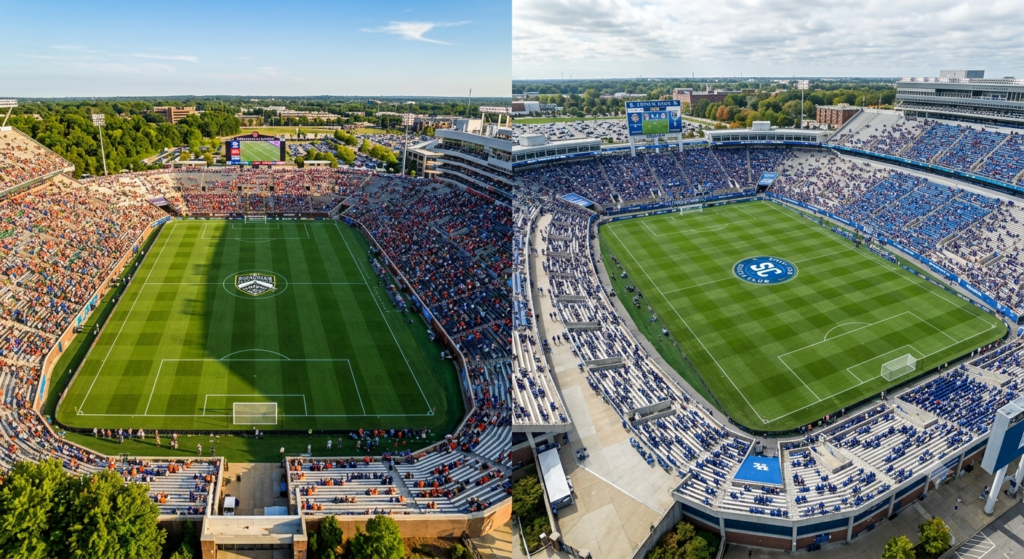
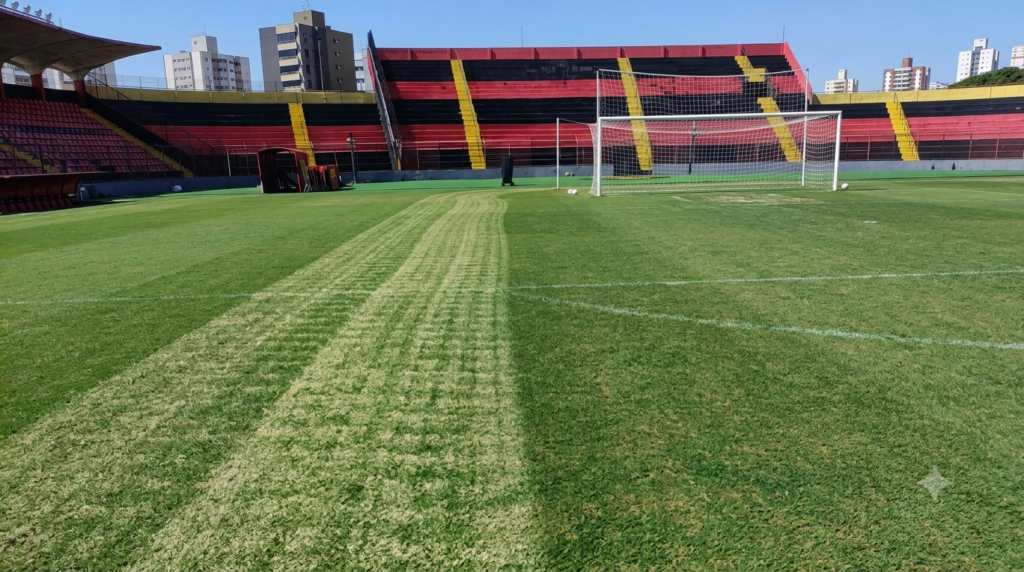
Figure 1. Warm-Season vs. Cool-Season Turfgrass for Athletic Fields.
As a general rule:
- Bermudagrass and zoysiagrass perform best in warm climates and the transition zone.
- Kentucky bluegrass, perennial ryegrass, and tall fescue are better suited to cooler regions.
Selecting the correct species reduces irrigation demand, improves disease resistance, and increases recovery from athletic traffic.
✅ Professional Tip
Before renovating a field, review your local climate, expected field usage, and maintenance budget. The best-performing turfgrass isn’t always the most popular one—it’s the one best adapted to your site conditions.
2. Water Deeply—Not Every Day
One of the most common mistakes in sports turf management is applying small amounts of water every day.
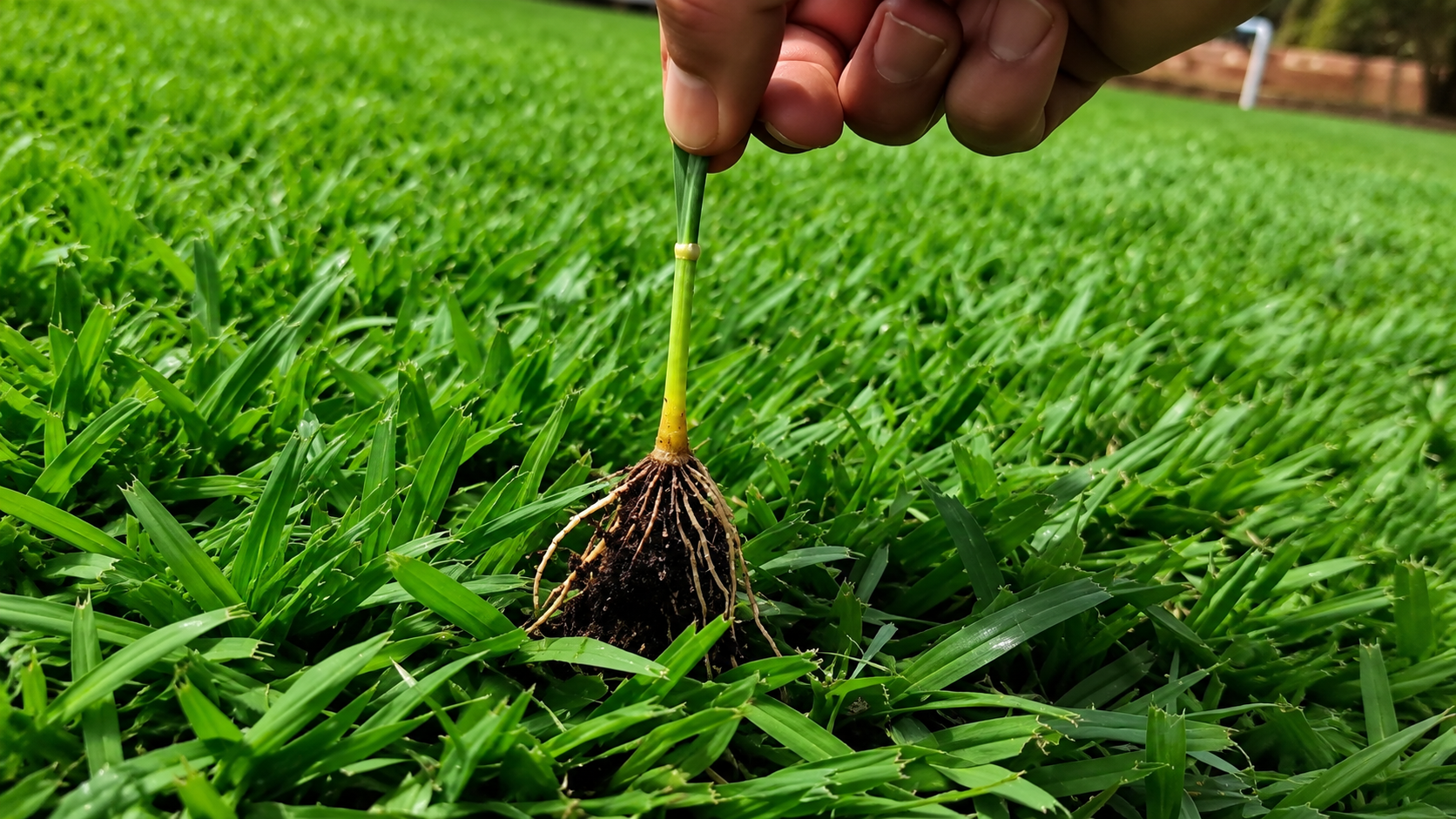
Frequent, shallow irrigation keeps moisture concentrated near the soil surface, encouraging shallow root systems that are less tolerant of drought, heat, and heavy athletic traffic.
Instead, irrigate deeply enough to wet the rootzone—typically 6 to 8 inches for established athletic fields—and allow the upper soil profile to dry slightly before the next irrigation event.
This approach encourages deeper rooting, improves drought resilience, and creates a firmer, safer playing surface.
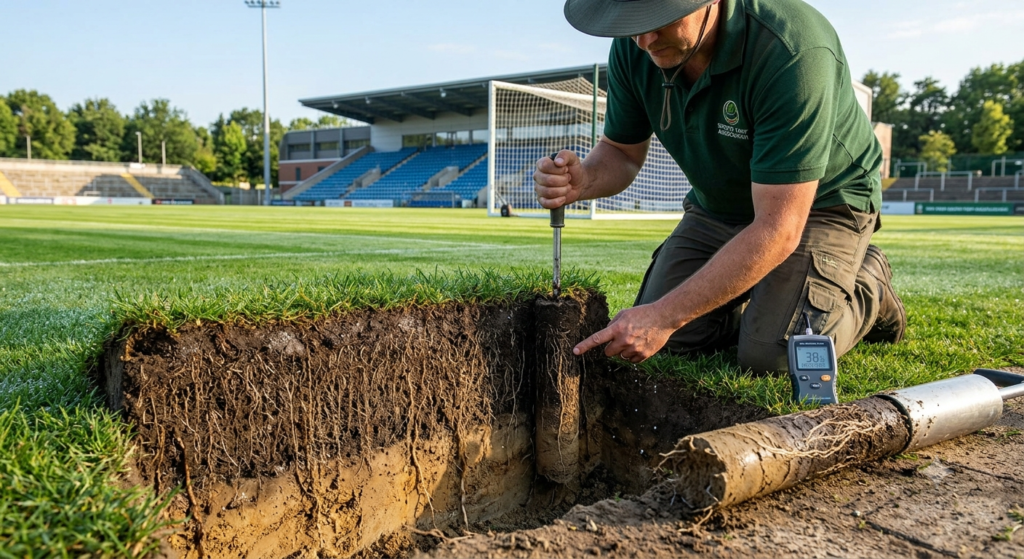
Figure 2. Deep Irrigation Promotes Stronger Sports Turf Roots (AI Image).
Why it works
Deep irrigation promotes:
Stronger root development
Better water-use efficiency
Improved traffic tolerance
Reduced disease pressure
Lower annual water consumption
3. Monitor Soil Moisture Instead of Guessing
Healthy turf begins below the surface.
Waiting until grass appears wilted or discolored often means the rootzone has already experienced unnecessary stress—or has remained overly wet for several days.
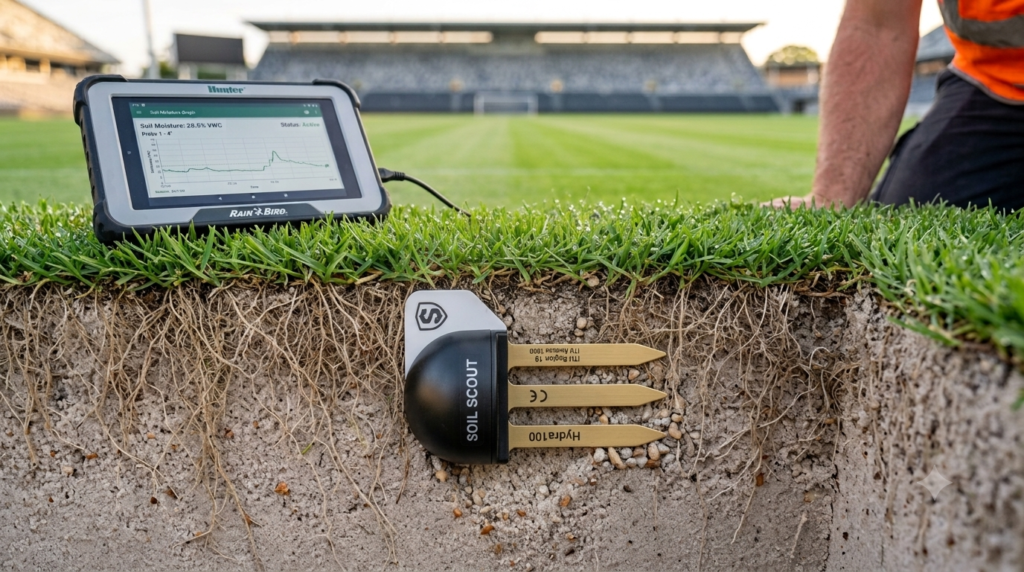
Modern soil moisture sensors allow managers to make irrigation decisions based on real rootzone conditions rather than visual appearance alone.
Many university extension studies have shown that sensor-based irrigation scheduling can significantly reduce water use while maintaining excellent turf quality.

Figure 3.Using Soil Moisture Sensors on Athletic Fields.
Best Practice
Install sensors at multiple depths (commonly 4 inches and 8 inches) to understand how water moves through the rootzone and to avoid both under- and over-irrigation.
📦 Professional Insight
One of the most common observations during irrigation audits is that fields showing “drought stress” are often suffering from poor irrigation distribution or soil compaction—not a lack of water. Measuring soil moisture before adjusting irrigation schedules prevents unnecessary watering and helps identify the true cause of turf decline.
4. Audit Your Irrigation System Every Season
Even the best-designed irrigation system loses efficiency over time.
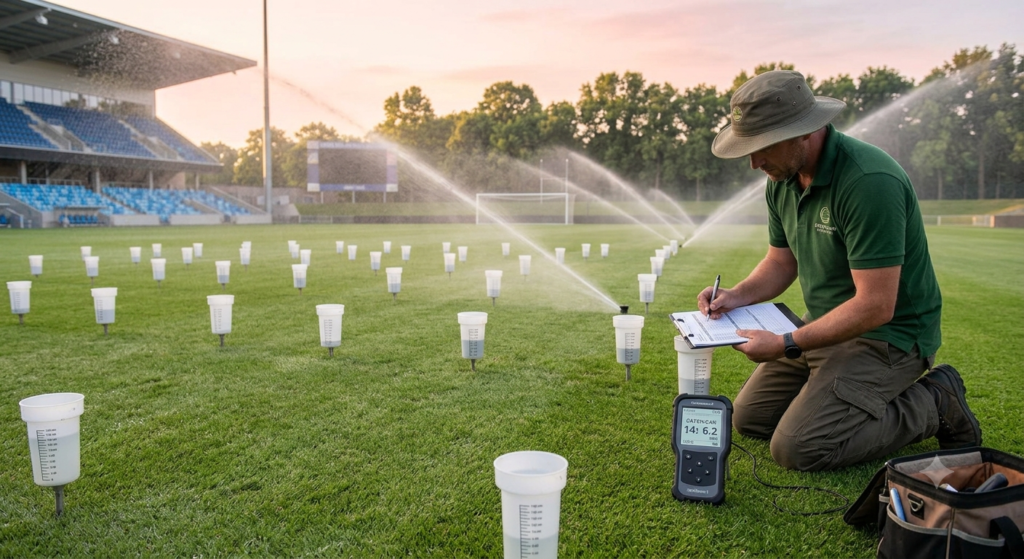
Sprinkler heads can become misaligned, nozzles may clog with debris, pressure can fluctuate, and normal wear gradually reduces distribution uniformity (DU). Because these problems develop slowly, many go unnoticed until dry spots or inconsistent turf quality appear.
A seasonal irrigation audit helps identify issues before they become expensive repairs—or affect field performance.

Figure 4. Catch-Can Irrigation Audit on a Professional Soccer Field.
Best Practice
At least once per season:
- Perform a catch-can distribution uniformity test.
- Check sprinkler alignment and arc adjustment.
- Measure operating pressure at representative heads.
- Inspect nozzles for wear or clogging.
- Verify head-to-head coverage across the field.
Correcting small irrigation deficiencies early often improves turf quality more than simply increasing run times.
📦 Professional Tip
Many managers respond to dry areas by increasing irrigation duration. During field audits, however, the underlying problem is often poor sprinkler performance rather than insufficient watering. Always verify system performance before adjusting the controller.
5. Aerate Before Compaction Becomes a Problem
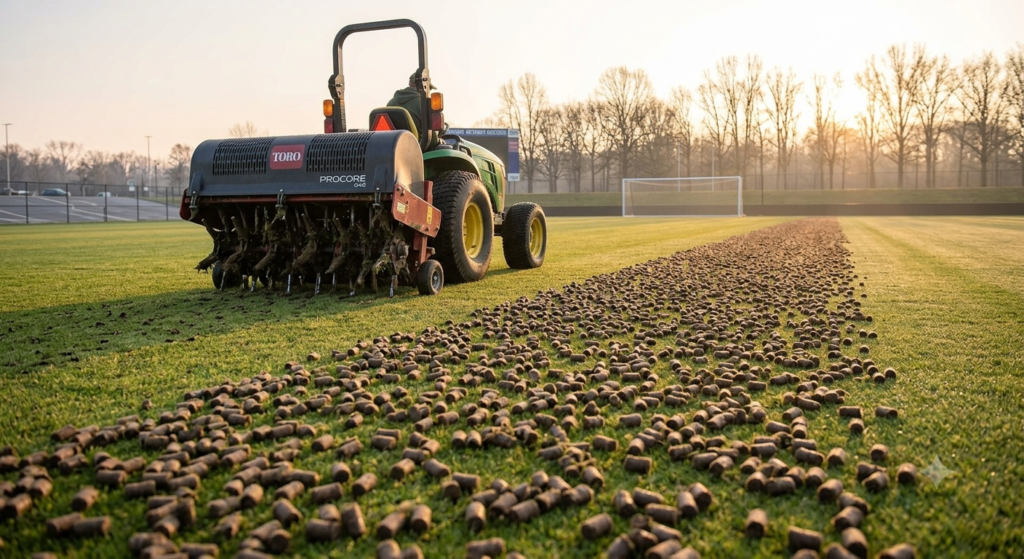
Compaction is inevitable on athletic fields—but severe compaction is preventable.
Every training session, match, maintenance vehicle, and mowing operation gradually reduces soil pore space, limiting oxygen movement and restricting root growth.
Waiting until turf decline becomes visible means the damage has already occurred.
Core aeration should be viewed as preventive maintenance rather than corrective maintenance.

Figure 5. Core Aeration Improves Athletic Field Performance.
General Recommendations
Although schedules vary with soil type and field usage:
- Native soil fields often benefit from two to four core aeration events per year.
- Sand-based fields generally require less frequent aeration but still benefit from periodic deep-tine operation.
Aeration improves:
- Root development
- Water infiltration
- Oxygen exchange
- Surface firmness
- Recovery from athletic traffic
6. Base Your Fertility Program on Soil and Tissue Testing
Applying fertilizer without current soil test results is little more than educated guesswork.
While nitrogen drives turf growth, excessive applications can produce lush leaf tissue at the expense of root development, increase mowing frequency, and elevate disease pressure—particularly during periods of environmental stress.

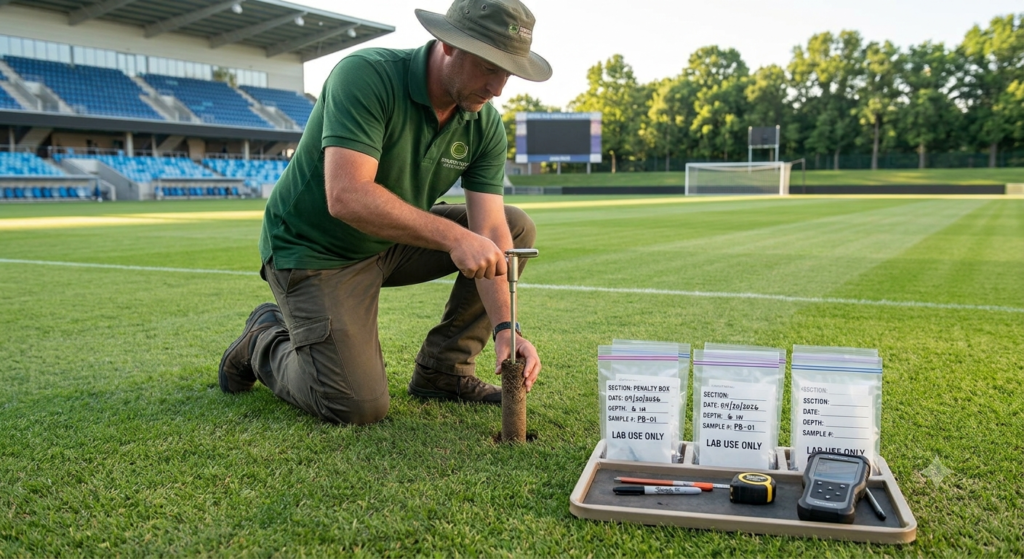
Figure 6. Collecting Soil Samples for Sports Turf Fertility Management.
Annual soil testing provides valuable information about:
- Soil pH
- Organic matter
- Phosphorus (P)
- Potassium (K)
- Micronutrient availability
Soil testing should be complemented with periodic turfgrass tissue analysis whenever possible. While a soil test indicates the nutrients available in the rootzone, tissue analysis reveals what the plant has actually absorbed. Together, these tools provide a more complete picture of turf nutrition and help identify hidden deficiencies before visible symptoms develop.
Tissue analysis is especially valuable for monitoring nitrogen (N), potassium (K), iron (Fe), magnesium (Mg), manganese (Mn), and other micronutrients that directly influence turf color, density, stress tolerance, and recovery. Many sports turf managers collect tissue samples two to four times during the growing season, particularly before periods of peak play or environmental stress, to fine-tune fertilizer applications and maintain consistent field performance.
Using soil and tissue analysis together allows managers to improve nutrient efficiency, avoid unnecessary fertilizer applications, and make more informed agronomic decisions throughout the season.
Professional Recommendation
Develop a fertility program based on both soil and tissue analysis, matching nutrient applications to the specific needs of your turfgrass species, soil conditions, and expected field use rather than following a generic calendar schedule.
7. Mow at the Proper Height for Your Turfgrass Species
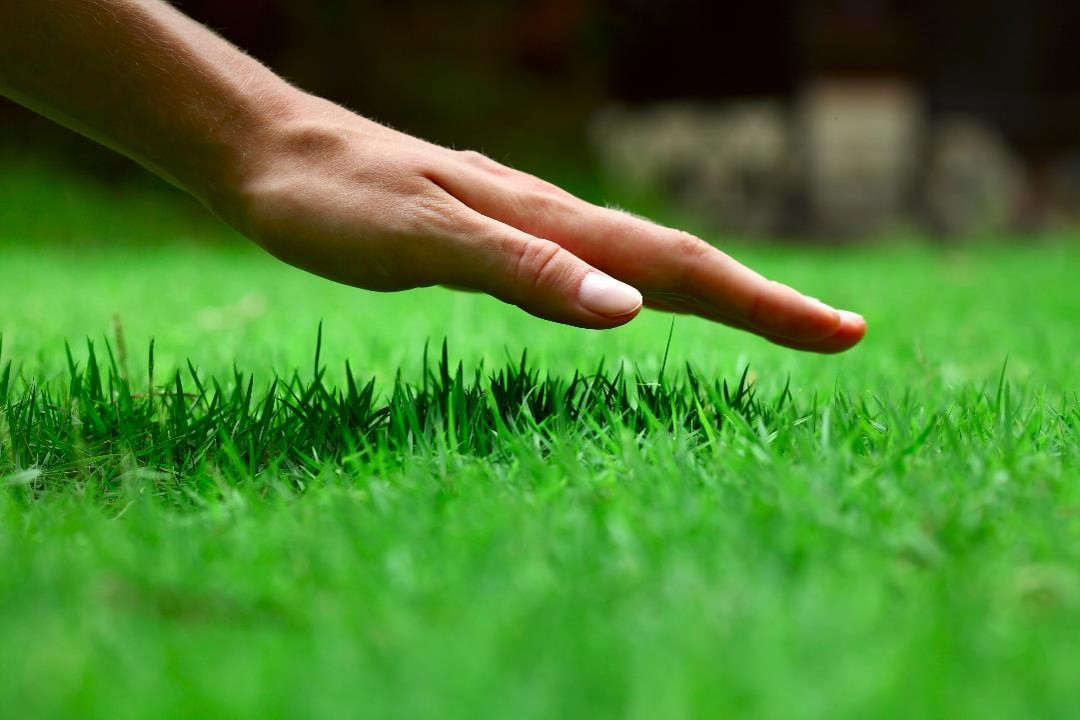
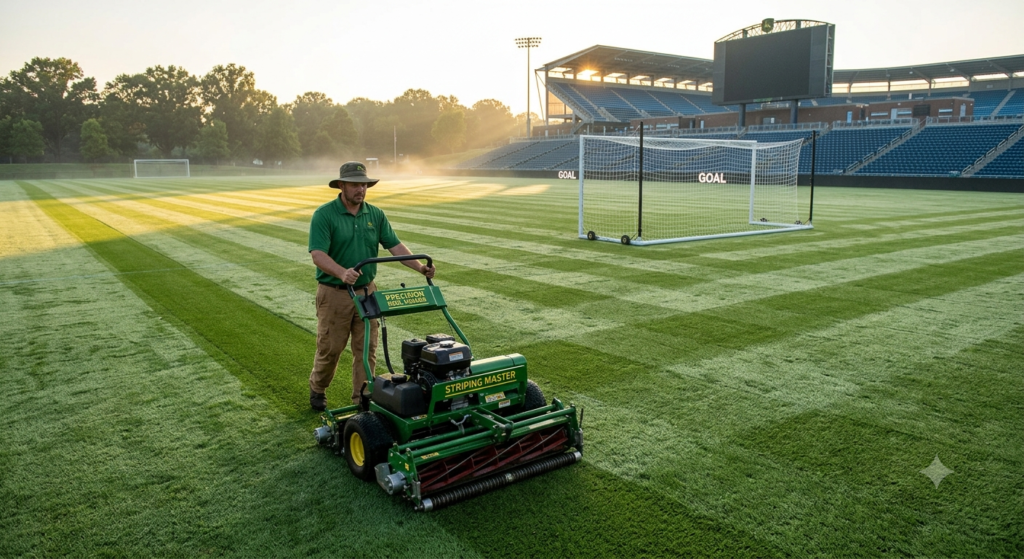
Mowing influences far more than appearance.
Cutting too low removes valuable leaf area needed for photosynthesis, reduces carbohydrate reserves, weakens roots, and increases stress during hot weather.
Allowing turf to grow excessively tall creates its own problems, including reduced ball roll, increased disease pressure, and lower playing quality.
The ideal mowing height depends on the turfgrass species and sport being played.

Figure 7: Proper Mowing Practices for Athletic Fields.
Typical Athletic Field Guidelines
Warm-season grasses
- Bermudagrass: approximately 0.75 to 1.5 inches
Cool-season grasses
- Kentucky bluegrass
- Perennial ryegrass
- Tall fescue
Generally perform best between 2 and 3 inches, depending on management intensity and field use.
Another important guideline is the one-third rule: never remove more than one-third of the leaf blade during a single mowing event.
Following this principle minimizes stress and supports healthier turf throughout the growing season.
📦 Professional Tip
Sharp mower blades are just as important as mowing height. Dull blades tear leaf tissue instead of producing a clean cut, increasing water loss and making turf more susceptible to disease.
8. Irrigate at the Right Time of Day
When you irrigate can be just as important as how much you irrigate.
Applying water during the hottest part of the afternoon increases evaporative losses and reduces irrigation efficiency. On the other hand, irrigating late in the evening can leave the turf canopy wet overnight, creating ideal conditions for diseases such as dollar spot, large patch, brown patch and Pythium blight.
The most effective irrigation window for most athletic fields is early morning, allowing water to infiltrate the rootzone while giving leaf surfaces enough time to dry after sunrise.

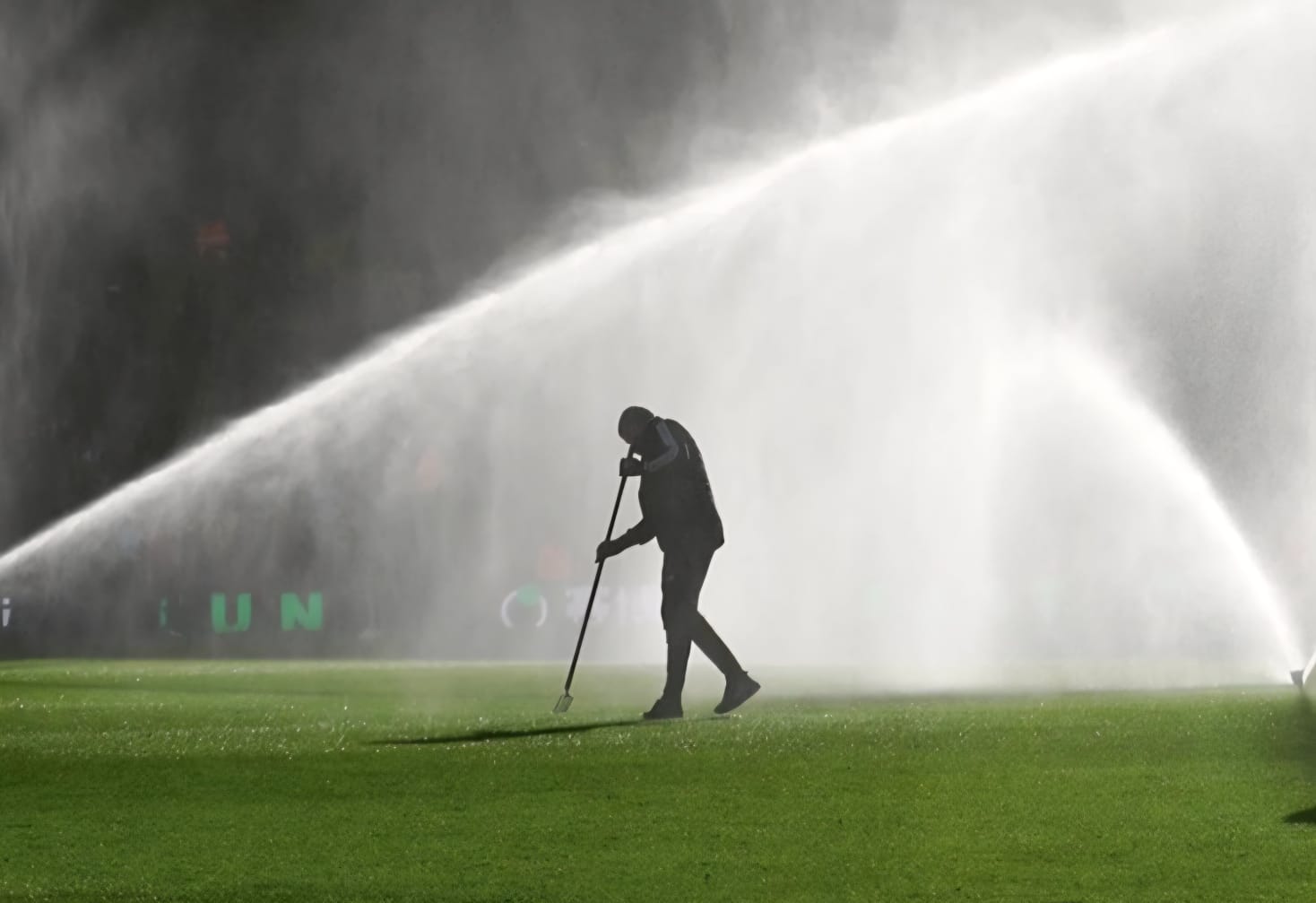
Figure 8. Early Morning Irrigation on a Professional Soccer Field.
Best Practice
Whenever possible, schedule irrigation to finish between 4:00 and 6:00 a.m.
This timing helps:
- Maximize irrigation efficiency
- Minimize evaporation losses
- Reduce disease pressure
- Improve field availability for morning practices
📦 Professional Tip
Modern ET-based smart controllers automatically adjust irrigation run times based on weather conditions. When paired with soil moisture sensors, they can significantly improve water-use efficiency while reducing unnecessary irrigation events.
9. Manage Field Traffic to Reduce Wear
Even the healthiest turfgrass cannot recover if the same areas receive repeated traffic every day.
Goalmouths, center circles, sidelines, player warm-up zones, and team benches typically experience the greatest wear. Without a traffic management strategy, these locations deteriorate much faster than the rest of the field.
Rather than asking the turf to tolerate unlimited use, successful managers distribute wear whenever possible.

Figure 9. Managing Athletic Field Traffic for Better Turf Recovery.
Practical Strategies
- Rotate practice locations.
- Alternate warm-up areas.
- Move portable goals regularly.
- Rest high-wear zones whenever scheduling allows.
- Rotate activities among multiple fields in sports complexes.
These simple management decisions often have a greater impact on turf longevity than additional irrigation or fertilizer applications.
📦 Professional Insight
One of the clearest differences between elite facilities and average facilities is not the quality of the irrigation system—it’s how traffic is managed. The best turf managers understand that protecting the turf is often more effective than trying to repair it later.
10. Finish Every Season with a Recovery Plan
Championship-quality fields are built during the off-season.
Once the playing season ends, the objective shifts from maintaining playability to restoring turf health before the next period of heavy use.
Post-season recovery typically includes:
- Core aeration
- Topdressing
- Overseeding (cool-season fields)
- Sprigging or plugging (warm-season fields when appropriate)
- Fertility adjustments based on soil tests and leaf analysis
- Irrigation system inspection and repairs
Facilities that invest in recovery immediately after the season consistently begin the following year with healthier turf, fewer repairs, and lower maintenance costs.

Figure 10. Post-Season Athletic Field Recovery Program (Topdressing).
Think Long-Term
Skipping post-season recovery may reduce expenses today, but it often leads to significantly higher renovation costs before the next playing season.
Key Takeaways
Healthy athletic fields are rarely the result of one exceptional practice.
Instead, they reflect the consistent execution of proven management fundamentals:
✔ Select turfgrass adapted to your climate.
✔ Irrigate deeply and schedule watering based on plant demand—not the calendar.
✔ Monitor soil moisture before adjusting irrigation.
✔ Audit your irrigation system regularly.
✔ Base fertility programs on soil testing and leaf analysis.
✔ Mow at the proper height with sharp blades.
✔ Relieve compaction before it limits root growth.
✔ Minimize unnecessary traffic in high-wear areas.
✔ Invest in post-season recovery to prepare for the next season.
When these practices work together, athletic fields become more resilient, safer for athletes, more water-efficient, and less expensive to maintain over the long term.
Frequently Asked Questions
1. What is the most important factor in maintaining a healthy athletic field?
No single practice guarantees success. Healthy athletic fields result from combining proper turfgrass selection, efficient irrigation, balanced fertility, regular aeration, correct mowing, and proactive traffic management. Consistency throughout the year is far more important than any individual product or maintenance operation.
2. How often should a sports field be irrigated?
There is no universal schedule. Irrigation frequency depends on weather conditions, soil type, turfgrass species, rooting depth, and field use.
Rather than watering every day, most professionally managed athletic fields perform better when irrigation is scheduled according to evapotranspiration (ET) and soil moisture conditions, applying enough water to replenish the rootzone before allowing it to dry slightly between irrigation events.
3. Why is soil moisture monitoring better than watering on a schedule?
Visual appearance often reflects plant stress long after soil moisture has changed.
Soil moisture sensors provide real-time information from the rootzone, allowing irrigation decisions to be based on actual plant needs instead of fixed calendar schedules. This approach improves water-use efficiency while helping prevent both drought stress and overwatering.
4. When should athletic fields be aerated?
Aeration frequency depends on traffic intensity and soil conditions.
Most high-use natural grass athletic fields benefit from two to four core aeration events per year, while sand-based systems may require fewer operations. The objective is to relieve compaction before it restricts root growth and water infiltration.
5. What is the best time of day to irrigate a sports field?
For most climates, irrigation should finish before sunrise, typically between 4:00 and 6:00 a.m.
Early morning irrigation reduces evaporative losses, minimizes wind drift, and allows leaf surfaces to dry after sunrise, helping reduce disease pressure.
6. Can smart irrigation controllers really save water?
Yes.
When combined with weather data, ET calculations, and soil moisture monitoring, smart irrigation controllers can significantly improve irrigation efficiency while maintaining excellent turf quality.
Instead of applying water on fixed schedules, these systems adjust irrigation based on actual environmental conditions.
Final Thoughts
Exceptional athletic fields are not built through shortcuts.
They result from thousands of small management decisions made correctly throughout the year.
The healthiest playing surfaces don’t necessarily receive more water, more fertilizer, or more maintenance—they receive better management.
By focusing on irrigation efficiency, soil health, traffic management, and preventive maintenance, sports turf professionals can produce safer, greener, and more resilient fields while reducing long-term operating costs.
Whether you oversee a municipal sports complex or a professional stadium, the same principle applies:
Great fields are managed proactively—not reactively.
Looking for more practical irrigation and sports turf management insights?
Explore our complete resource library at TurfWaterPro, where we cover irrigation scheduling, water management, irrigation system design, sports field maintenance, and the latest best management practices for natural grass athletic fields.
👉 Next Read: 10 Sports Turf Irrigation Mistakes That Waste Thousands of Gallons Every Year