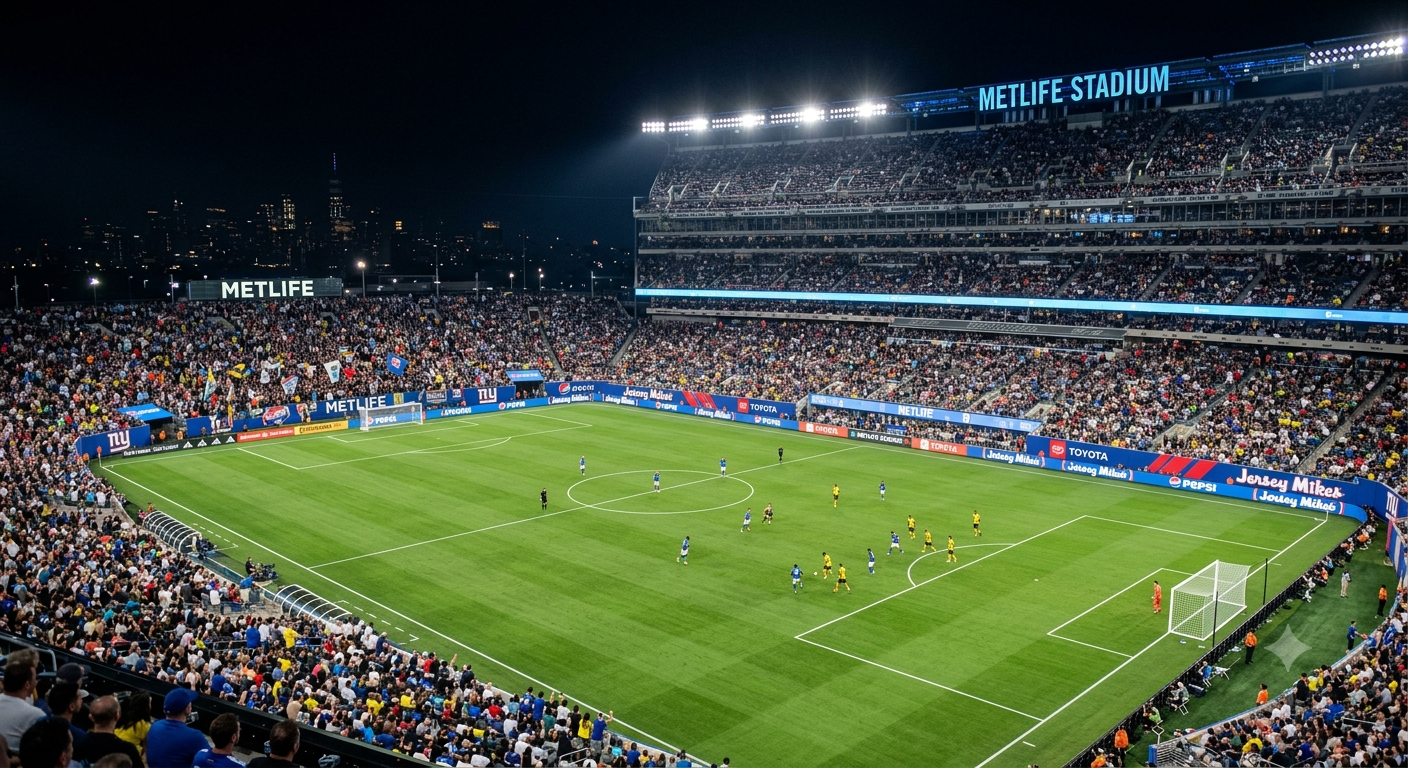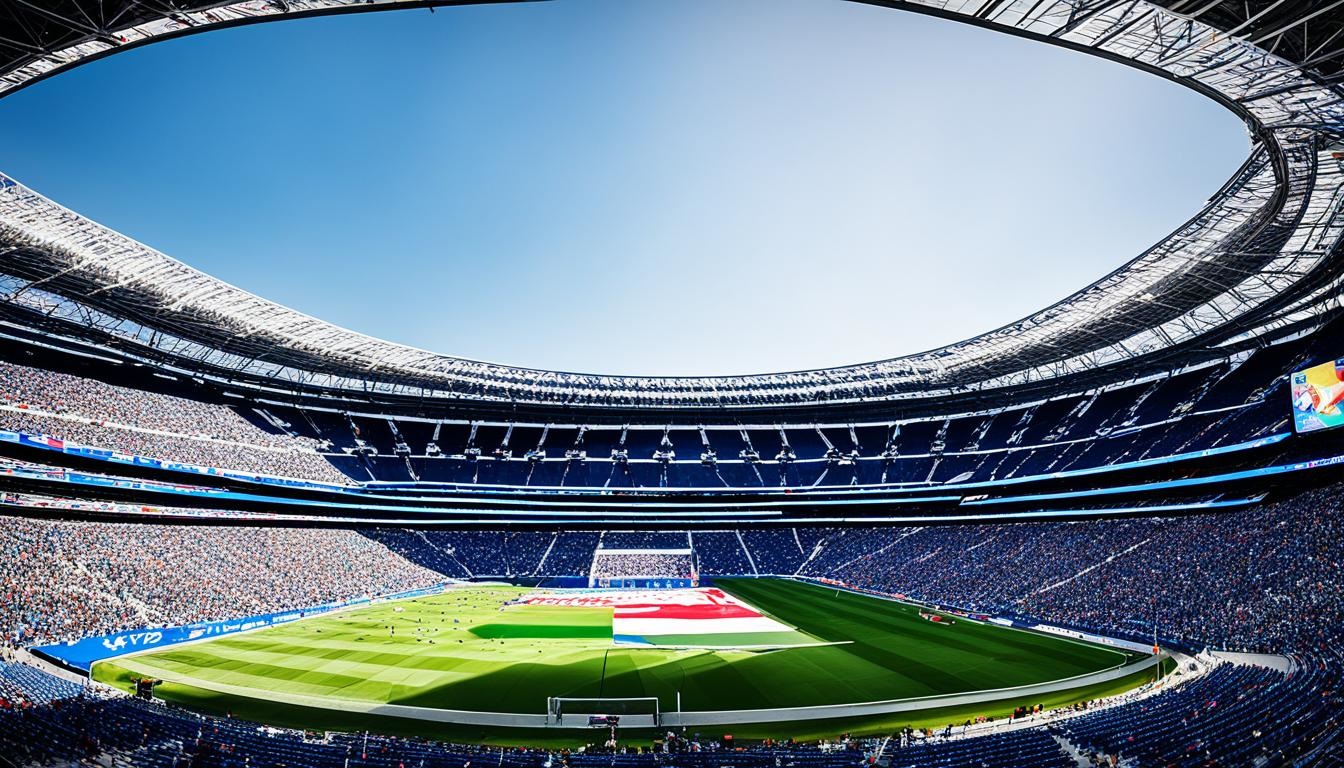

Replacing an entire soccer field in less than two weeks may sound impossible—but for many professional stadiums, it’s becoming standard practice. The professional soccer stadium turf replacement process has evolved dramatically thanks to advances in sod production, logistics, and installation technology.
One of the best recent examples comes from Arena Fonte Nova in Salvador, Brazil, where the entire natural grass playing surface was replaced in just 12 days during an international FIFA window. The project demonstrates how modern turf production and careful planning can minimize downtime while delivering a match-ready field for elite competition.
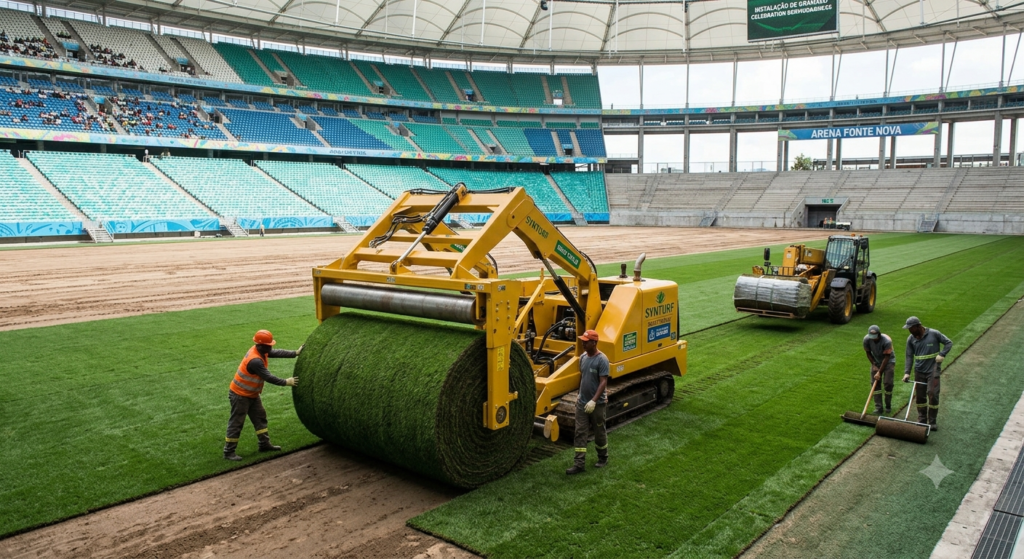
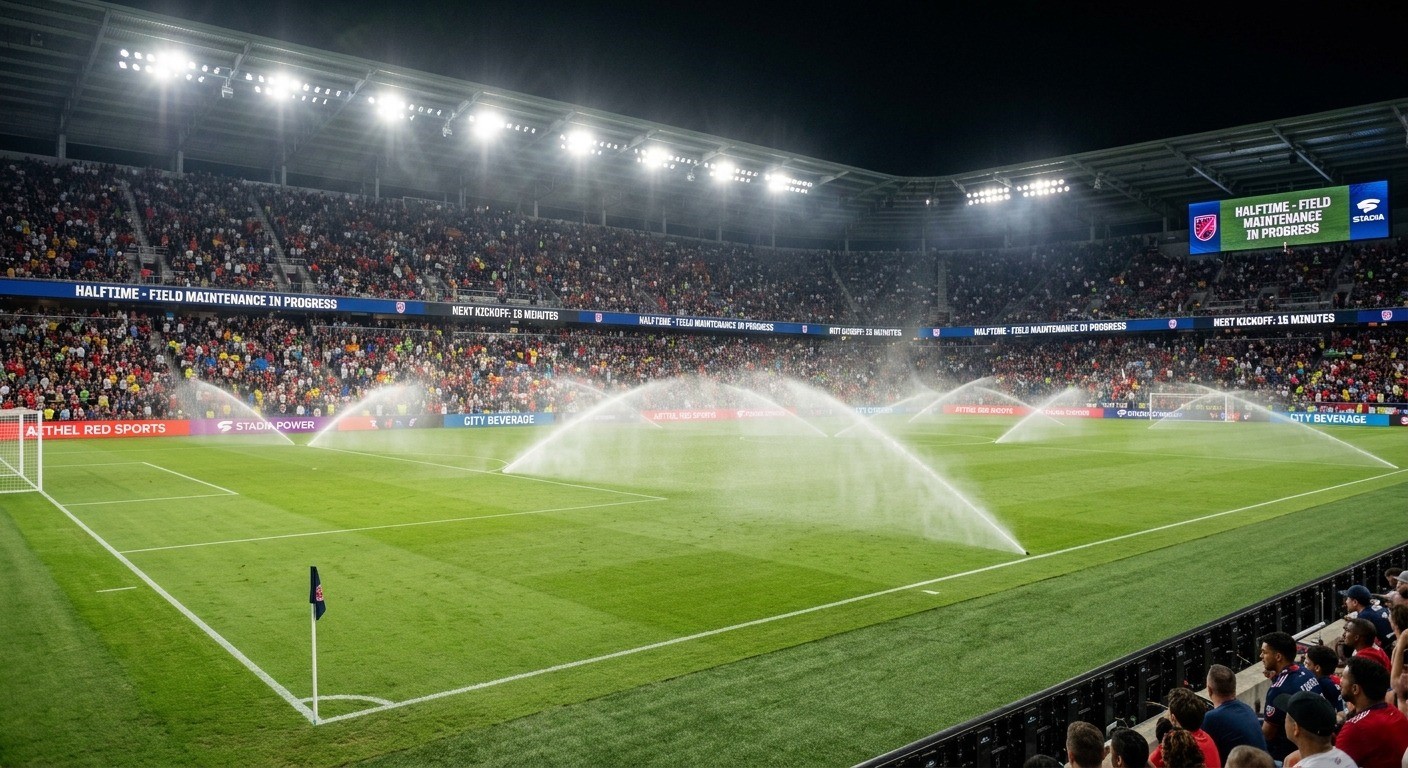
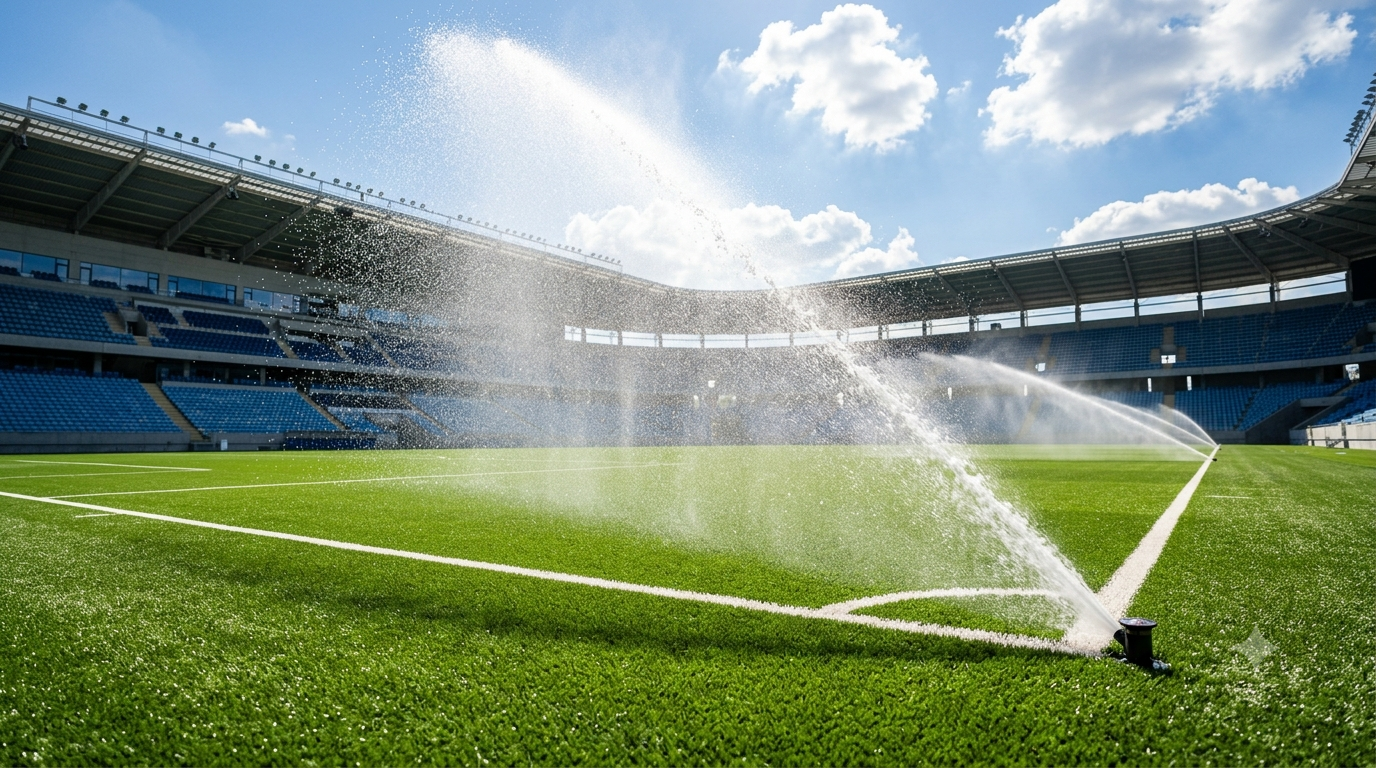
Figure1. Large-Format Ready-to-Play Sod Installation (AI Image).
How Professional Soccer Stadium Turf Replacement Works
Unlike conventional sod installations, modern stadium renovations utilize “Ready-to-Play” systems. This system involves producing thicker turf rolls that, once installed, create a pitch ready for play in record time—ranging from two to three days. It is, therefore, the most advanced technology currently available in Brazil.
For the Arena Fonte Nova project, the new surface consisted of Celebration Bermudagrass, a warm-season turfgrass widely used in professional sports facilities due to its wear tolerance, rapid recovery, and excellent visual quality. 👉 See too: Grass grown on plastic for the 2026 World Cup stadiums
Approximately 600 sod rolls, each measuring 12 meters (39 ft) long by 1.2 meters (4 ft) wide, were harvested, transported, and installed over a carefully coordinated schedule.
Key Lessons from Arena Fonte Nova’s Turf Replacement:
1. Logistics Are as Important as Turf Quality
A successful turf replacement begins long before installation day.
At Arena Fonte Nova, harvesting, transportation, and installation were synchronized to minimize the time between sod removal from the farm and placement inside the stadium. The average interval was approximately 12 hours, helping preserve turf freshness and root viability.
2. Large Sod Rolls Speed Up Installation
Using oversized sod rolls dramatically reduces the number of seams compared to conventional palletized sod.
Fewer seams improve field uniformity, enhance rooting, and allow the surface to become playable much sooner.
3. Team Coordination Determines Success
Projects of this scale require specialists in harvesting, transportation, irrigation, turf installation, and field finishing.
The Arena Fonte Nova replacement involved approximately 30 professionals and a transportation fleet of up to 35 trucks, moving nearly 500 metric tons of sod within an extremely tight schedule.
4. Choosing the Right Turfgrass Matters
Celebration Bermudagrass has been used at Arena Fonte Nova since 2013 because of its excellent traffic tolerance, rapid establishment, and ability to maintain high-quality playing conditions under intense use.
Selecting a turf species adapted to local climate and stadium conditions remains one of the most important decisions in any replacement project.
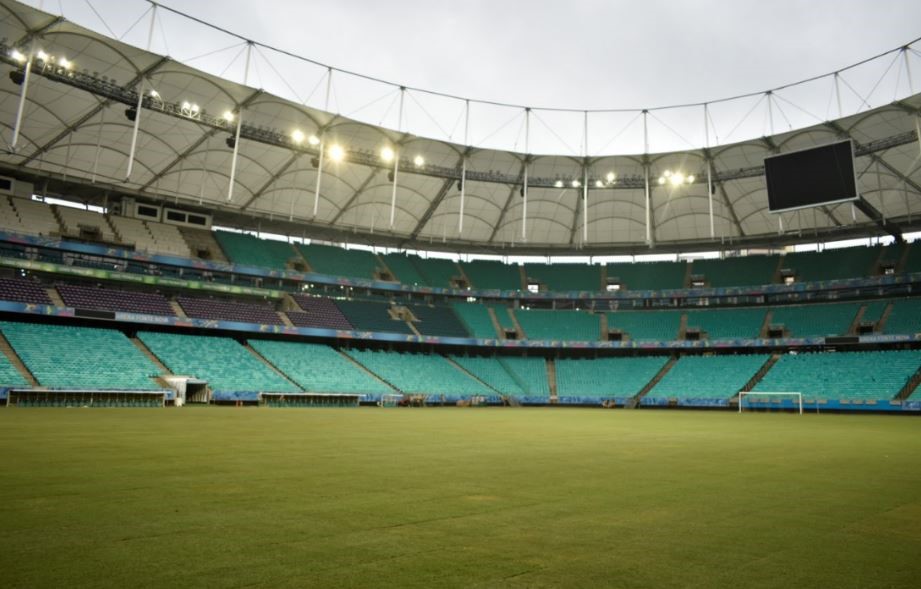
Figure 2: Celebration Bermudagrass planted at the Arena Fonte Nova stadium, Salvador, Brazil.
Common Mistakes to Avoid
- Underestimating transportation logistics and delivery timing.
- Installing sod that has remained harvested for too long before placement.
- Neglecting irrigation immediately after installation.
- Choosing turfgrass varieties that are poorly adapted to the local climate.
- Failing to coordinate harvesting, trucking, installation, and field finishing as a single operation.
Conclusion
The professional soccer stadium turf replacement process is far more than simply laying new grass. Success depends on precise logistics, specialized equipment, experienced crews, and selecting the right turfgrass technology.
The Arena Fonte Nova renovation demonstrates how modern Ready-to-Play systems allow elite stadiums to replace an entire playing surface within days while maintaining the high standards required for professional soccer.
Looking for more practical irrigation and sports turf management insights?
Explore our complete resource library at TurfWaterPro, where we cover irrigation scheduling, water management, system maintenance, sports field performance, and best management practices for athletic turf.
👉 Next read: How Soccer Field Stripes Are Created: The Science Behind Professional Turf Striping